
Luke 20:27-47 is about the question posed by the Sadducees regarding marriage in the afterlife and Jesus’ response highlighting the resurrection of the dead and the importance of knowing the Scriptures to understand God’s truth, while also denouncing the hypocrisy of the religious leaders and emphasizing the supremacy of Jesus as the Son of God.
27 There came to him some Sadducees, those who deny that there is a resurrection,
28 Now there were seven brothers. The first took a wife, and died without children.
29 Now there were seven brothers. The first took a wife, and died without children.
30 and the second took her as wife, and he died childless.
31 and the third took her, and likewise all seven left no children and died.
32 Last of all the woman also died.
33 In the resurrection, therefore, whose wife will the woman be? For the seven had her as wife.”
34 And Jesus said to them, “The sons of this age marry and are given in marriage,
35 but those who are considered worthy to attain to that age and to the resurrection from the dead neither marry nor are given in marriage,
36 for they cannot die anymore, because they are equal to angels and are sons of God, being sons of the resurrection.
37 But that the dead are raised, even Moses showed, in the passage about the bush, where he calls the Lord the God of Abraham and the God of Isaac and the God of Jacob.
38 Now he is not God of the dead, but of the living, for all live to him.
39 Then some of the scribes answered, “Teacher, you have spoken well.”
40 For they no longer dared to ask him any question.
41 But he said to them, “How can they say that the Christ is David’s son?
42 For David himself says in the Book of Psalms, “The Lord said to my Lord, ‘Sit at my right hand,
43 until I put your enemies under your feet.”
44 David thus calls him Lord, so how is he his son?”
45 And in the hearing of all the people he said to his disciples,
46 “Beware of the scribes, who like to walk around in long robes, and love greetings in the marketplaces and the best seats in the synagogues and the places of honor at feasts,”
47 who devour widows’ houses and for a pretense make long prayers. They will receive the greater condemnation.
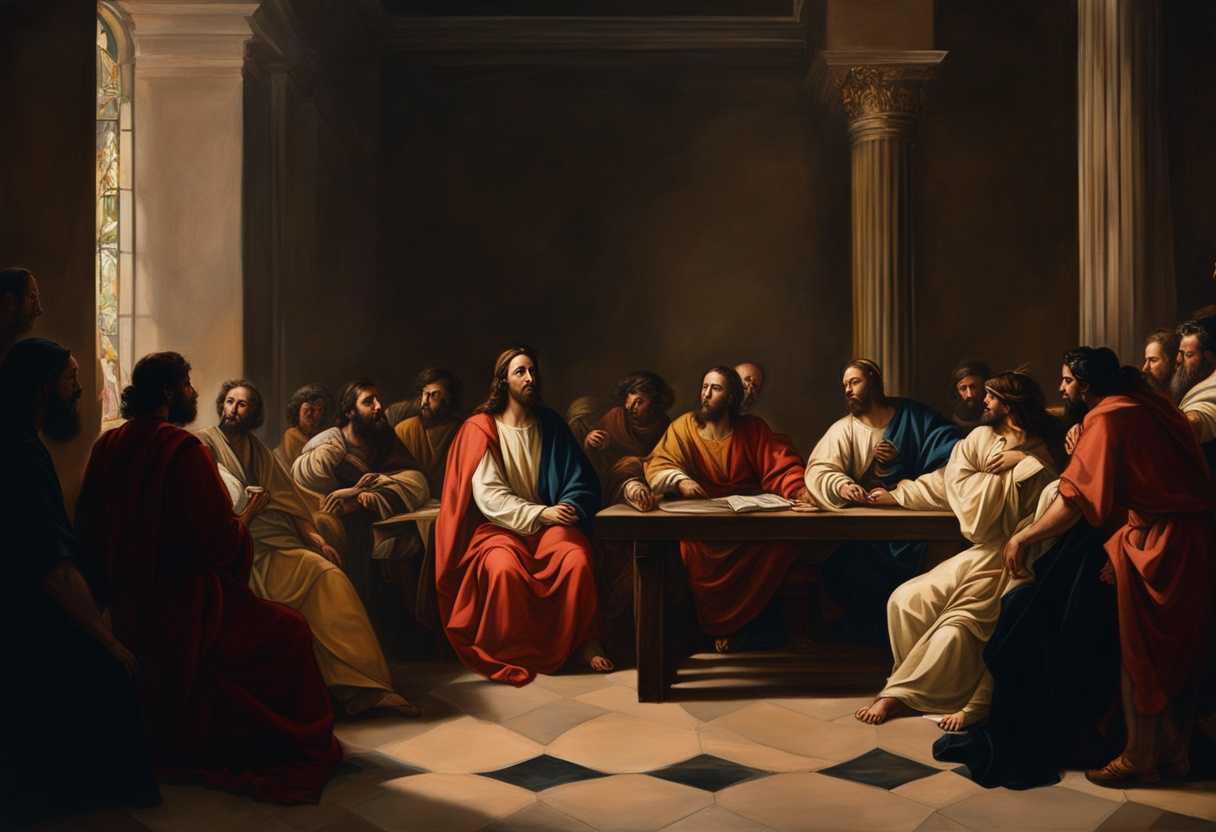
Setting the Scene for Luke 20:27-47
In Luke chapter 20, we find Jesus engaged in a heated discussion with the religious leaders of the time in the temple in Jerusalem. The scene is bustling with activity as people come and go, offering sacrifices and engaging in prayer. The air is filled with the scent of incense and the sound of prayers being lifted up to God.
Among the religious leaders present are the Pharisees, Sadducees, and scribes, who have come to challenge Jesus with questions in an attempt to trap him in his words. The Pharisees, known for their strict adherence to religious laws, are particularly vocal in their questioning of Jesus. The Sadducees, who do not believe in the resurrection, also join in the debate, trying to discredit Jesus’ teachings.
Jesus, calm and composed, responds to their questions with wisdom and authority, leaving the religious leaders amazed at his teachings. The scene is tense as Jesus exposes the hypocrisy of the religious leaders and warns the people to beware of their pride and self-righteousness. The onlookers are captivated by the exchange, witnessing a powerful display of spiritual insight and truth.
What is Luke 20:27-47 about?
Jesus in this verse imparts profound wisdom that encompasses the core beliefs of Christianity. He speaks of resurrection, highlighting the fundamental belief in life after death and the promise of eternal life through faith. Jesus emphasizes resurrection, instilling hope and assurance in his followers, reminding them of the ultimate purpose and destiny awaiting believers.
Furthermore, Jesus underscores the significance of love as a guiding principle in our lives. He calls upon his followers to love God above all else, emphasizing the importance of cultivating a deep and intimate relationship with the divine. Jesus teaches that all other relationships and pursuits in life find their true meaning and fulfillment when rooted in love for God by prioritizing love for God. This verse ultimately encapsulates the essence of Christian teachings. It challenges us to reflect on our priorities and ask ourselves if we are truly honoring God above all else and living our lives in a way that reflects the love and teachings of Jesus.
Understanding what Luke 20:27-47 really means
The passage in Luke 20:27-47 presents us with two distinct sections that offer profound insights into the nature of resurrection and the importance of genuine faith and service. In the first part, the Sadducees, who deny the concept of resurrection, attempt to test Jesus with a hypothetical scenario. Jesus responds by illuminating the eternal nature of the resurrected life, emphasizing a transformation beyond earthly constraints. His words challenge our understanding of life after death and invite us to contemplate the eternal significance of our existence.
One key phrase, “The sons of this age marry and are given in marriage,” serves as a stark contrast between the temporal nature of earthly life and the eternal realm to come. Jesus paints a picture of a reality where earthly institutions like marriage will no longer hold sway, pointing towards a higher, spiritual dimension awaiting believers. Similarly, the phrase “They cannot die anymore, because they are equal to angels and are sons of God, being sons of the resurrection,” underscores the everlasting nature of the resurrected state and our union with God in immortality.
Moving to the second part of the passage, Jesus issues a warning against the hypocrisy of the scribes, cautioning against those who prioritize outward appearances and seek recognition over genuine service to God. His admonition echoes throughout time, reminding us to live authentically and humbly, focusing on true devotion rather than the trappings of status and acclaim. This call to sincerity and humility resonates with believers today, urging us to examine our motives and actions in light of God’s truth.
Drawing parallels with related Bible passages such as 1 Corinthians 15:42-44 and Matthew 23:1-12, we gain a deeper understanding of the themes presented in Luke 20. Paul’s teachings on the resurrection body and Jesus’ critique of religious leaders further illuminate the importance of living with integrity and sincerity in our faith. Additionally, Revelation 21:4’s depiction of a new heaven and earth devoid of suffering aligns with Jesus’ promise of a resurrection life free from pain and death, offering believers a glimpse of the eternal hope that awaits.
In our contemporary context, the passage speaks to our longing for hope in the face of life’s challenges. The assurance of resurrection and eternal life provides solace and encouragement, reminding us that our current struggles are temporary in light of the eternal glory to come. Simultaneously, Jesus’ warning against hypocrisy serves as a timeless call to authenticity and humility in our faith journey, urging us to prioritize genuine service over seeking human approval.
Consider a scenario where a respected community leader’s facade of honor is shattered by revelations of self-serving actions. This anecdote mirrors Jesus’ caution against the scribes, highlighting the destructive nature of hypocrisy and the importance of living with integrity and transparency. As we reflect on this passage, let us ponder our beliefs about the afterlife, strive for authenticity in our faith, and commit to serving God with humility and sincerity. May we embrace the eternal values of the Kingdom and eschew the fleeting allure of worldly recognition, embodying the transformative truths revealed in Luke 20:27-47.
How can we live with a resurrection mindset?
Living with a resurrection mindset means recognizing that our hope and confidence are not in this earthly life but in the promise of eternal life with God through Jesus’ resurrection. It means viewing life’s struggles and challenges through the lens of faith, knowing that our ultimate victory lies in the resurrection that Jesus offers to all who believe in him. This mindset also shapes our priorities and values, reminding us to focus on eternal things rather than fleeting earthly pursuits. We can find comfort and strength in difficult times by keeping the reality of the resurrection at the forefront of our minds, knowing that death is not the end but the beginning of something far greater. This perspective can transform how we approach every aspect of our lives, shaping our decisions, actions, and relationships with an eternal perspective. Living with a resurrection mindset is about living each day with the hope and assurance that our future is secure in Christ, no matter what challenges or trials we may face in this life.
Application
Explore the depths of the Scriptures, uncovering new truths and strengthening your bond with our Creator. Engage in discussions about faith with an open heart and a thirst for knowledge. Will you seize the chance today to immerse yourself in the Word of God, paving the way for a deeper connection with Him?

Reverend Michael Johnson is an experienced Church Minister with a profound expertise in spirituality and guidance. With a serene presence and a compassionate heart, he has faithfully served his congregation for over 20 years, leading them on a spiritual journey towards inner peace and enlightenment. Reverend Johnson’s extensive knowledge of religious philosophies and profound understanding of human nature have made him a trusted confidant and mentor to many, as he seamlessly weaves his profound wisdom into life teachings. Reverend Johnson’s calming demeanor and empathetic nature continue to uplift and heal souls, nurturing a sense of unity and tranquility within his community.