
Luke 21:1-9 is about Jesus warning his disciples of the deceitful teachings and false Messiahs that will arise, instructing them to remain faithful, discerning, and not be led astray by these impostors.
1 Jesus looked up and saw the rich putting their gifts into the offering box.
2 He also saw a poor widow put in two small copper coins.
3 And he said, “Truly, I tell you, this poor widow has put in more than all of them.
4 For they all contributed out of their abundance, but she out of her poverty put in all she had to live on.”
5 And while some were speaking of the temple, how it was adorned with noble stones and offerings, he said,
6 “As for these things that you see, the days will come when there will not be left here one stone upon another that will not be thrown down.”
7 And they asked him, “Teacher, when will these things be, and what will be the sign when these things are about to take place?”
8 And he said, “See that you are not led astray. For many will come in my name, saying, ‘I am he!’ and, ‘The time is at hand!’ Do not go after them.
9 And when you hear of wars and tumults, do not be terrified, for these things must first take place, but the end will not be at once.
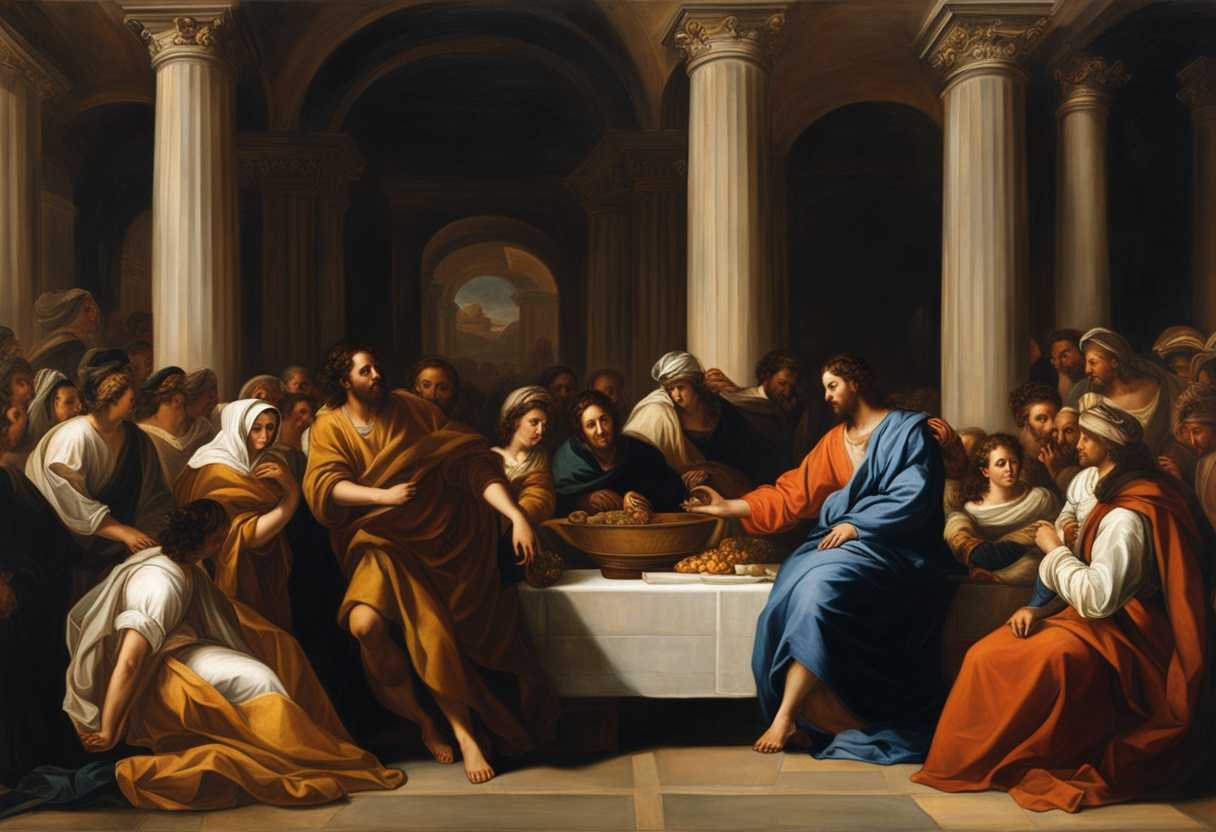
Setting the Scene for Luke 21:1-9
In Luke chapter 21, Jesus is in the temple in Jerusalem with his disciples. The scene is bustling with people coming to offer their gifts and donations. Jesus and his disciples have been observing the crowd when suddenly a poor widow approaches. She is dressed humbly, with a worn shawl draped over her shoulders and a small pouch in her hand.
The widow hesitantly makes her way to the offering box and drops in two small coins, all she has to live on. Jesus, who is sitting nearby, notices her act of generosity and selflessness. He calls his disciples over and uses this moment to teach them about the true meaning of giving and the value of sacrificial giving. The disciples listen intently as Jesus explains that the widow, though she gave only a small amount, gave more than all the others because she gave out of her poverty, while the others gave out of their wealth.
The temple is filled with the sounds of prayers, offerings, and the shuffling of feet as people come and go. The atmosphere is charged with the energy of devotion and religious fervor. Jesus’ words hang in the air, challenging his disciples to examine their own hearts and motives when it comes to giving. The disciples look at each other, pondering the lesson they have just learned from the humble widow’s act of faith.
What is Luke 21:1-9 about?
Isn’t it fascinating how Jesus uses this powerful moment to teach us about the true essence of giving? The story of the poor widow in this verse reflects a profound lesson about the purity of one’s heart when serving others. It sheds light on the importance of sincerity and humble intentions in our actions, especially when it comes to acts of generosity and compassion.
This verse challenges us to reflect on our own motives and attitudes towards giving. Are we driven by a desire for recognition and praise, like the wealthy individuals in the story, or are we guided by a genuine sense of love and empathy for those in need? Jesus’s words remind us that true generosity is not measured by the size of our donations but by the depth of our commitment and the purity of our intentions. It urges us to seek opportunities to give selflessly, just like the poor widow, who offered all she had out of love and faith.
Let this verse inspire us to approach our service with humility and authenticity, following the example of the widow who gave from her heart without seeking external validation. May we strive to cultivate a spirit of generosity that is rooted in compassion and driven by love, mirroring the selfless devotion that Jesus exemplified throughout his teachings and actions.
Understanding what Luke 21:1-9 really means
In the bustling temple, Jesus observed the actions of those around Him, delving into the themes of generosity, sacrifice, and the signs of the end times. The narrative unfolds with the poignant account of the Widow’s Offering, where Jesus contrasts the ostentatious giving of the wealthy with the sacrificial gift of a poor widow. While the rich contributed out of their abundance, the widow, out of her poverty, offered all she had to live on, showcasing the essence of sacrificial giving. This narrative underscores the significance of the heart and intention behind our actions, emphasizing that true generosity is not measured by the amount given but by the depth of faith and trust in God.
Transitioning from the intimate scene of the widow’s offering, Jesus foretells the destruction of the temple, proclaiming that not one stone will be left upon another. This prophecy, fulfilled in AD 70, serves as a stark reminder of the impermanence of earthly structures and possessions, urging us to prioritize building spiritual foundations that withstand the test of time. Just as the physical temple crumbled, so too will all material things fade away, prompting us to invest in eternal values that endure beyond the transient nature of this world.
As Jesus continues, He warns His disciples to beware of deception in the signs of the end times, cautioning against false prophets and misleading signs. This call to vigilance and discernment echoes through the ages, urging us to remain steadfast in our faith, rooted in the truth of God’s Word. In a world rife with confusion and deception, the importance of discerning truth from falsehood becomes paramount, guiding us to navigate the complexities of our spiritual journey with clarity and conviction.
The timeless lessons gleaned from the widow’s sacrificial offering, the temple’s destruction, and the call to discernment resonate deeply in our modern lives. They prompt us to reflect on our own acts of generosity, encouraging us to give sacrificially and trust in God’s provision, even when resources seem scarce. The impermanence of earthly possessions serves as a poignant reminder to focus on eternal values, finding strength and hope in our faith rather than fleeting material wealth. Likewise, the admonition to remain vigilant against deception underscores the need for unwavering faithfulness and a commitment to seeking truth amidst the noise of falsehood.
In conclusion, the narrative in Luke 21:1-9 encapsulates profound truths about sacrificial giving, the transient nature of material possessions, and the necessity of discernment in our spiritual walk. As we ponder these lessons, may we be inspired to apply them in our daily lives, embodying sacrificial generosity, investing in eternal values, and standing firm in our faith, guided by the unchanging truth of God’s Word.
Are we giving from the heart or for show?
Jesus observes how the rich put their gifts into the temple offering, but a poor widow gives just two small copper coins in Luke 21. Jesus then praises her, saying that she has given more than all the others because she has given from her poverty while the others gave out of their wealth. This passage reminds us that it is not the amount we give that matters, but the heart behind our giving.
The focus here is on the intention and sincerity of the giver rather than the public display of generosity. Jesus values the sacrificial heart of the widow who gives with humility and devotion. He contrasts this with those who give for the sake of appearances or to fulfill a religious duty without genuine compassion and selflessness.
Therefore, when we give, whether it be monetarily, through acts of service, or in any other form, we should examine our motives and ensure that we are giving from a place of genuine love and compassion, rather than seeking self-glorification or applause from others. The widow gave with sincerity and selflessness, as we should, from our hearts and for the glory of God.
Application
Think of your life like juggling work and family. Are you investing your time and money in things that really matter? Reflect on Luke 21:1-9 — it’s a wake-up call to use your blessings wisely. Picture your resources not just as assets, but as tools to lift others up and build something meaningful. Will you take action today, giving generously and trusting in a purpose greater than material wealth?

Reverend Michael Johnson is an experienced Church Minister with a profound expertise in spirituality and guidance. With a serene presence and a compassionate heart, he has faithfully served his congregation for over 20 years, leading them on a spiritual journey towards inner peace and enlightenment. Reverend Johnson’s extensive knowledge of religious philosophies and profound understanding of human nature have made him a trusted confidant and mentor to many, as he seamlessly weaves his profound wisdom into life teachings. Reverend Johnson’s calming demeanor and empathetic nature continue to uplift and heal souls, nurturing a sense of unity and tranquility within his community.