
Luke 21:37 is about Jesus teaching the people during the day in the temple, then withdrawing to the Mount of Olives at night, highlighting the importance of finding moments of solitude and spiritual retreat even in the midst of public ministry.
37 And every day he was teaching in the temple, but at night he went out and lodged on the mount called Olivet.
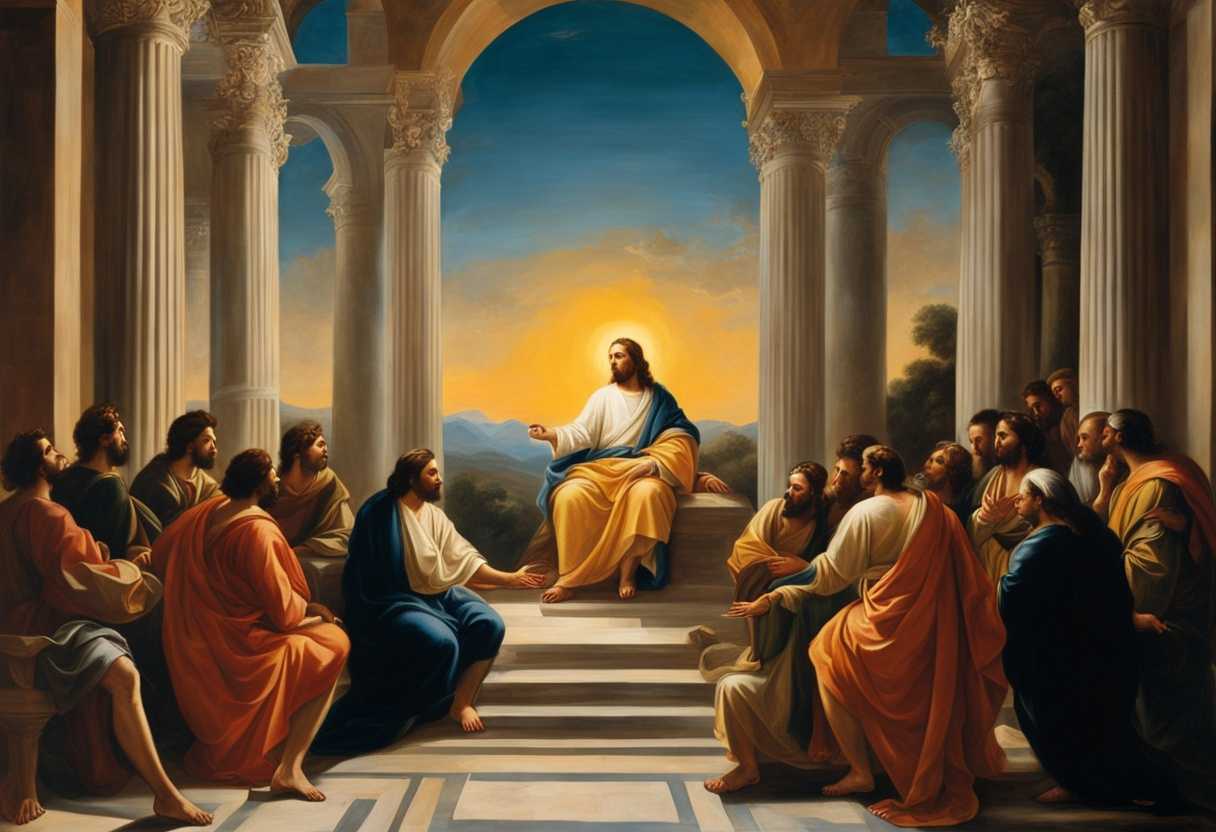
Setting the Scene for Luke 21:37
In Luke chapter 21, we find Jesus teaching in the temple in Jerusalem during the final days of his earthly ministry. The scene is bustling with activity as people from all walks of life gather to listen to his teachings. The air is filled with a sense of anticipation and tension as Jesus speaks about the destruction of the temple and the signs of the end times.
Among the crowd are Jesus’ disciples, including Peter, James, John, and Andrew, who have been following him closely and learning from his teachings. They are seated around Jesus, hanging on his every word, eager to understand the mysteries he is revealing to them. The temple courtyard is filled with a mix of curious onlookers, religious leaders, and ordinary people who have come to hear this renowned teacher.
As the sun begins to set, casting a warm glow over the temple grounds, Jesus concludes his teaching for the day. The disciples gather around him, asking questions and seeking further clarification on the things he has shared. The atmosphere is charged with a sense of urgency and importance, as they know that these are the final days before Jesus will be crucified.
What is Luke 21:37 about?
This verse gives us a glimpse into the daily life of Jesus during his time on earth. Jesus is actively engaging with the people, sharing his wisdom, and spreading the message of love and salvation by teaching in the temple during the day. The temple was a place of spiritual significance and learning, making it the perfect setting for Jesus to reach a wider audience and connect with both believers and skeptics alike.
On the other hand, by staying on the Mount of Olives at night, Jesus demonstrates a different aspect of his character. The Mount of Olives was a place of solitude and reflection, where Jesus would retreat to connect with God in prayer and find moments of peace and renewal. This dual existence of engaging with the world during the day and seeking solace at night highlights the balance that Jesus embodied in his life – between active ministry and personal spiritual growth. We are challenged to consider how we can similarly balance our outward actions with our inner spiritual life as we reflect on this verse. How can we engage with the world around us, sharing love and wisdom like Jesus did in the temple? And how can we also cultivate moments of solitude and connection with God, seeking renewal and strength in those quiet moments on our own metaphorical “Mount of Olives”? Let this verse inspire us to live a life of purpose and prayer, actively engaging with others while also nurturing our own spiritual well-being.
Understanding what Luke 21:37 really means
During the final week of Jesus’ life, as He approached His crucifixion, we find Him in Luke 21:37, engaging in a routine of teaching in the temple during the day and spending nights on the Mount of Olives. This setting provides a glimpse into the daily life of Jesus, showcasing His dedication to both public ministry and private moments of prayer and reflection. The Mount of Olives, a place of significance for Jesus throughout the Gospels, serves as a backdrop for His moments of solitude and communion with God.
In parallel passages like Matthew 21:12-17, Mark 11:11, and John 8:1-2, we see Jesus cleansing the temple, entering Jerusalem, and seeking solitude on the Mount of Olives. These passages collectively paint a picture of Jesus’ intentional actions, emphasizing the importance of both engaging with the community and withdrawing for personal reflection. Jesus’ example challenges us to consider how we balance our own commitments to others with our need for spiritual nourishment and solitude.
The relevance of Luke 21:37 extends to our modern lives, reminding us of the essential balance between active ministry or work and personal time for prayer and reflection. In a world filled with constant busyness and distractions, this verse prompts us to evaluate our daily rhythms and ensure that we carve out space for both outward engagement and inward contemplation. Just as Jesus found strength and guidance through His routine, we too can benefit from a harmonious blend of action and introspection.
Imagine a scenario where a professional juggles a demanding schedule of meetings and deadlines but also sets aside evenings for quiet reflection and prayer. This intentional balance allows them to navigate their responsibilities with clarity and purpose, mirroring Jesus’ pattern of teaching in the day and retreating at night. By emulating Jesus’ example of intentional engagement with others and intentional withdrawal for spiritual nourishment, we can cultivate a more holistic approach to our daily lives.
The phrases “teaching in the temple” and “lodged on the mount called Olivet” in Luke 21:37 offer profound insights into Jesus’ actions. The former underscores the importance of sharing wisdom in a communal setting, while the latter symbolizes the need for solitude and connection with God. These phrases invite us to reflect on our own practices of engaging with others in learning and community, as well as our habits of seeking solace and guidance in moments of quiet reflection.
As we ponder the application of Luke 21:37 in our lives, let us consider how we can emulate Jesus’ balance of public engagement and private reflection. Setting aside dedicated time for prayer and solitude can rejuvenate our spirits and provide clarity amidst life’s demands. Engaging in communal activities that foster growth and learning, akin to Jesus’ teachings in the temple, can enrich our spiritual journey and deepen our connections with others. May we find inspiration in Jesus’ example to lead lives that harmonize action with contemplation, service with self-care, and community engagement with personal reflection.
How can we prioritize prayer in daily life?
Prioritizing prayer in daily life means recognizing the importance of communing with God and seeking His guidance, strength, and peace throughout our day. We should set aside dedicated moments in our busy schedules to connect with God, just as Jesus spent time in prayer each day in the mentioned verse. We acknowledge our dependence on Him and invite His presence into every aspect of our lives by consistently making prayer a priority.
One way to prioritize prayer is to establish a routine or schedule for prayer, carving out specific times during the day where we can retreat and communicate with God. This intentional practice can help us cultivate a deeper relationship with Him and stay connected spiritually. We demonstrate our commitment to seeking God’s will and trusting in His provision by following Jesus’ example and making prayer a regular part of our daily life.
Furthermore, prioritizing prayer requires a shift in mindset, where we view prayer not as a task to be checked off our to-do list, but as a vital practice that sustains and nourishes our soul. When we approach prayer with reverence, humility, and expectation, we open ourselves up to the transformative power of God’s presence in our lives. We align our hearts with God’s will and invite His divine guidance and protection into our daily activities by prioritizing prayer.
Application
Take a page from Jesus’ book and prioritize your connection with God, just like you would make time for work or family. Dedicate moments in your day to seek His presence and nurture your faith. Are you ready to commit to spending quality time in prayer today, aligning your heart with His divine will?

Reverend Michael Johnson is an experienced Church Minister with a profound expertise in spirituality and guidance. With a serene presence and a compassionate heart, he has faithfully served his congregation for over 20 years, leading them on a spiritual journey towards inner peace and enlightenment. Reverend Johnson’s extensive knowledge of religious philosophies and profound understanding of human nature have made him a trusted confidant and mentor to many, as he seamlessly weaves his profound wisdom into life teachings. Reverend Johnson’s calming demeanor and empathetic nature continue to uplift and heal souls, nurturing a sense of unity and tranquility within his community.