
Luke 22:14-20 is about Jesus sharing a final meal with his disciples before his crucifixion and instituting the symbolism of the bread and wine as his body and blood in the act of communion.
14 And when the hour came, he reclined at table, and the apostles with him.
15 And he said to them, “I have earnestly desired to eat this Passover with you before I suffer.
16 for I tell you I will not eat it until it is fulfilled in the kingdom of God.”
17 And he took a cup, and when he had given thanks he said, “Take this, and divide it among yourselves.
18 for I tell you that from now on I will not drink of the fruit of the vine until the kingdom of God comes.”
19 And he took bread, and when he had given thanks, he broke it and gave it to them, saying, “This is my body, which is given for you. Do this in remembrance of me.”
20 And likewise the cup after they had eaten, saying, “This cup that is poured out for you is the new covenant in my blood.
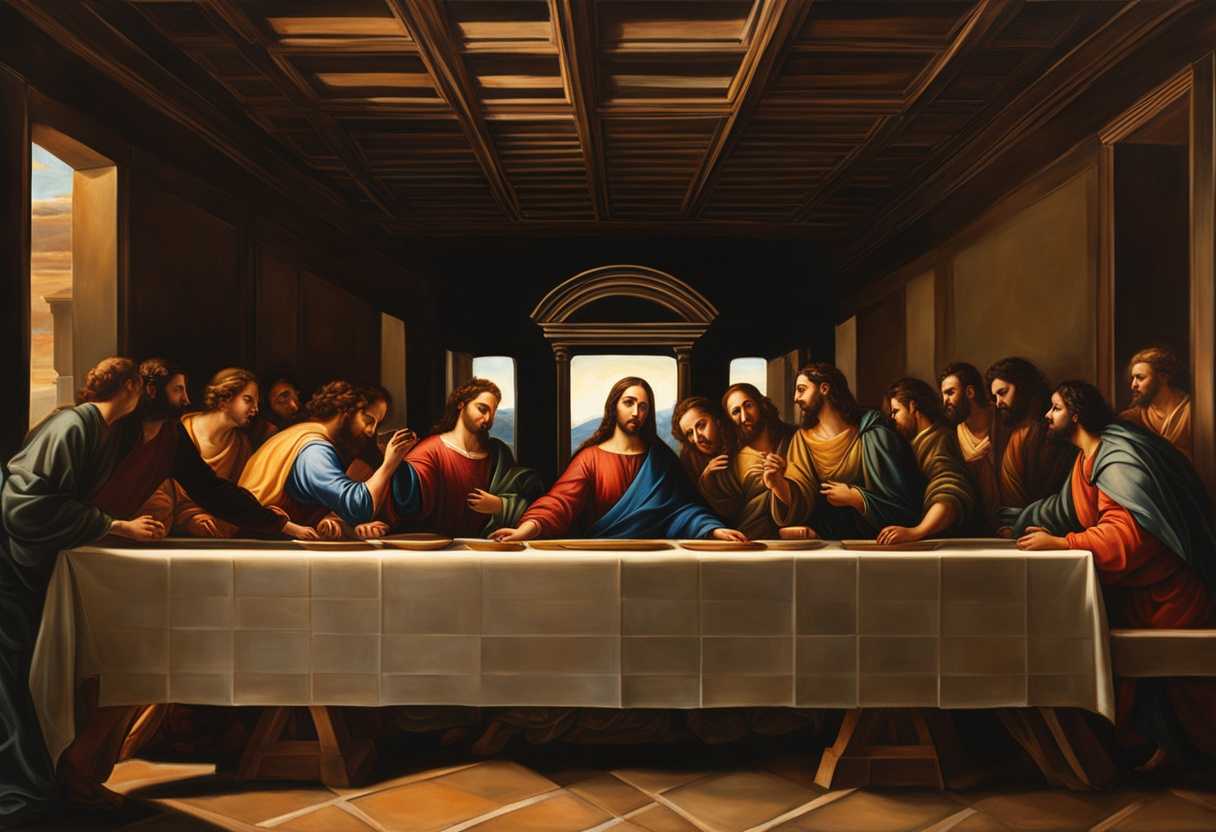
Setting the Scene for Luke 22:14-20
In Luke chapter 22, we find Jesus and his disciples gathered together in an upper room in Jerusalem to celebrate the Passover meal. The room is dimly lit by oil lamps, casting a warm glow over the group as they recline around a low table laden with unleavened bread, bitter herbs, and wine. The disciples, including Peter, John, James, and the others, are dressed in simple robes, their sandals kicked off as they lean on cushions, following the tradition of reclining at meals.
Jesus, the central figure in the room, takes on the role of the host, breaking the bread and blessing the wine as he shares the symbolic elements with his closest companions. There is a sense of solemnity in the air as Jesus speaks of the impending betrayal and his upcoming sacrifice. The disciples listen intently, their expressions a mix of confusion, concern, and devotion as they try to grasp the weight of his words.
As the evening progresses, Jesus institutes the Lord’s Supper, a new covenant meal that will come to symbolize his body broken and blood shed for the redemption of humanity. The atmosphere in the room is charged with emotion as Jesus imparts this profound moment of communion with his disciples, setting the stage for the events that will soon unfold in the Garden of Gethsemane and beyond.
What is Luke 22:14-20 about?
This verse holds significant importance in the Christian faith as it captures the moment when Jesus instituted the Lord’s Supper. This symbolic act of breaking bread and sharing wine is a solemn and sacred ritual observed by followers of Christ to remember his sacrifice on the cross. Believers are reminded of Jesus’ body broken for them and his blood shed for the forgiveness of sins when they partake in this communion. It serves as a moment of reflection, gratitude, and unity among those who share in the faith.
Have you ever paused to consider the depth of meaning behind the bread and wine shared during the Lord’s Supper? What emotions stir within you when you partake in this symbolic act of remembrance? Reflecting on this verse can deepen your understanding of the profound sacrifice Jesus made for humankind and the profound love he demonstrated through his willingness to lay down his life for us. It is a moment to connect with the core beliefs of the Christian faith and to express gratitude for the redemption offered through Jesus’ body and blood. Let this verse serve as a reminder of the solemnity and significance of the Lord’s Supper in your spiritual journey.
Understanding what Luke 22:14-20 really means
The passage in Luke 22:14-20 captures a poignant moment during the Last Supper, Jesus’ final meal with His disciples before His crucifixion. This event holds immense significance for Christians as it lays the foundation for the practice of Communion or the Eucharist, a central ritual in Christian worship. As Jesus sat with His apostles, the phrase “When the hour came” underscores the divine timing of this event, highlighting the fulfillment of God’s plan in the sacrifice that was to come. The image of Jesus reclining at the table with His apostles conveys a sense of intimate fellowship and teaching, setting the stage for the profound words He was about to speak.
In this passage, Jesus utters the powerful words, “This is my body, given for you,” symbolizing His impending sacrifice on the cross, where His body would be broken for the sins of humanity. Likewise, when He declares, “This cup is the new covenant in my blood,” He establishes a new relationship between God and humanity, sealed by His blood shed for the forgiveness of sins. These phrases encapsulate the essence of Christian faith, emphasizing the sacrificial love of Christ and the redemption it brings to believers.
Drawing parallels from related biblical passages such as 1 Corinthians 11:23-26, Exodus 24:8, and Jeremiah 31:31-34, we see the continuity of God’s redemptive plan throughout history. Paul’s exhortation in Corinthians underscores the importance of remembering and proclaiming Jesus’ death through the Lord’s Supper, while the contrast between the old covenant sealed with sacrifices and the new covenant in Jesus’ blood highlights the transformative nature of Christ’s sacrifice. Jeremiah’s prophecy of the new covenant further solidifies the promise of God’s forgiveness and the internal transformation He brings to His people.
The relevance of the Last Supper extends to believers today in various ways. Just as physical food nourishes the body, the spiritual sustenance provided through Communion reminds believers of Jesus’ sacrifice and love, strengthening their faith and resolve. Moreover, sharing in the Lord’s Supper fosters a sense of community and unity among believers, transcending individual differences and fostering a deep bond in Christ. In a world filled with uncertainty, the new covenant offers believers hope and assurance of God’s forgiveness and eternal life, anchoring their faith in the unchanging promises of God.
Imagine a family gathering for a special meal, where stories are shared, and bonds are strengthened. Similarly, Communion serves as a spiritual family meal where believers come together to remember Jesus’ sacrifice, renew their commitment to Him, and reaffirm their unity in faith. The Last Supper is not merely a historical event but a living tradition that continues to shape and strengthen the faith of believers. It calls us to reflect on Jesus’ sacrifice, celebrate our unity in Him, and eagerly anticipate His return, embodying the essence of Christian faith and fellowship.
How can we honor Jesus through the Lord’s Supper?
We can honor Jesus through the Lord’s Supper by recognizing the sacrifice He made for us on the cross. When we partake in communion, we remember the body that was broken and the blood that was shed for the forgiveness of our sins. It is a solemn act of gratitude and remembrance for the love and grace that Jesus showed us through His sacrifice.
Partaking in the Lord’s Supper also serves as a symbol of our unity with other believers. We are reminded that we are all part of the body of Christ as we come together to share in this sacred meal. It is a time to set aside our differences and come together in love and fellowship, just as Jesus intended for His followers. We proclaim the Lord’s death until He comes again as we eat the bread and drink the cup. The communion table not only looks back at the past sacrifice of Jesus but also looks forward to His promised return. We declare our faith in His second coming and our hope in the future fulfillment of His kingdom by participating in the Lord’s Supper.
Application
Dear reader, in the words of Luke, let us embrace the Holy Communion as a symbol of remembrance, gratitude, and devotion to our Lord. Just as each member plays a vital role in a thriving team at work, let us partake in communion to strengthen our bond with Christ and our fellow believers. Let us not overlook the beauty and power of this sacred act, which brings us closer to our Savior. Will you answer the call to join in communion with Christ and spread His love in your world?

Reverend Michael Johnson is an experienced Church Minister with a profound expertise in spirituality and guidance. With a serene presence and a compassionate heart, he has faithfully served his congregation for over 20 years, leading them on a spiritual journey towards inner peace and enlightenment. Reverend Johnson’s extensive knowledge of religious philosophies and profound understanding of human nature have made him a trusted confidant and mentor to many, as he seamlessly weaves his profound wisdom into life teachings. Reverend Johnson’s calming demeanor and empathetic nature continue to uplift and heal souls, nurturing a sense of unity and tranquility within his community.