
Luke 22:14-30 is about the Last Supper where Jesus institutes the Eucharist and emphasizes the importance of servant leadership among his disciples.
14 And when the hour came, he reclined at table, and the apostles with him.
15 And he said to them, “I have earnestly desired to eat this Passover with you before I suffer.
16 for I tell you I will not eat it until it is fulfilled in the kingdom of God.”
17 And he took a cup, and when he had given thanks he said, “Take this, and divide it among yourselves.
18 for I tell you that from now on I will not drink of the fruit of the vine until the kingdom of God comes.”
19 And he took bread, and when he had given thanks, he broke it and gave it to them, saying, “This is my body, which is given for you. Do this in remembrance of me.”
20 And likewise the cup after they had eaten, saying, “This cup that is poured out for you is the new covenant in my blood.
21 But behold, the hand of him who betrays me is with me on the table.
22 For the Son of Man goes as it has been determined, but woe to that man by whom he is betrayed!
23 And they began to question one another, which of them it could be who was going to do this.
24 A dispute also arose among them, as to which of them was to be regarded as the greatest.
25 And he said to them, “The kings of the Gentiles exercise lordship over them, and those in authority over them are called benefactors.
26 But not so with you. Rather, let the greatest among you become as the youngest, and the leader as one who serves.
27 For who is the greater, one who reclines at table or one who serves? Is it not the one who reclines at table? But I am among you as the one who serves.
28 You are those who have stayed with me in my trials,
29 and I assign to you, as my Father assigned to me, a kingdom,
30 that you may eat and drink at my table in my kingdom and sit on thrones judging the twelve tribes of Israel.
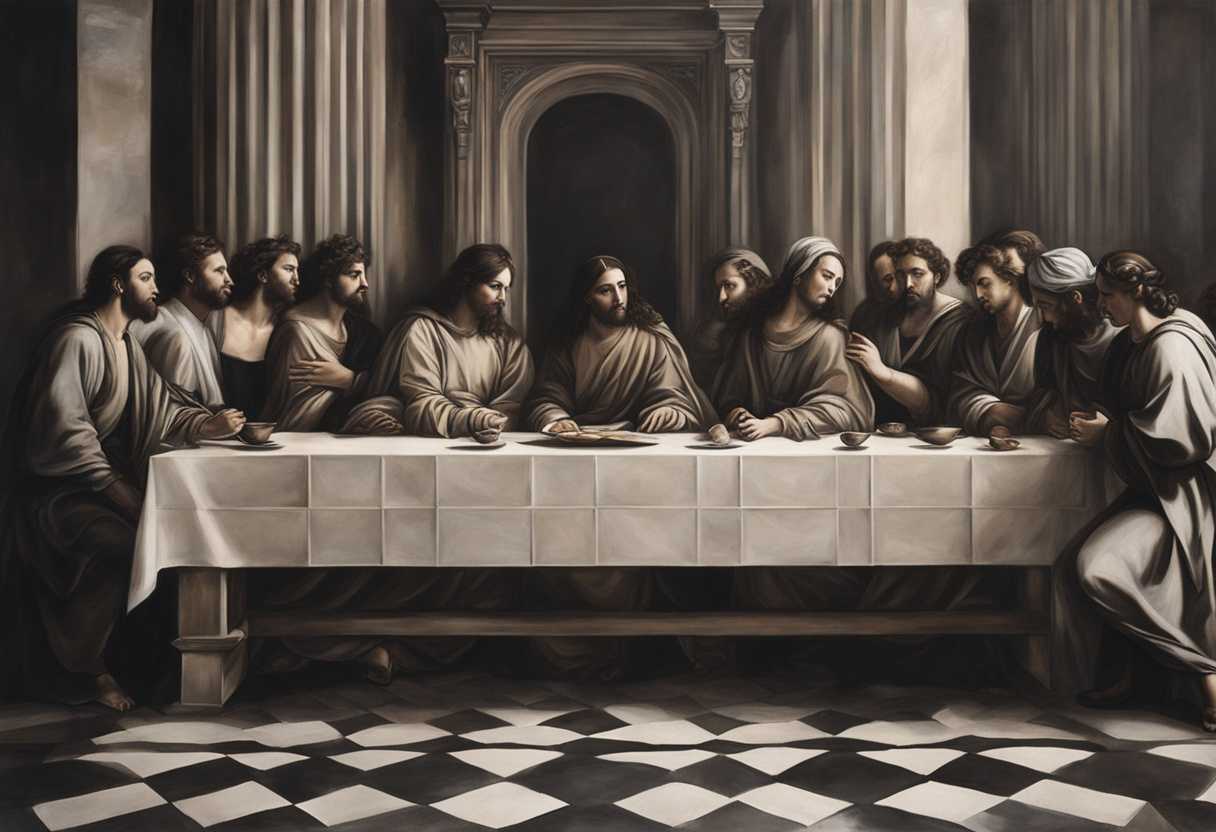
Setting the Scene for Luke 22:14-30
In Luke chapter 22, we find Jesus and his twelve disciples gathered together in an upper room in Jerusalem to celebrate the Passover meal. The room is dimly lit by oil lamps, casting a warm glow over the group as they recline around a low table laden with unleavened bread, bitter herbs, and wine. The disciples, including Peter, John, James, and Judas Iscariot, are dressed in simple robes, their faces reflecting a mix of anticipation and confusion as they listen to Jesus speak.
As they partake in the traditional Passover meal, Jesus takes a loaf of bread, blesses it, breaks it, and gives it to his disciples, saying, “This is my body given for you; do this in remembrance of me.” He then takes a cup of wine, gives thanks, and offers it to them, declaring, “This cup is the new covenant in my blood, which is poured out for you.” The disciples are struck by the solemnity and significance of Jesus’ words, sensing that something momentous is about to occur.
Amidst the flickering light and the aroma of the Passover meal, Jesus shares with his disciples about the betrayal that is to come, the denial by Peter, and the challenges they will face. Yet, he also speaks words of comfort and reassurance, promising them a place in his kingdom and urging them to serve one another in love. The scene is charged with emotion and tension, as the disciples grapple with the weight of Jesus’ words and the path that lies ahead.
What is Luke 22:14-30 about?
Jesus is setting an example of humility and servant leadership for His disciples in this powerful moment of the Last Supper. He demonstrates that true leadership involves serving others with love and compassion by washing their feet. This act challenges societal norms of power and authority, showing that being a leader means putting the needs of others above your own.
Imagine the impact this must have had on the disciples, who were used to seeing leaders exerting their dominance and authority. Jesus flips this concept on its head, revealing that true greatness comes from serving others selflessly. We, as educators, can learn from this example and strive to lead with humility, empathy, and a commitment to supporting and uplifting those around us. Let’s reflect on how we can embody the spirit of servant leadership in our own classrooms and schools, creating a culture of care and respect where everyone feels valued and supported.
Understanding what Luke 22:14-30 really means
The Last Supper, a poignant moment in Jesus’ ministry, holds profound significance for Christians. As Jesus and His disciples gathered for their final meal before His crucifixion, the scene was laden with emotion and divine purpose. The timing of this event was not arbitrary; it was a pivotal moment in Jesus’ earthly ministry, marking the institution of the Lord’s Supper and imparting crucial teachings on servanthood and leadership.
“When the hour came, Jesus and his apostles reclined at the table,” setting the stage for a sacred moment. This phrase underscores the divine timing and significance of the Last Supper, highlighting the meticulous plan of God in orchestrating Jesus’ ministry. Jesus’ poignant words, “I have eagerly desired to eat this Passover with you before I suffer,” reveal His deep emotional connection with His disciples and the weight of the impending sacrifice. This expression of longing emphasizes the profound importance of the Last Supper as a precursor to Jesus’ ultimate act of love on the cross.
In instituting the practice of Communion, Jesus declared, “This is my body given for you; do this in remembrance of me,” symbolizing His sacrificial death and the establishment of a new covenant. Likewise, when He proclaimed, “This cup is the new covenant in my blood, which is poured out for you,” Jesus sealed the bond between God and humanity through His sacrificial offering. These words encapsulate the essence of Christian faith, emphasizing the centrality of Jesus’ sacrifice and the significance of Communion in remembering His redemptive work.
Jesus’ revolutionary teaching on leadership further permeates this passage as He challenges conventional notions of greatness. “The greatest among you should be like the youngest, and the one who rules like the one who serves,” Jesus redefines leadership as servanthood, emphasizing humility and selfless service. This paradigm shift underscores the transformative power of servant leadership, where authority is wielded with humility and service to others.
The relevance of this passage extends beyond its historical context, resonating with contemporary believers in profound ways. Communion remains a central practice in Christian worship, serving as a poignant reminder of Jesus’ sacrifice and the covenant relationship with God. The principles of servant leadership, exemplified by Jesus at the Last Supper, offer a counter-cultural model of leadership that prioritizes humility and service over power and authority. Additionally, the emphasis on community and fellowship in the Last Supper underscores the importance of shared experiences and mutual support in the Christian faith.
In reflecting on the Last Supper and its implications for our lives today, we are challenged to embody the sacrificial love of Jesus, embrace servant leadership, and prioritize community and fellowship in our interactions. Just as Jesus humbly served His disciples and instituted Communion as a remembrance of His sacrifice, we are called to emulate His example in our daily lives. May the profound truths encapsulated in Luke 22:14-30 inspire us to live out the values of sacrificial love, servant leadership, and authentic community in our journey of faith.
What does it mean to serve others selflessly?
To serve others selflessly means to give of oneself without expecting anything in return, to act with humility and compassion, and to prioritize the needs of others above one’s own desires or interests. It involves showing genuine care and concern for the well-being of others, seeking to uplift and support them in their journey. This kind of service is rooted in love and reflects a heart that is willing to sacrifice for the benefit of others.
Selfless service is characterized by a willingness to serve without seeking recognition or personal gain. It requires a mindset of putting others first and finding joy in helping and supporting those in need. This form of service is not driven by personal agendas or selfish motives but is instead guided by a genuine desire to make a positive impact in the lives of others. It is a way of embodying the principles of love, compassion, and kindness in our interactions with those around us.
Application
Embrace the spirit of selfless love and humility, akin to when Jesus Christ humbly washed his disciples’ feet. As he, the son of God, donned the humble garb of a servant, may we too don the cloak of altruism in serving others with sincere love. Let’s cast aside arrogance and self-centeredness, and embrace a life of service and humility. Will you rise to the occasion and embody the love and humility shown by Christ in your actions towards others?

Reverend Michael Johnson is an experienced Church Minister with a profound expertise in spirituality and guidance. With a serene presence and a compassionate heart, he has faithfully served his congregation for over 20 years, leading them on a spiritual journey towards inner peace and enlightenment. Reverend Johnson’s extensive knowledge of religious philosophies and profound understanding of human nature have made him a trusted confidant and mentor to many, as he seamlessly weaves his profound wisdom into life teachings. Reverend Johnson’s calming demeanor and empathetic nature continue to uplift and heal souls, nurturing a sense of unity and tranquility within his community.