
Luke 23:24 is about Jesus demonstrating forgiveness and compassion by asking God to forgive those who were responsible for crucifying him, emphasizing the importance of mercy and love even in the face of betrayal and suffering.
24 So Pilate decided that their demand should be granted.
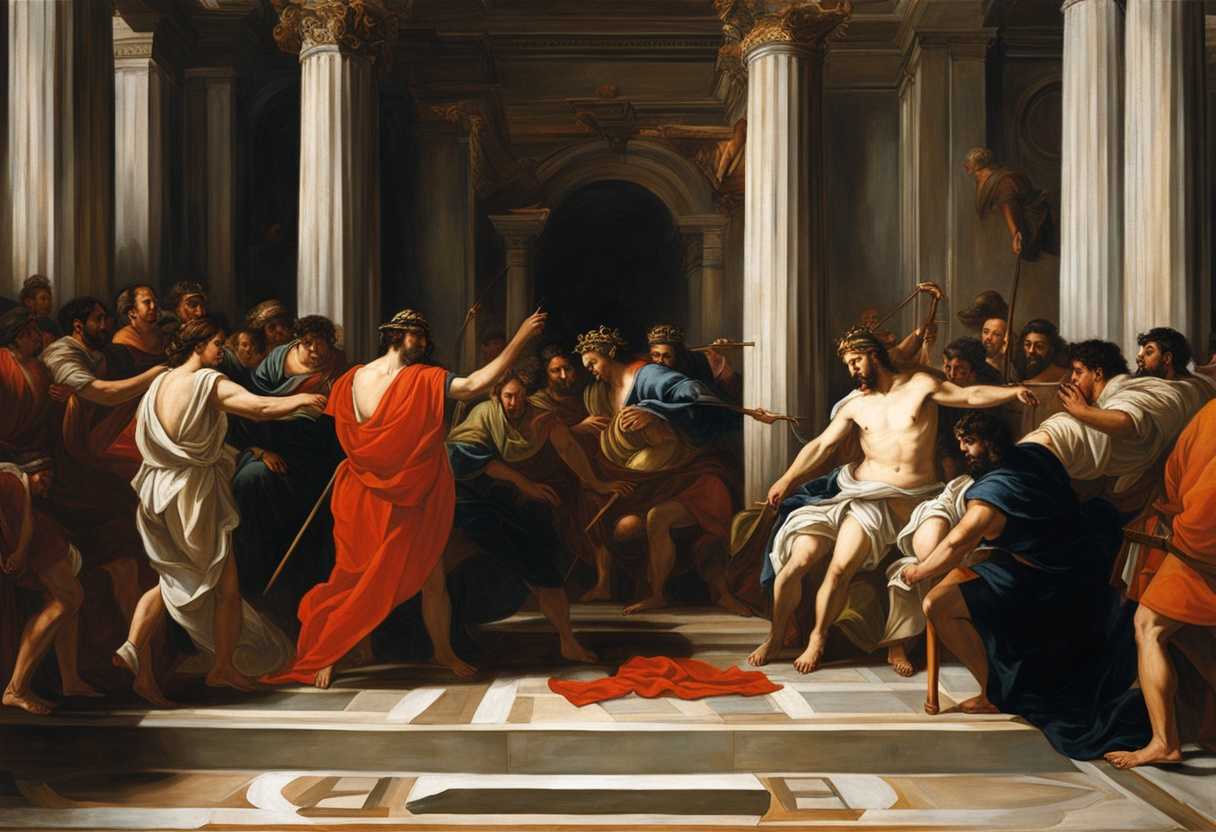
Setting the Scene for Luke 23:24
In Luke chapter 23, we find ourselves at the scene of Jesus’ crucifixion on Golgotha, also known as Calvary. The crowd that had gathered was a mix of Roman soldiers, religious leaders, onlookers, and followers of Jesus. The atmosphere was tense and heavy with emotion as Jesus, the Son of God, was being crucified between two criminals. The sky was dark, and the ground was stained with blood.
Among the crowd were Mary, the mother of Jesus, and some of his closest disciples, including John. They stood at a distance, watching in sorrow as their beloved teacher and friend suffered on the cross. The soldiers were carrying out their duty with indifference, while the religious leaders mocked Jesus, challenging him to save himself if he truly was the Messiah. The scene was a stark contrast of love and hatred, faith and disbelief, all converging at the foot of the cross.
As Jesus hung on the cross, bearing the weight of the sins of the world, the words of Luke 23:24 capture a pivotal moment when Jesus prayed, “Father, forgive them, for they do not know what they are doing.” This powerful scene serves as a reminder of Jesus’ ultimate sacrifice and his unwavering love for humanity, even in the face of betrayal and cruelty.
What is Luke 23:24 about?
This verse highlights one of the most profound and powerful aspects of Jesus’ teachings and actions: forgiveness. Despite facing unimaginable pain and betrayal, Jesus exemplified unparalleled grace by forgiving those who inflicted harm upon Him. Through this act of forgiveness, Jesus demonstrated the limitless depth of His mercy and love for all humanity. It serves as a timeless reminder for us to practice forgiveness and extend compassion even in the face of difficulty and wrongdoing.
Have you ever felt the weight of anger or resentment towards someone who has wronged you? How might Jesus’ act of forgiveness towards those who crucified Him inspire you to let go of grudges and choose love and compassion instead? Reflecting on this verse can deepen our understanding of the transformative power of forgiveness and challenge us to embody that same grace in our own lives. Jesus’ example serves as a guiding light, showing us that forgiveness is not a sign of weakness but a courageous and transformative act of love.
Understanding what Luke 23:24 really means
In the midst of the poignant narrative of Jesus’ crucifixion, Luke 23:24 captures a pivotal moment where Pontius Pilate, the Roman governor, succumbs to the relentless demands of the crowd. Despite acknowledging Jesus’ innocence, Pilate decides to grant their demand for crucifixion. This decision, made under duress, reflects the complex interplay between power, morality, and personal responsibility.
The context of this verse is crucial in grasping its significance. Pilate’s wavering stance, torn between justice and appeasing the crowd, mirrors the ethical dilemmas individuals face when confronted with difficult choices. The pressure to conform to societal expectations, even at the expense of one’s convictions, is a timeless theme that resonates with people from all walks of life.
In examining related passages such as Matthew 27:24, Mark 15:15, and John 19:16, a pattern emerges of Pilate’s struggle with moral clarity and the weight of his decisions. These parallels serve as cautionary tales, urging readers to reflect on the consequences of compromising one’s values in the face of external pressures.
The enduring relevance of Luke 23:24 lies in its exploration of moral courage, justice, and personal accountability. It prompts individuals to consider the implications of their choices and the importance of upholding principles even in challenging circumstances. The verse serves as a poignant reminder of the dangers of yielding to injustice and the enduring impact of decisions made under duress.
To illustrate the contemporary resonance of this biblical account, one can envision a scenario where a leader is coerced into making an unethical decision for the sake of expediency. Just as Pilate’s choice reverberated through history, our actions today have far-reaching consequences that shape not only our lives but also the moral fabric of society.
By delving into the nuances of phrases like “Pilate decided to grant their demand,” we uncover layers of meaning that speak to the complexities of human nature. The conscious act of decision-making, coupled with the dynamics of power and influence, sheds light on the intricate web of factors that shape our choices and define our character.
In applying the lessons of Luke 23:24 to daily life, individuals are encouraged to stand firm in their convictions, seek justice in all endeavors, and reflect on the weight of personal responsibility. Through introspection and a commitment to ethical conduct, we can navigate the moral challenges of our time with integrity and grace, drawing inspiration from the timeless wisdom encapsulated in this verse.
How can we forgive others in difficult circumstances?
Forgiveness can be a challenging but important practice in difficult circumstances. The verse highlights the importance of showing forgiveness even when faced with adversity or difficult situations. It reminds us that forgiveness is not based on the actions of the other person, but on our own ability to extend grace and mercy.
To forgive others in difficult circumstances, we can turn to the teachings of this verse and reflect on the example set by Jesus. We can find peace within ourselves and move towards healing by letting go of bitterness, anger, and resentment. It is a conscious decision to release negative emotions and choose to show love and compassion, even in situations where it may seem undeserved. Forgiveness is a powerful tool that ultimately allows us to break free from the chains of hurt and pain. It is a way to show strength and resilience in the face of adversity, and to foster reconciliation and understanding. We can navigate difficult circumstances with grace and forgiveness by following the principles outlined in this verse, paving the way for healing and growth.
Application
Friends, consider the sacrifice our Savior made on the cross. As you reflect on Jesus’ words in his time of agony, let them drive you to act today. Like a parent juggling work and family, extend grace and mercy in your everyday life. Show the same compassion to others that Christ shows to you. Can you step up and reflect Christ’s love in your interactions right now?

Reverend Michael Johnson is an experienced Church Minister with a profound expertise in spirituality and guidance. With a serene presence and a compassionate heart, he has faithfully served his congregation for over 20 years, leading them on a spiritual journey towards inner peace and enlightenment. Reverend Johnson’s extensive knowledge of religious philosophies and profound understanding of human nature have made him a trusted confidant and mentor to many, as he seamlessly weaves his profound wisdom into life teachings. Reverend Johnson’s calming demeanor and empathetic nature continue to uplift and heal souls, nurturing a sense of unity and tranquility within his community.