
I’m sorry, but you didn’t provide the actual verse from Luke 23:4. Could you please provide the verse so I can help you?
4 Then Pilate said to the chief priests and the crowds, “I find no guilt in this man.”
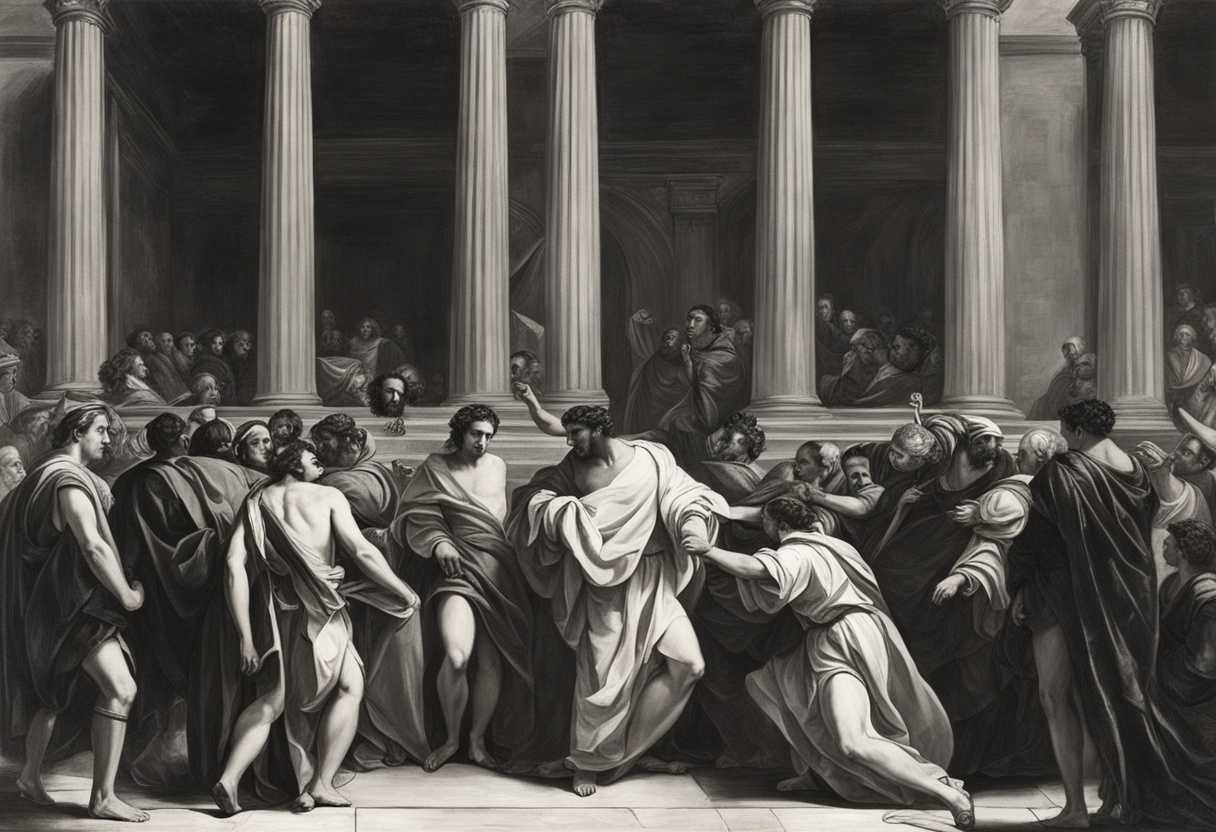
Setting the Scene for Luke 23:4
In Luke chapter 23, we find a pivotal scene taking place in the Praetorium, the official residence of the Roman governor Pontius Pilate in Jerusalem. The room is filled with tension as Pilate questions Jesus, who has been brought before him by the chief priests and elders. The atmosphere is heavy with the weight of the impending trial and the conflicting interests at play.
Pontius Pilate, the Roman governor, sits on his judgment seat, flanked by his guards and advisors. Jesus, the central figure in this scene, stands before Pilate, calm and composed despite the accusations hurled against him. The chief priests and elders, driven by their desire to see Jesus condemned, press Pilate to pass judgment on him.
The Praetorium is a grand yet imposing setting, with marble floors and intricate Roman architecture. The room is dimly lit, casting shadows on the faces of those present, adding to the somber mood of the occasion. As the dialogue unfolds between Pilate, Jesus, and the religious leaders, the fate of Jesus hangs in the balance, setting the stage for the dramatic events that will soon follow.
What is Luke 23:4 about?
It is quite remarkable to see how this verse reaffirms the innocence of Jesus, especially in the midst of such turmoil and accusations. Imagine the strength and courage it took for Jesus to remain steadfast in his innocence while facing intense scrutiny and resistance. This moment not only fulfills the prophecy of the Messiah’s innocence but also serves as a powerful reminder of the unwavering truth that Jesus embodied throughout his earthly journey. Pilate declared Jesus innocent in the grand narrative of salvation and redemption, signifying immense significance. This declaration not only speaks to the purity and righteousness of Jesus but also serves as a pivotal moment in the unfolding of God’s divine plan for humanity. Let this verse remind us of the unshakable foundation of truth and righteousness that Jesus stood upon, inspiring us to walk in integrity and grace in our own lives.
Understanding what Luke 23:4 really means
In the midst of the tumultuous trial of Jesus before Pontius Pilate, a pivotal moment unfolds in Luke 23:4. Here, Pilate, the Roman governor, addresses the chief priests and the crowd, delivering a profound statement that reverberates through the ages. He proclaims, “I find no basis for a charge against this man,” signaling his initial judgment that Jesus is innocent of any crime deserving of death. This declaration encapsulates a moment of clarity amidst the chaos, where truth and righteousness stand in stark contrast to the clamor of false accusations and political maneuvering.
Pilate’s words echo a timeless theme of innocence in the face of unjust condemnation, a narrative that resonates with individuals across cultures and generations. The struggle between truth and falsehood, integrity and expediency, is a moral quandary that continues to confront humanity in various forms. How often do we find ourselves in situations where the truth is obscured by the noise of deception and manipulation, where standing firm in righteousness requires unwavering courage?
In the broader biblical context, Pilate’s acknowledgment of Jesus’ innocence aligns with the prophetic words of Isaiah 53:9, which foretold the suffering servant who “had done no violence, nor was any deceit in his mouth.” This parallel underscores the divine orchestration of events, where the purity and blamelessness of Jesus shine forth amidst the darkness of betrayal and injustice. It serves as a poignant reminder of the unwavering truth that transcends human frailty and deceit.
As we contemplate the implications of Luke 23:4 in our lives today, we are confronted with the sobering reality of injustice and the imperative of moral courage. Just as Pilate grappled with the weight of his decision, we too face moments that demand ethical clarity and steadfast resolve. Consider a contemporary scenario where someone is falsely accused at work, pressured to accept blame despite their innocence. How would you respond in such a situation? How can you embody the principles of truth and integrity in your interactions and decisions?
The collective pressure exerted by “the chief priests and the crowd” serves as a cautionary tale against the perils of groupthink and the erosion of individual moral judgment. It prompts us to reflect on the dangers of succumbing to societal pressures at the expense of truth and justice. In a world where voices clamor for conformity and expedience, the example set forth in Luke 23:4 beckons us to stand firm in our convictions, even when the tide of public opinion may seem overwhelming.
By delving into the depths of this verse and its surrounding narrative, we glean not only historical insight but also timeless wisdom for navigating the complexities of our own lives. Let us draw inspiration from Pilate’s fleeting moment of clarity, using it as a beacon to guide our actions and decisions. May we find the strength to uphold truth and justice in the face of adversity, championing righteousness in a world often shrouded in shadows of deceit and falsehood.
What is truth?
Pilate states in this verse that he finds no basis for the charges brought against Jesus. From this statement, we can understand that truth is grounded in fact, evidence, and righteousness. Pilate’s declaration that he finds no guilt in Jesus implies that truth is not subjective or based on personal opinions, but rooted in objective reality and fairness. This reinforces the idea that truth is absolute and stands firm in the face of scrutiny and examination.
Furthermore, Pilate’s assertion that he finds no fault in Jesus suggests that truth is pure and untainted by deception or falsehood. It reveals that truth is transparent and unchangeable, shining light on the honesty and integrity that define it. Pilate’s acknowledgement of Jesus’ innocence underscores the importance of seeking and upholding the truth, even when it challenges popular beliefs or goes against the tide of public opinion. This verse ultimately serves as a reminder that truth is not only a concept but a guiding principle that enlightens and directs our actions and decisions.
Application
Just as Jesus faced Pilate with unwavering resolve, let us tackle our challenges with the same determination. Stand tall in your beliefs, even when the world pushes against you. Let Luke 23:4 be your beacon of strength in times of doubt. How will you choose to stand firm in your faith when tested?

Reverend Michael Johnson is an experienced Church Minister with a profound expertise in spirituality and guidance. With a serene presence and a compassionate heart, he has faithfully served his congregation for over 20 years, leading them on a spiritual journey towards inner peace and enlightenment. Reverend Johnson’s extensive knowledge of religious philosophies and profound understanding of human nature have made him a trusted confidant and mentor to many, as he seamlessly weaves his profound wisdom into life teachings. Reverend Johnson’s calming demeanor and empathetic nature continue to uplift and heal souls, nurturing a sense of unity and tranquility within his community.