
Luke 24:13-17 is about two disciples walking on the road to Emmaus feeling discouraged and confused after the death of Jesus, symbolizing the journey of faith and how sometimes we may not recognize Jesus in our midst during difficult times.
13 That very day two of them were going to a village named Emmaus, about seven miles from Jerusalem,
14 And they were talking with each other about all these things that had happened.
15 While they were talking and discussing together, Jesus himself drew near and went with them.
16 But their eyes were kept from recognizing him.
17 And he said to them, “What is this conversation that you are holding with each other as you walk?” And they stood still, looking sad.
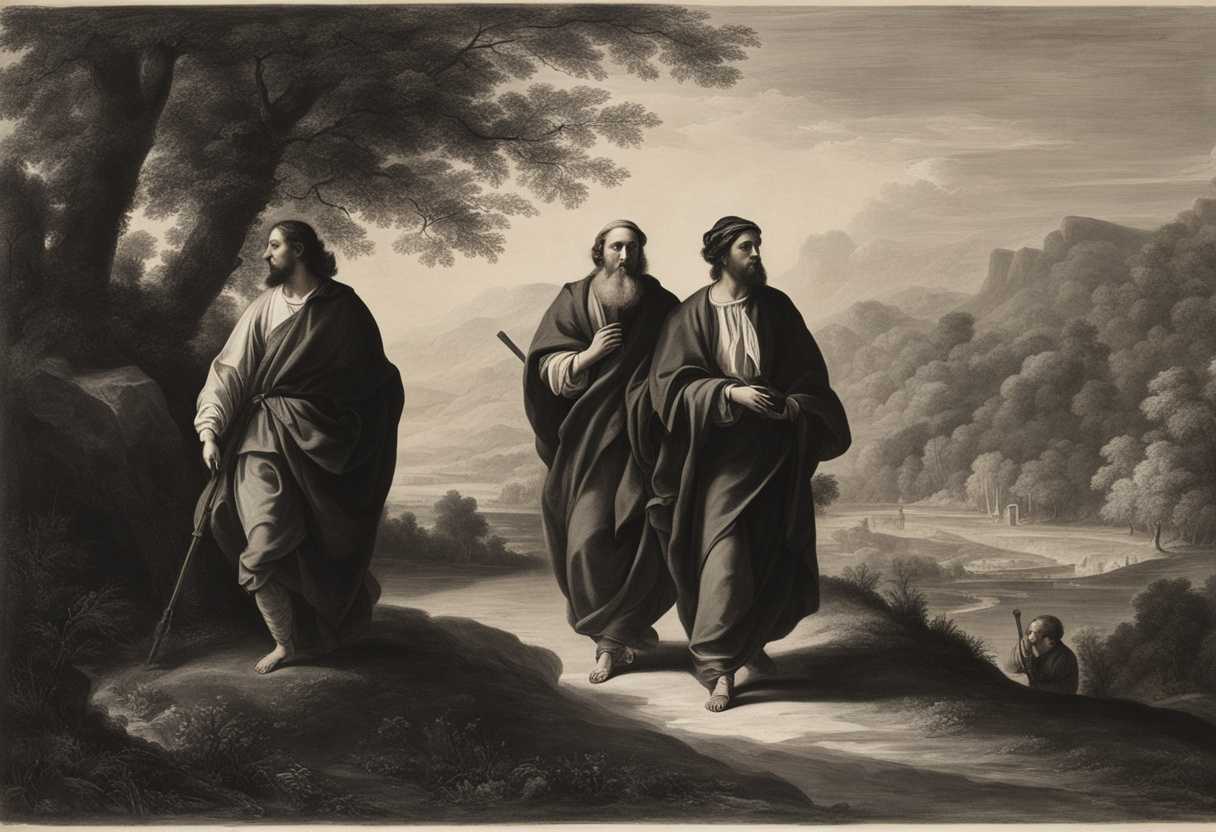
Setting the Scene for Luke 24:13-17
In Luke chapter 24, we find two disciples walking on the road to Emmaus, a village about seven miles from Jerusalem. The disciples are Cleopas and another unnamed disciple, who are deep in conversation about the recent events surrounding Jesus’ crucifixion and the reports of His resurrection. They are filled with confusion, sadness, and disbelief as they try to make sense of all that has transpired.
The scene is set on a dusty road, with the sun beginning to set in the distance, casting a warm glow over the landscape. The disciples are walking slowly, their heads bowed, their voices filled with emotion as they recount the events of the past few days. The air is filled with a sense of heaviness and uncertainty as they grapple with the implications of Jesus’ death and the rumors of His resurrection. Little do they know that their journey and conversation will soon be interrupted by a miraculous encounter with the risen Christ, who will open their eyes to the truth and transform their sorrow into joy.
What is Luke 24:13-17 about?
This verse highlights a powerful and profound moment in the Bible where Jesus appears incognito to two of His disciples on the road to Emmaus. Despite being in the presence of Jesus Himself, these disciples fail to recognize Him. This raises important questions about the nature of faith, perception, and the way we interact with the divine. How often do we fail to see the presence of God in our daily lives because we are too focused on our own expectations and preconceived notions? What barriers do we have in our hearts and minds that prevent us from recognizing the divine in our midst?
This verse serves as a reminder that sometimes God may be working in our lives in ways we do not expect or recognize. It challenges us to look beyond the surface and to be open to the presence of the divine in all aspects of our lives. It also emphasizes the importance of faith and spiritual discernment in recognizing God’s presence, even when it may not be immediately obvious. How can we cultivate a deeper awareness of God’s presence in our lives, even when things may seem uncertain or unclear? This verse calls us to reflect on our own spiritual awareness and to seek out the presence of God in all situations, knowing that He is always with us, even when we may not immediately recognize Him.
Understanding what Luke 24:13-17 really means
The passage in Luke 24:13-17 paints a vivid picture of two disciples journeying to Emmaus, engrossed in conversation about the recent crucifixion of Jesus and the reports of His resurrection. This setting is crucial as it unfolds on the day of Jesus’ resurrection, capturing the confusion and uncertainty that enveloped His followers in the wake of these extraordinary events. The disciples’ dialogue reflects the human need for community and shared reflection in processing significant occurrences, highlighting the power of communal discussion in navigating life’s complexities.
As the disciples walk, Jesus Himself joins them, symbolizing His unwavering presence alongside His followers, even when they are oblivious to His nearness. The phrase “But they were kept from recognizing him” underscores the notion that spiritual discernment often unfolds in God’s appointed time, reminding us of the importance of patience and trust in divine revelations. This encounter on the road to Emmaus echoes similar instances in the Bible, such as Mary Magdalene’s recognition of Jesus when He calls her by name in John 20:14-16, emphasizing the intimate and personal nature of Jesus’ relationship with His disciples.
Hebrews 13:2 further complements this theme by urging hospitality towards strangers, as divine encounters can manifest in ordinary interactions. The relevance of this passage to contemporary audiences is profound, urging us to view our lives as spiritual journeys akin to the disciples’ physical trek. It prompts us to embrace community and open dialogue, recognizing the value of discussing our doubts and uncertainties with fellow believers.
In our modern lives, we may overlook the presence of Jesus amidst our struggles and joys, much like the disciples failed to recognize Him on the road to Emmaus. This passage serves as a gentle nudge for us to heighten our awareness and openness to divine encounters in the mundane moments of our daily routines. Consider a person grappling with challenges, unaware that the love and support surrounding them are manifestations of God’s companionship. Just as the disciples’ eyes were opened to Jesus’ presence in retrospect, may we too cultivate a discerning spirit to perceive His hand at work in our lives.
In conclusion, Luke 24:13-17 offers profound lessons on community, spiritual insight, and the concealed presence of Jesus in our lives. It beckons us to embrace communal dialogue, remain receptive to divine encounters, and actively seek the presence of Jesus in the ordinary occurrences of our existence. Let us heed the call to walk alongside our fellow travelers, engage in meaningful conversations, and cultivate a discerning spirit that recognizes the subtle yet profound ways in which Jesus walks with us each day.
How can we recognize Jesus in our midst today?
We can recognize Jesus in our midst today by being open to encountering Him in unexpected ways and places. We too may overlook His presence in our daily lives, just as the two disciples on the road to Emmaus did not initially recognize Jesus when He walked with them. It is important to approach every person and situation with eyes of faith and a heart open to the possibility of encountering Christ.
Furthermore, we can recognize Jesus by attentively listening to His words and allowing them to ignite a fire within our hearts, just as the disciples’ hearts were burning as Jesus explained the Scriptures to them. We can cultivate a deeper awareness of Jesus’ presence with us and allow His teachings to transform our lives by spending time in prayer, reading the Bible, and participating in the sacraments.
Additionally, we can recognize Jesus in our midst today through acts of hospitality and service to others. When the disciples invited Jesus to stay with them and shared a meal, their eyes were opened to His true identity. We create opportunities for Jesus to reveal Himself to us in the faces of our brothers and sisters by reaching out to those in need, showing kindness and compassion, and welcoming others with love.
Application
Just as we navigate our demanding work schedules and prioritize our cherished family time, let us also make room for encounters with Christ in our daily hustle. Take a moment to ponder on how you can invite the Lord into your everyday moments – through reading the Bible, conversing in prayer, or lending a helping hand to those around you. Will you choose to welcome the presence of Christ into your midst, holding faith that He walks alongside you in every step of your journey?

Reverend Michael Johnson is an experienced Church Minister with a profound expertise in spirituality and guidance. With a serene presence and a compassionate heart, he has faithfully served his congregation for over 20 years, leading them on a spiritual journey towards inner peace and enlightenment. Reverend Johnson’s extensive knowledge of religious philosophies and profound understanding of human nature have made him a trusted confidant and mentor to many, as he seamlessly weaves his profound wisdom into life teachings. Reverend Johnson’s calming demeanor and empathetic nature continue to uplift and heal souls, nurturing a sense of unity and tranquility within his community.