
Luke 24:13-24 is about two disciples encountering Jesus on the road to Emmaus after His resurrection, yet not recognizing Him until He revealed Himself, symbolizing the importance of faith and spiritual discernment in recognizing the presence of Christ in our lives.
13 That very day two of them were going to a village named Emmaus, about seven miles from Jerusalem,
14 And they were talking with each other about all these things that had happened.
15 While they were talking and discussing together, Jesus himself drew near and went with them.
16 But their eyes were kept from recognizing him.
17 And he said to them, “What is this conversation that you are holding with each other as you walk?” And they stood still, looking sad.
18 Then one of them, named Cleopas, answered him, “Are you the only visitor to Jerusalem who does not know the things that have happened there in these days?”
19 And he said to them, “What things?” And they said to him, “Concerning Jesus of Nazareth, a man who was a prophet mighty in deed and word before God and all the people,
20 and how our chief priests and rulers delivered him up to be condemned to death, and crucified him.
21 But we had hoped that he was the one to redeem Israel. Yes, and besides all this, it is now the third day since these things happened.
22 Moreover, some women of our company amazed us. They were at the tomb early in the morning,
23 and did not find his body, they came back saying that they had even seen a vision of angels, who said that he was alive.
24 Some of those who were with us went to the tomb and found it just as the women had said, but him they did not see.”
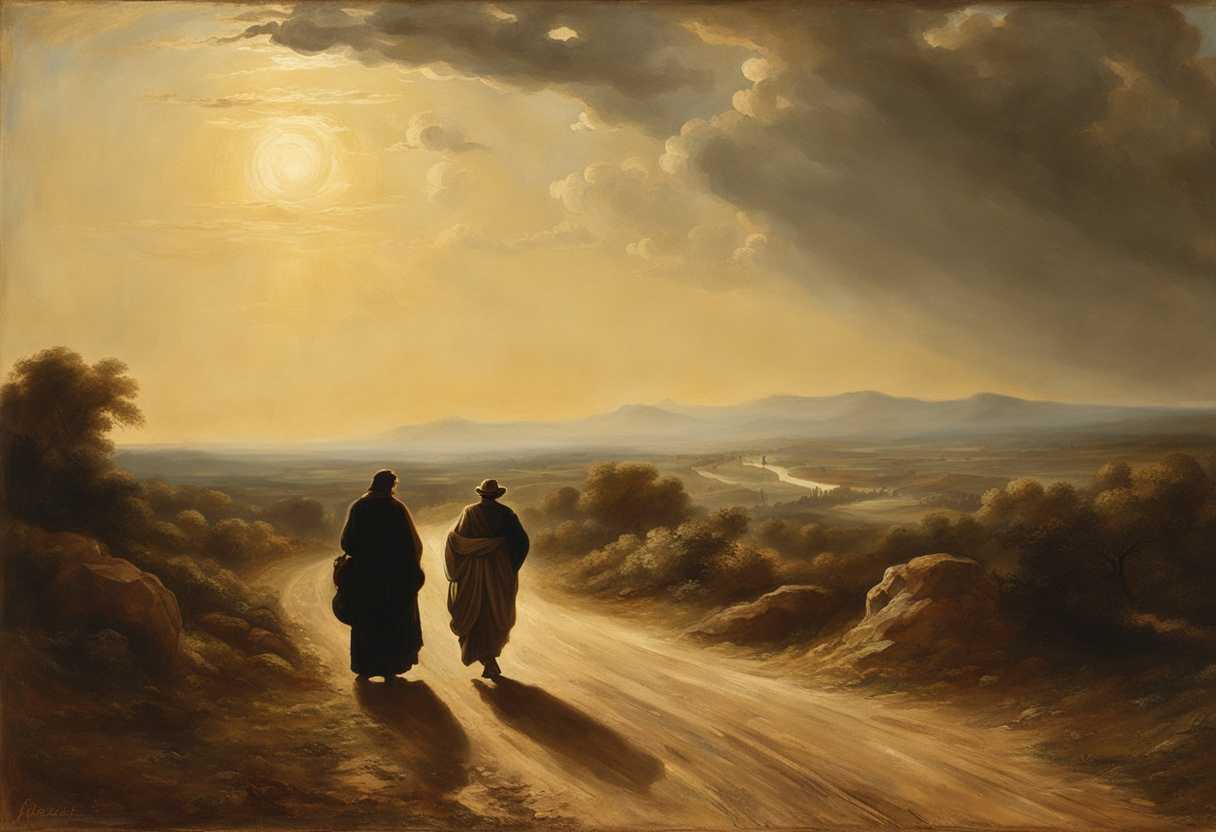
Setting the Scene for Luke 24:13-24
In Luke 24:13-24, we find two disciples walking on the road to Emmaus, a village about seven miles from Jerusalem. These disciples are Cleopas and another unnamed disciple. They are discussing the recent events in Jerusalem, particularly the crucifixion of Jesus and the rumors of His resurrection. As they walk, they are filled with confusion and sadness, trying to make sense of all that has transpired.
The scene is set on a dusty road, with the sun beginning to set in the distance. The disciples are deep in conversation, their voices filled with emotion as they recount the events of the past few days. Suddenly, a stranger joins them on the road. It is Jesus Himself, but they do not recognize Him. He asks them what they are discussing, and they express their disbelief at the news of Jesus’ resurrection. Jesus then begins to explain the Scriptures to them, starting from Moses and all the Prophets, showing how everything pointed to His suffering and resurrection.
As they continue walking, the disciples are captivated by Jesus’ words, feeling their hearts burn within them. Finally, they reach Emmaus, and Jesus acts as if He is going further. However, the disciples invite Him to stay with them, and as they sit down to eat, Jesus takes bread, blesses it, breaks it, and gives it to them. In that moment, their eyes are opened, and they recognize Him as the risen Lord before He vanishes from their sight.
What is Luke 24:13-24 about?
Isn’t it incredible how Jesus chose an ordinary road to reveal Himself to His disciples? It’s a reminder that He meets us where we are, even in the midst of our travels and daily activities. Jesus is always walking with us as we journey through life, ready to reveal Himself in unexpected ways.
Through this interaction on the road to Emmaus, Jesus shows us the importance of Scripture and communion. He opens the disciples’ minds to understand the Scriptures, demonstrating how the Word of God can truly illuminate our hearts and minds. Similarly, in partaking in communion, Jesus reveals His presence and sustenance for our journey. Just like the disciples recognized Jesus in the breaking of the bread, we too can encounter Him in the Eucharist and experience His tangible presence in our lives.
So as we travel through the various roads of our lives, let us remain open to encountering Jesus along the way. Let Scripture guide us and nourish our souls, and let us deepen our connection with Christ by partaking in communion. May we be like the disciples on the road to Emmaus, continually seeking and recognizing the presence of our Lord in our midst.
Understanding what Luke 24:13-24 really means
The passage in Luke 24:13-24 recounts the journey of two disciples on the road to Emmaus following Jesus’ resurrection. As they discuss the recent events of Jesus’ crucifixion and the reports of His resurrection, their confusion and uncertainty mirror the emotions felt by many of Jesus’ followers at that time. The setting on the day of Jesus’ resurrection adds depth to the narrative, emphasizing the profound impact of these events on the disciples.
A key phrase in this passage, “They were kept from recognizing him,” suggests a divine intervention where the disciples’ perception of Jesus was temporarily obscured. This notion symbolizes how our doubts and preconceptions can blind us to God’s presence in our lives, urging us to reflect on the ways in which we may overlook His workings in our midst. Jesus’ question, “What things?” demonstrates His desire for open communication with His followers, even in moments of confusion or despair, inviting us to express our thoughts and emotions honestly before Him.
Drawing parallels with other biblical passages, such as John 20:14-16 where Mary Magdalene initially did not recognize Jesus after His resurrection, underscores the theme of spiritual blindness and the personal nature of Jesus’ interactions with His followers. Additionally, Hebrews 13:2 reminds us of the importance of showing hospitality to strangers, as we may unknowingly encounter manifestations of Jesus in unexpected ways.
The relevance of this passage to contemporary audiences lies in its exploration of doubt, recognition, and revelation. Many individuals grapple with acknowledging God’s presence in their lives, particularly during challenging circumstances. It serves as a poignant reminder to remain open and communicative with God, trusting that He accompanies us on our journey even when His presence may not be immediately apparent.
Consider a scenario where someone facing adversity feels isolated and questions their faith. They may overlook the gestures of kindness from others as mere coincidences, failing to recognize them as manifestations of God’s presence. Similar to the disciples on the road to Emmaus, they may only realize in retrospect that God was alongside them all along, offering guidance and solace through the people around them.
In conclusion, the passage in Luke 24:13-24 underscores the significance of faith and receptivity to God’s presence in our lives. It serves as a poignant reminder that even when we do not perceive Him, God walks beside us, providing guidance and comfort throughout our journey. Let us heed this lesson, remaining attuned to the subtle ways in which God reveals Himself in our lives, even amidst uncertainty and doubt.
How can we recognize Jesus in our midst?
We need to have our hearts open to Jesus and be willing to listen to His teachings in order to recognize Him in our midst. Sometimes we may not see Him at work in our lives until we take the time to truly understand His word and reflect on His presence, just as the two disciples on the road to Emmaus did not immediately recognize Jesus. We create an atmosphere where we can recognize Jesus and His teachings in our everyday lives by engaging in prayer, studying the Scriptures, and participating in acts of service and love.
Jesus often reveals Himself in unexpected ways and through unexpected people. It is essential for us to remain open-minded and receptive to different forms of His presence. We reflect Jesus in our own actions and become more capable of recognizing Him in the actions of those around us by being attuned to the needs of others, showing compassion, and practicing kindness. Through our interactions with others and our commitment to following His teachings, we can feel the presence of Jesus in our midst and witness His transformative power at work in our lives and communities.
Application
Let’s walk the road to Emmaus with hearts open and minds engaged, just like the disciples. Let’s dive into deep conversations about what moves us and fuels our spirits, seeking to encounter the divine in our midst. Like the disciples, let’s allow our encounters to transform us, igniting a fire within us for a deeper connection with Christ. Will you join in this journey, ready to be surprised by where and how you may encounter the sacred in your daily life?

Reverend Michael Johnson is an experienced Church Minister with a profound expertise in spirituality and guidance. With a serene presence and a compassionate heart, he has faithfully served his congregation for over 20 years, leading them on a spiritual journey towards inner peace and enlightenment. Reverend Johnson’s extensive knowledge of religious philosophies and profound understanding of human nature have made him a trusted confidant and mentor to many, as he seamlessly weaves his profound wisdom into life teachings. Reverend Johnson’s calming demeanor and empathetic nature continue to uplift and heal souls, nurturing a sense of unity and tranquility within his community.