
Luke 24:13-31 is about Jesus revealing Himself to two disciples on the road to Emmaus, illustrating the importance of recognizing Christ’s presence and teachings even during times of confusion and doubt.
13 That very day two of them were going to a village named Emmaus, about seven miles from Jerusalem,
14 And they were talking with each other about all these things that had happened.
15 While they were talking and discussing together, Jesus himself drew near and went with them.
16 But their eyes were kept from recognizing him.
17 And he said to them, “What is this conversation that you are holding with each other as you walk?” And they stood still, looking sad.
18 Then one of them, named Cleopas, answered him, “Are you the only visitor to Jerusalem who does not know the things that have happened there in these days?”
19 And he said to them, “What things?” And they said to him, “Concerning Jesus of Nazareth, a man who was a prophet mighty in deed and word before God and all the people,
20 and how our chief priests and rulers delivered him up to be condemned to death, and crucified him.
21 But we had hoped that he was the one to redeem Israel. Yes, and besides all this, it is now the third day since these things happened.
22 Moreover, some women of our company amazed us. They were at the tomb early in the morning,
23 and did not find his body, they came back saying that they had even seen a vision of angels, who said that he was alive.
24 Some of those who were with us went to the tomb and found it just as the women had said, but him they did not see.”
25 And he said to them, “O foolish ones, and slow of heart to believe all that the prophets have spoken!
26 Was it not necessary that the Christ should suffer these things and enter into his glory?”
27 And beginning with Moses and all the Prophets, he interpreted to them in all the Scriptures the things concerning himself.
28 So they drew near to the village to which they were going. He acted as if he were going farther,
29 but they urged him strongly, saying, “Stay with us, for it is toward evening and the day is now far spent.” So he went in to stay with them.
30 When he was at table with them, he took the bread and blessed and broke it and gave it to them.
31 And their eyes were opened, and they recognized him. And he vanished from their sight.
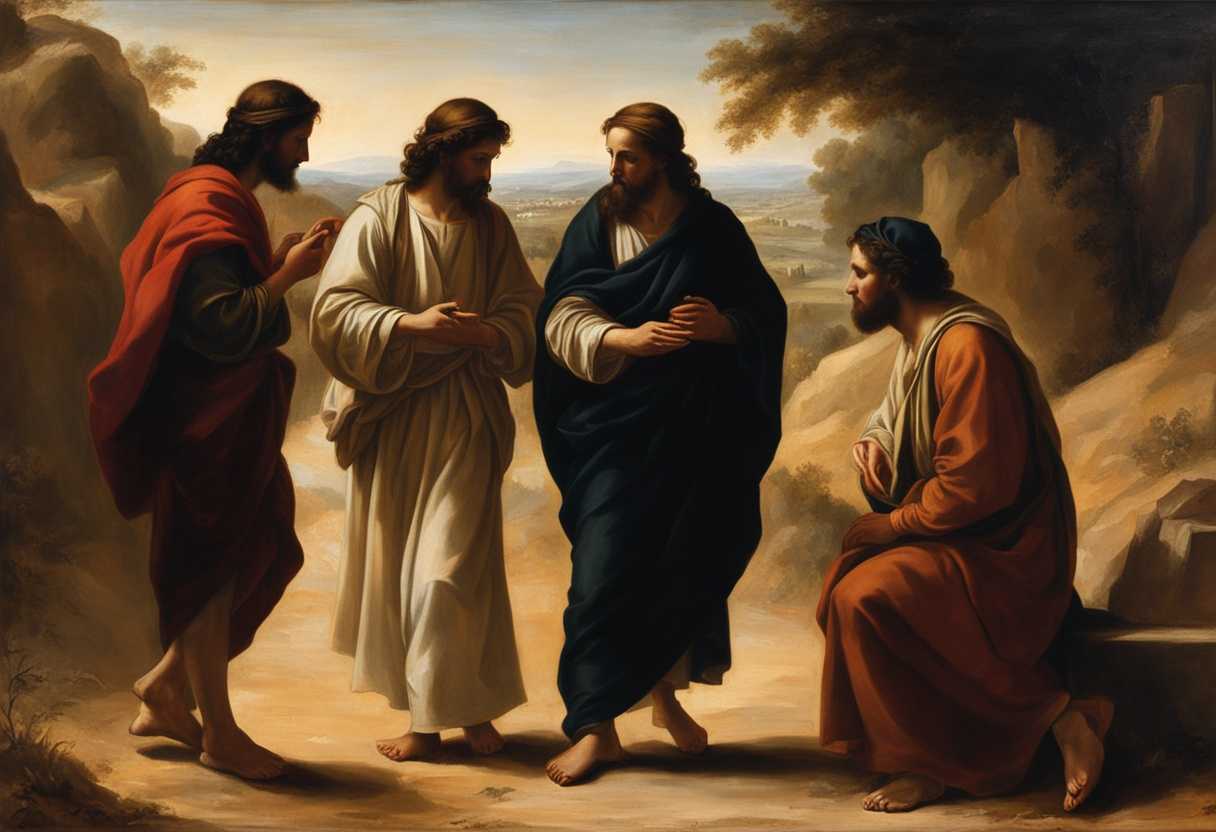
Setting the Scene for Luke 24:13-31
In Luke chapter 24, we find two disciples walking on the road to Emmaus, a village about seven miles from Jerusalem. These disciples are Cleopas and another unnamed disciple, who are discussing the recent events surrounding Jesus’ crucifixion and the reports of His resurrection. They are filled with confusion and sadness, trying to make sense of all that has transpired.
As they walk, a stranger joins them, who is actually the resurrected Jesus, but they do not recognize Him. Jesus engages them in conversation, asking about the things that have been troubling them. The disciples share their doubts and struggles, not realizing they are speaking to the very person they are discussing.
Upon reaching Emmaus, the disciples invite the stranger to stay with them since it is getting late. As they sit down to eat, Jesus takes bread, blesses it, breaks it, and gives it to them. In that moment, their eyes are opened, and they recognize Him as the risen Lord. Overjoyed and amazed, they realize that they have been in the presence of Jesus all along.
What is Luke 24:13-31 about?
What a powerful and beautiful moment in the Bible this verse captures! Jesus walks alongside the two disciples on the road to Emmaus, listening to their doubts and confusion and gently correcting their understanding by revealing how He is woven throughout Scripture. This interaction shows the importance of studying Scripture to understand God’s plan and recognizing Jesus in every part of it. It also emphasizes the significance of having a personal relationship with Jesus, allowing Him to walk beside us and reveal Himself to us in intimate ways.
Furthermore, the act of communion in this verse symbolizes the deeper connection we have with Jesus through partaking in His body and blood. Jesus illustrates the importance of remembering His sacrifice and being in communion with Him and with one another by sharing this meal together. This verse serves as a reminder for us to seek Jesus in all aspects of our lives, to allow Him to reveal Himself through Scripture, and to partake in communion as a way to commune with Him and with our fellow believers. How wonderful it is that Jesus meets us where we are, walks alongside us, and reveals Himself to us in ways that draw us closer to Him and to one another.
Understanding what Luke 24:13-31 really means
The encounter on the road to Emmaus, as described in Luke 24:13-31, is a profound moment where two disciples meet the resurrected Jesus but fail to recognize Him until He breaks bread with them. This event takes place on the same day as Jesus’ resurrection, emphasizing the immediate impact of His victory over death. The phrase “Their eyes were kept from recognizing him” suggests a divine purpose in their initial inability to see Jesus, highlighting the mystery and revelation inherent in matters of faith. Jesus’ act of interpreting the Scriptures to reveal how they point to Himself demonstrates the continuity and fulfillment of God’s plan throughout history.
When their eyes are finally opened, and they recognize Him, it symbolizes a spiritual awakening and understanding, often associated with the breaking of bread, signifying communion and fellowship. This moment of recognition is pivotal in the disciples’ journey of faith, mirroring the personal revelation experienced by Mary Magdalene in John 20:14-16 when she recognizes Jesus upon hearing her name. Acts 2:42 underscores the importance of communal worship and fellowship, as the early Christians devoted themselves to the apostles’ teaching and the breaking of bread. Similarly, 1 Corinthians 2:14 highlights that spiritual truths are discerned through the Spirit, aligning with the disciples’ eventual recognition of Jesus through divine revelation.
In today’s context, the theme of spiritual blindness and revelation resonates strongly. Just as the disciples were initially blind to Jesus’ presence, people today can be unaware of God’s work in their lives until a moment of revelation opens their eyes. The significance of studying Scripture is underscored by Jesus’ explanation of the Scriptures to the disciples, emphasizing the importance of understanding God’s plan to recognize His presence in our lives. The act of breaking bread as the moment of recognition highlights the importance of communal worship and the sacraments in experiencing God’s presence and deepening our faith.
Consider a scenario where an individual grappling with a difficult decision finds clarity and peace during a church service through the pastor’s sermon and the act of communion. This experience mirrors the disciples’ eyes being opened to recognize Jesus and illustrates how God can reveal Himself through community and worship. In conclusion, this passage encourages believers to seek understanding through Scripture, remain open to divine revelation, and value the communal aspects of faith. It assures us that Jesus is always present, even when not immediately recognized, and that spiritual awakening can come through fellowship and the breaking of bread.
How can we recognize Jesus in our midst?
Jesus joins the two disciples on their journey to Emmaus, but they do not recognize him at first. It is only after he breaks bread with them that their eyes are opened, and they realize it is Jesus who has been with them all along.
Similarly, we can recognize Jesus in our midst through moments of shared fellowship and communion. When we gather together with others in love and unity, breaking bread and sharing in a meal, Jesus is there with us, just as he was with the disciples at Emmaus. It is in these moments of connection and community that we may come to see Jesus among us, revealing himself in ways we may not have initially perceived. We can recognize Jesus in our midst by being open to his presence in our everyday interactions and in the shared moments of grace and kindness that we experience with others. We too may feel a deep sense of peace and understanding when we encounter Jesus in the faces and actions of those around us, just as the disciples’ hearts burned within them as Jesus spoke to them.
Application
Embark on your own modern-day journey to Emmaus by diving into Luke 24:13-31. Let this narrative fuel your passion to connect with Christ in the hustle and bustle of your daily grind. Just as Jesus revealed Himself through the breaking of bread, open your heart to recognizing His presence in the mundane. Are you ready to actively seek and encounter Christ in the little moments of your life, much like the disciples did on their path to Emmaus?

Reverend Michael Johnson is an experienced Church Minister with a profound expertise in spirituality and guidance. With a serene presence and a compassionate heart, he has faithfully served his congregation for over 20 years, leading them on a spiritual journey towards inner peace and enlightenment. Reverend Johnson’s extensive knowledge of religious philosophies and profound understanding of human nature have made him a trusted confidant and mentor to many, as he seamlessly weaves his profound wisdom into life teachings. Reverend Johnson’s calming demeanor and empathetic nature continue to uplift and heal souls, nurturing a sense of unity and tranquility within his community.