
Luke 24:13-53 is about the story of Jesus’ resurrection appearance to two of his disciples on the road to Emmaus, followed by his appearance to the gathered disciples in Jerusalem, emphasizing the fulfillment of Old Testament prophecies and the commissioning of the disciples to preach the gospel to all nations.
13 That very day two of them were going to a village named Emmaus, about seven miles from Jerusalem,
14 And they were talking with each other about all these things that had happened.
15 While they were talking and discussing together, Jesus himself drew near and went with them.
16 But their eyes were kept from recognizing him.
17 And he said to them, “What is this conversation that you are holding with each other as you walk?” And they stood still, looking sad.
18 Then one of them, named Cleopas, answered him, “Are you the only visitor to Jerusalem who does not know the things that have happened there in these days?”
19 And he said to them, “What things?” And they said to him, “Concerning Jesus of Nazareth, a man who was a prophet mighty in deed and word before God and all the people,
20 and how our chief priests and rulers delivered him up to be condemned to death, and crucified him.
21 But we had hoped that he was the one to redeem Israel. Yes, and besides all this, it is now the third day since these things happened.
22 Moreover, some women of our company amazed us. They were at the tomb early in the morning,
23 and did not find his body, they came back saying that they had even seen a vision of angels, who said that he was alive.
24 Some of those who were with us went to the tomb and found it just as the women had said, but him they did not see.”
25 And he said to them, “O foolish ones, and slow of heart to believe all that the prophets have spoken!
26 Was it not necessary that the Christ should suffer these things and enter into his glory?”
27 And beginning with Moses and all the Prophets, he interpreted to them in all the Scriptures the things concerning himself.
28 So they drew near to the village to which they were going. He acted as if he were going farther,
29 but they urged him strongly, saying, “Stay with us, for it is toward evening and the day is now far spent.” So he went in to stay with them.
30 When he was at table with them, he took the bread and blessed and broke it and gave it to them.
31 And their eyes were opened, and they recognized him. And he vanished from their sight.
32 They said to each other, “Did not our hearts burn within us while he talked to us on the road, while he opened to us the Scriptures?”
33 And they rose that same hour and returned to Jerusalem. And they found the eleven and those who were with them gathered together,
34 saying, “The Lord has risen indeed, and has appeared to Simon!”
35 Then they told what had happened on the road, and how he was known to them in the breaking of the bread.
36 As they were talking about these things, Jesus himself stood among them, and said to them, “Peace to you!”
37 But they were startled and frightened and thought they saw a spirit.
38 And he said to them, “Why are you troubled, and why do doubts arise in your hearts?
39 See my hands and my feet, that it is I myself. Touch me, and see. For a spirit does not have flesh and bones as you see that I have.”
40 And when he had said this, he showed them his hands and his feet.
41 And while they still disbelieved for joy and were marveling, he said to them, “Have you anything here to eat?”
42 They gave him a piece of broiled fish,
43 and he took it and ate before them.
44 Then he said to them, “These are my words that I spoke to you while I was still with you, that everything written about me in the Law of Moses and the Prophets and the Psalms must be fulfilled.”
45 Then he opened their minds to understand the Scriptures,
46 and said to them, “Thus it is written, that the Christ should suffer and on the third day rise from the dead,
47 and that repentance for the forgiveness of sins should be proclaimed in his name to all nations, beginning from Jerusalem.
48 You are witnesses of these things.
49 And behold, I am sending the promise of my Father upon you. But stay in the city until you are clothed with power from on high.
50 Then he led them out as far as Bethany, and lifting up his hands he blessed them.
51 While he blessed them, he parted from them and was carried up into heaven.
52 And they worshiped him and returned to Jerusalem with great joy,
53 and were continually in the temple blessing God.
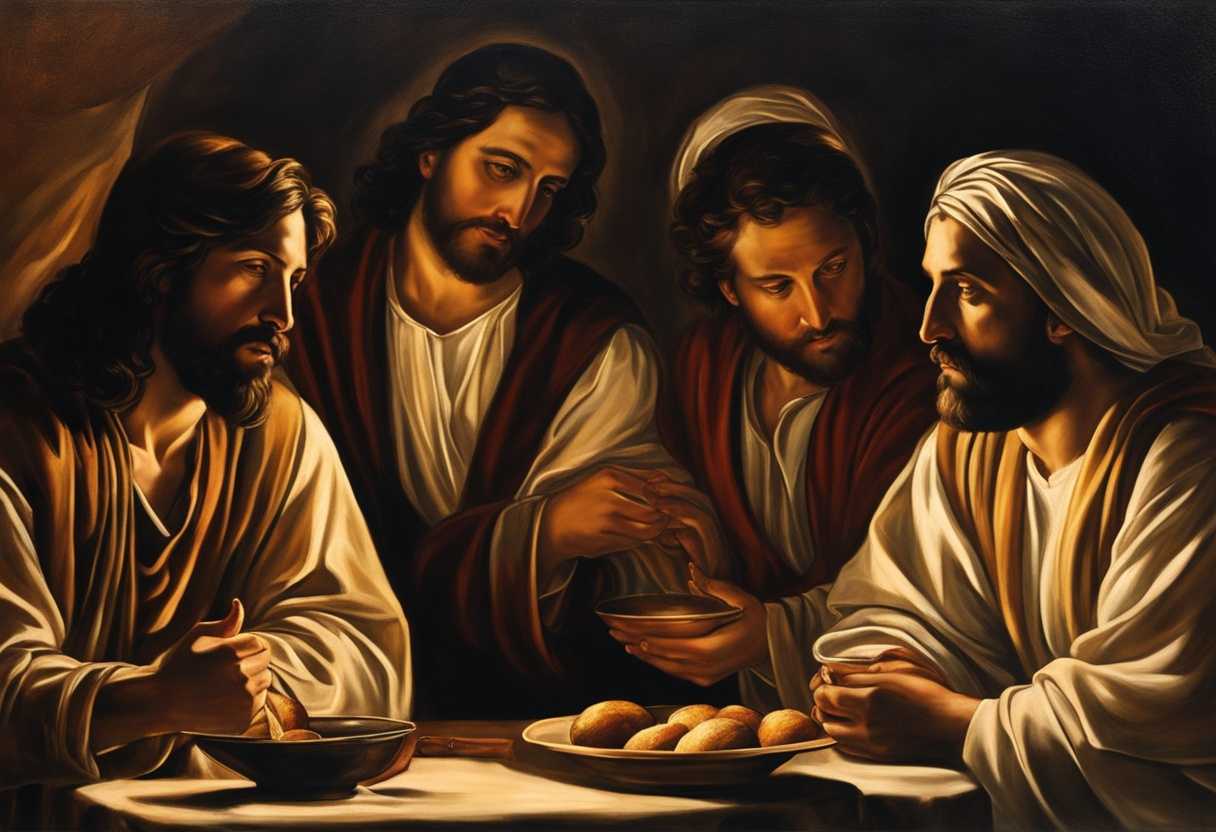
Setting the Scene for Luke 24:13-53
In Luke chapter 24, we find the scene where two of Jesus’ disciples are walking on the road to Emmaus, a village about seven miles from Jerusalem. These disciples are Cleopas and another unnamed disciple. They are walking and discussing the recent events surrounding Jesus’ crucifixion and the reports of His resurrection. They are filled with confusion and sadness, trying to make sense of all that has happened.
As they are walking, a stranger joins them on the road. This stranger is actually Jesus, but the disciples do not recognize Him. Jesus engages them in conversation, asking them what they are discussing. They share their thoughts and feelings with Him, still unaware of His true identity. Jesus then begins to explain to them all the prophecies in the Scriptures that point to Him as the Messiah. It is not until they reach Emmaus and sit down to eat together that their eyes are opened, and they realize it is Jesus who has been with them all along.
The scene is set on a dusty road leading to Emmaus, with the disciples walking alongside Jesus, unaware of who He truly is. The atmosphere is heavy with confusion and sorrow, but as Jesus reveals Himself to them through the Scriptures and in the breaking of bread, their hearts are filled with joy and understanding. This encounter on the road to Emmaus serves as a powerful reminder of Jesus’ presence with His disciples, even in the midst of their doubts and struggles.
What is Luke 24:13-53 about?
This verse encapsulates the profound concept of faith, hope, and the omnipresence of God. It highlights the transformative power of belief and the ways in which divine beings can manifest themselves in our lives. The appearance of Jesus to the disciples on the road to Emmaus and later to the eleven disciples is a poignant reminder that even in moments of doubt or despair, God is always present, guiding us on our journey and revealing Himself in unexpected ways.
Imagine walking along a road, consumed by confusion and uncertainty, only to have Jesus Himself walk beside you, offering clarity and reassurance. This verse speaks to the idea that divine intervention is not limited by time or space, and that God can reveal Himself to us in the most unexpected of places. Jesus underscores the importance of faith and the enduring power of belief by appearing to the disciples in various forms. We can find moments of revelation and comfort in our own lives if only we open our hearts to the possibility of divine presence, just as Jesus revealed Himself to the disciples.
Understanding what Luke 24:13-53 really means
The passage in Luke 24:13-53 delves into the post-resurrection events, particularly focusing on the journey to Emmaus and Jesus’ appearances to His disciples. It brings to light essential themes of revelation, understanding, and the fulfillment of prophecy. One striking phrase, “Their eyes were kept from recognizing him” (v. 16), signifies the spiritual blindness that can hinder us from perceiving Jesus in our lives, emphasizing the necessity of divine intervention for true recognition. It prompts us to ponder on how often we may miss encountering Christ due to our own spiritual blindness.
Another poignant phrase, “Did not our hearts burn within us while he talked to us on the road?” (v. 32), captures the transformative impact of Jesus’ words and presence. It speaks to the inner stirring and awakening that occurs when we engage with Christ, urging us to reflect on the profound effect His teachings can have on our hearts and minds. Furthermore, “He opened their minds to understand the Scriptures” (v. 45) underscores the vital role of divine revelation in comprehending the depths of God’s Word, emphasizing that genuine understanding stems from God’s illumination rather than mere human effort.
In exploring related biblical passages like John 20:19-29, Acts 1:3, and 1 Corinthians 15:3-8, we witness the various accounts of Jesus’ appearances post-resurrection, reinforcing the significance of belief, tangible evidence of His resurrection, and the foundational truth of Christ’s victory over death. These passages collectively affirm the centrality of the resurrection in shaping Christian faith and understanding. The relevance of the journey to Emmaus narrative resonates with us today, serving as a metaphor for our individual spiritual journeys where we may overlook Jesus’ presence beside us. It prompts us to seek deeper comprehension and remain receptive to divine revelations in our daily walk with God.
Consider a scenario where someone, amidst turmoil and confusion, experiences a moment of clarity and peace while engaging with spiritual practices. This epiphany mirrors the disciples’ realization on the road to Emmaus, where their eyes were opened to recognize Jesus’ abiding presence. The passage from Luke 24:13-53 serves as a poignant reminder of the tangible reality of Christ’s resurrection and its profound implications for our faith journey. It beckons us to be attuned to God’s presence in our lives, urging us to delve deeper into His Word for enlightenment and guidance. By meditating on this passage, we find solace and assurance that Jesus walks alongside us, even when His presence may not be immediately apparent, offering unwavering hope and companionship on our spiritual pilgrimage.
What does it mean to recognize Jesus in our midst?
Recognizing Jesus in our midst means being aware of His presence and acknowledging that He is with us. Jesus walks alongside two disciples on the road to Emmaus in the passage, but they do not recognize Him at first. It is only through His actions, such as breaking bread with them, that their eyes are opened and they realize they have been in the presence of the resurrected Christ. This recognition brings them comfort, joy, and a renewed sense of purpose.
When we recognize Jesus in our midst, it allows us to experience His love, peace, and guidance in our lives. Recognizing Christ’s presence can ignite a passion for Him within us, just as Jesus’ words set the disciples’ hearts on fire. It also reminds us that Jesus is always with us, even in times when we may not see or feel Him. Through recognizing Jesus in our midst, we can deepen our relationship with Him and be transformed by His presence.
Application
Reflect on the journey of the two disciples and envision your own path intertwining with that of Christ. Open your heart to the unexpected moments where His presence may be waiting to be discovered. Take the initiative to seek out ways to connect with Him, to break barriers, and spread kindness to those in your circles. Will you embrace this divine opportunity to deepen your connection with Jesus and embody His teachings in your everyday living?

Reverend Michael Johnson is an experienced Church Minister with a profound expertise in spirituality and guidance. With a serene presence and a compassionate heart, he has faithfully served his congregation for over 20 years, leading them on a spiritual journey towards inner peace and enlightenment. Reverend Johnson’s extensive knowledge of religious philosophies and profound understanding of human nature have made him a trusted confidant and mentor to many, as he seamlessly weaves his profound wisdom into life teachings. Reverend Johnson’s calming demeanor and empathetic nature continue to uplift and heal souls, nurturing a sense of unity and tranquility within his community.