
Luke 24:30-32 is about the moment when the disciples’ eyes were opened to recognize Jesus in the breaking of the bread, symbolizing how true understanding and revelation come through spiritual communion with Christ.
30 When he was at table with them, he took the bread and blessed and broke it and gave it to them.
31 And their eyes were opened, and they recognized him. And he vanished from their sight.
32 They said to each other, “Did not our hearts burn within us while he talked to us on the road, while he opened to us the Scriptures?”
Setting the Scene for Luke 24:30-32
In Luke chapter 24, we find the scene where two of Jesus’ disciples are walking on the road to Emmaus, discussing the recent events surrounding Jesus’ crucifixion and the rumors of His resurrection. As they are deep in conversation, a stranger joins them on the road. Unbeknownst to them, this stranger is actually Jesus Himself, but their eyes are kept from recognizing Him.
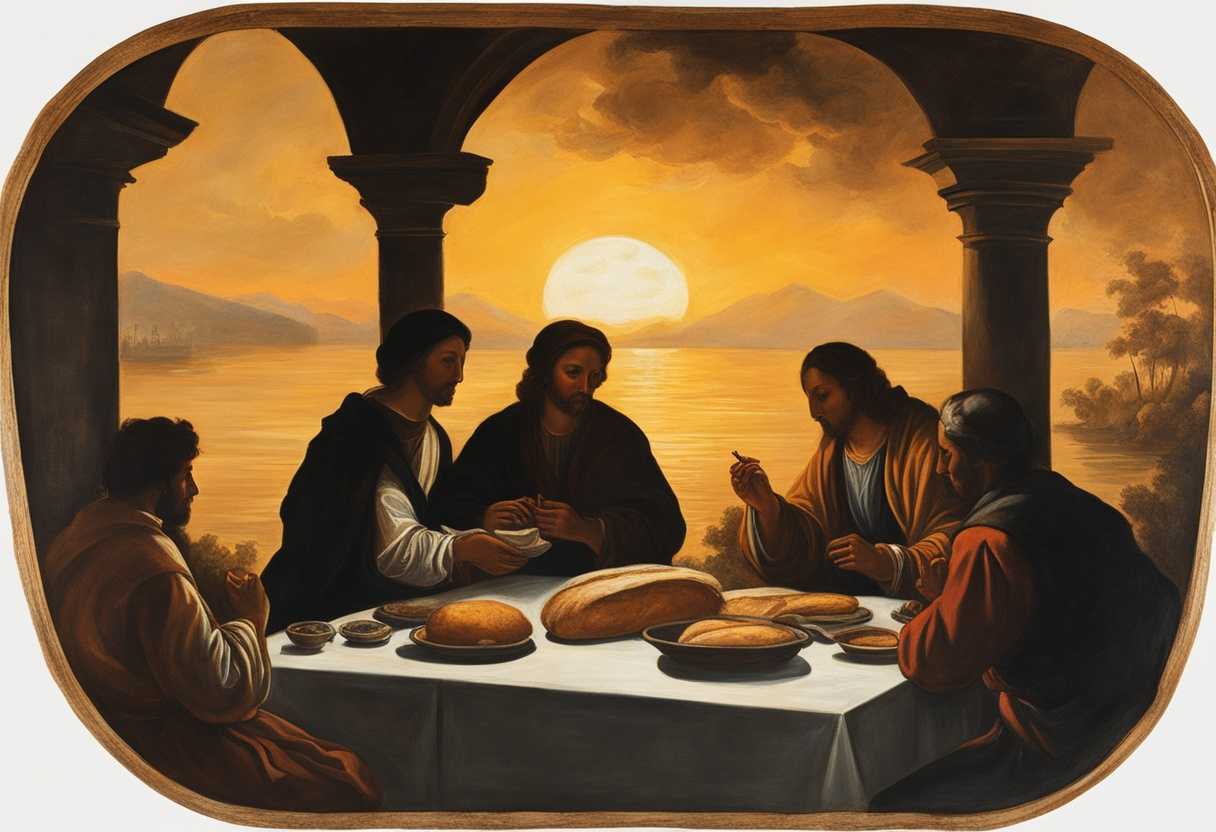
The disciples, Cleopas and another unnamed disciple, are puzzled by the stranger’s apparent lack of knowledge about the recent events in Jerusalem. They explain to Him the story of Jesus, a prophet mighty in deed and word before God and all the people, who was crucified and whose tomb was found empty that very morning. As they reach Emmaus, the disciples invite the stranger to stay with them, and as they sit down to eat, the stranger takes bread, blesses it, breaks it, and gives it to them. It is in this moment of breaking bread that their eyes are opened, and they recognize Him as Jesus. And just as they recognize Him, He vanishes from their sight, leaving them amazed and filled with joy at the realization of His resurrection.
The scene is set on a dusty road to Emmaus, with the sun setting in the distance, casting a warm glow over the landscape. The disciples walk with heavy hearts, still processing the events of the past few days. The stranger’s presence brings a sense of peace and comfort, and as they sit down to eat, the atmosphere is filled with anticipation and wonder. The breaking of bread becomes a sacred moment of revelation, where the disciples’ eyes are opened to the presence of their risen Lord in their midst.
What is Luke 24:30-32 about?
When we break bread in remembrance of Jesus, we are not just sharing a meal, but we are partaking in a sacred act that connects us to His presence and teachings. We are reminded of the sacrifice and love that Jesus showed for us in that moment of breaking bread. We are also reminded of the fellowship and unity that sharing a meal together brings. It is a beautiful and profound way to commune with Jesus and with one another.
Think about the last time you shared a meal with someone. Did you feel a sense of closeness and connection? Now, imagine that feeling magnified by recognizing Jesus in the breaking of bread. It is a powerful and transformative experience that can bring understanding of His teachings and joy in His presence. Breaking bread with others in this context reminds us of the importance of community and sharing with one another. It is a simple yet profound way to strengthen our faith and deepen our relationship with Jesus.
Understanding what Luke 24:30-32 really means
The passage in Luke 24:30-32 captures a profound moment after Jesus’ resurrection, where He reveals Himself to two disciples on the road to Emmaus. This encounter holds immense significance as it unveils Jesus’ true identity and the transformative power of His presence and teachings. As Jesus took bread, gave thanks, broke it, and shared it with them, echoing the Last Supper, the disciples’ eyes were opened to His sacrifice and the establishment of the New Covenant. This act symbolizes recognition and revelation, marking a pivotal moment in the disciples’ journey of faith.
Their eyes being opened and recognizing Jesus signifies a spiritual awakening, where doubt and confusion give way to clarity and faith. This transition highlights the transformative power that encountering Christ can have on individuals, leading them from uncertainty to a firm belief in His divinity. The disciples’ reflection on their hearts burning within them while Jesus explained the Scriptures underscores the inner transformation they experienced. This burning sensation signifies a profound internal change brought about by the Word of God, emphasizing its ability to ignite faith and understanding in believers.
Connecting this passage to other biblical references, such as Luke 22:19, John 6:35, and Hebrews 4:12, further illuminates the themes of sacrifice, spiritual sustenance, and the living power of God’s Word. These passages reinforce the central message of the transformative nature of encountering Jesus and engaging with His teachings. Today, individuals can still experience spiritual awakening, inner transformation, and the importance of communion and fellowship through their faith journey.
Consider a scenario where someone grappling with doubt attends a Bible study that resonates deeply with them, akin to the disciples’ experience on the road to Emmaus. Through the explanation of Scriptures, they find clarity and peace, reigniting their faith and deepening their understanding of Jesus’ presence in their life. This anecdote mirrors the potential for personal revelation and transformation that the disciples encountered in the presence of Christ.
In conclusion, Luke 24:30-32 serves as a poignant reminder of the profound impact of Jesus’ presence and the Scriptures on believers. It urges individuals to seek spiritual awakening, embrace inner transformation through the Word of God, and value the communal aspect of faith through acts like breaking bread together. Just as the disciples’ encounter with Jesus transformed their hearts and minds, may we also be open to the transformative power of Christ in our lives today.
How can we recognize Jesus in our midst?
We can recognize Jesus in our midst through moments of revelation and understanding, similar to how the disciples recognized him during their encounter on the road to Emmaus. When Jesus opens our eyes to understand the scriptures or reveals himself to us in a profound way, we can sense his presence and know that he is with us.
Furthermore, Jesus can be recognized in our midst through the breaking of the bread, which is symbolic of communion and fellowship. We can recognize his presence when we come together to partake in the sacrament of the Eucharist or share a meal with one another in love and unity, just as the disciples recognized Jesus during the breaking of the bread. Recognizing Jesus in our midst ultimately requires an openness of heart and a willingness to see beyond the ordinary to perceive the extraordinary. When we are attentive to the signs of his presence, whether through moments of understanding, communion, or acts of love and service, we can encounter Jesus in our midst and experience the transformative power of his grace and love.
Application
Unlock the potential of connecting with Jesus through the act of breaking bread, as mentioned in Luke 24:30-32. Invite His transformative presence into your everyday life by embracing these moments of communion. Just like how we nurture our work and family relationships, let us prioritize nourishing our spiritual bond with Christ. Have you considered incorporating these meaningful connections into your daily routine?

Reverend Michael Johnson is an experienced Church Minister with a profound expertise in spirituality and guidance. With a serene presence and a compassionate heart, he has faithfully served his congregation for over 20 years, leading them on a spiritual journey towards inner peace and enlightenment. Reverend Johnson’s extensive knowledge of religious philosophies and profound understanding of human nature have made him a trusted confidant and mentor to many, as he seamlessly weaves his profound wisdom into life teachings. Reverend Johnson’s calming demeanor and empathetic nature continue to uplift and heal souls, nurturing a sense of unity and tranquility within his community.