
Luke 2:20-40 is about the presentation of Jesus in the temple, where Simeon and Anna recognize him as the fulfillment of God’s promise and proclaim him as the light to the Gentiles and glory of Israel.
20 And the shepherds returned, glorifying and praising God for all they had heard and seen, as it had been told them.
21 And at the end of eight days, when he was circumcised, he was called Jesus, the name given by the angel before he was conceived in the womb.
22 And when the time came for their purification according to the Law of Moses, they brought him up to Jerusalem to present him to the Lord.
23 (as it is written in the Law of the Lord, “Every male who first opens the womb shall be called holy to the Lord”)
24 and to offer a sacrifice according to what is said in the Law of the Lord, “a pair of turtledoves, or two young pigeons.”
25 Now there was a man in Jerusalem, whose name was Simeon, and this man was righteous and devout, waiting for the consolation of Israel, and the Holy Spirit was upon him.
26 And it had been revealed to him by the Holy Spirit that he would not see death before he had seen the Lord’s Christ.
27 And he came in the Spirit into the temple, and when the parents brought in the child Jesus, to do for him according to the custom of the Law,
28 he took him up in his arms and blessed God and said,
29 “Lord, now you are letting your servant depart in peace, according to your word;”
30 for my eyes have seen your salvation
31 that you have prepared in the presence of all peoples,
32 a light for revelation to the Gentiles, and for glory to your people Israel.
33 And his father and his mother marveled at what was said about him.
34 And Simeon blessed them and said to Mary his mother, “Behold, this child is appointed for the fall and rising of many in Israel, and for a sign that is opposed.
35 (and a sword will pierce through your own soul also), so that thoughts from many hearts may be revealed.
36 And there was a prophetess, Anna, the daughter of Phanuel, of the tribe of Asher. She was advanced in years, having lived with her husband seven years from when she was a virgin,
37 and then as a widow until she was eighty-four. She did not depart from the temple, worshiping with fasting and prayer night and day.
38 And coming up at that very hour she began to give thanks to God and to speak of him to all who were waiting for the redemption of Jerusalem.
39 And when they had performed everything according to the Law of the Lord, they returned into Galilee, to their own town of Nazareth.
40 And the child grew and became strong, filled with wisdom. And the favor of God was upon him.
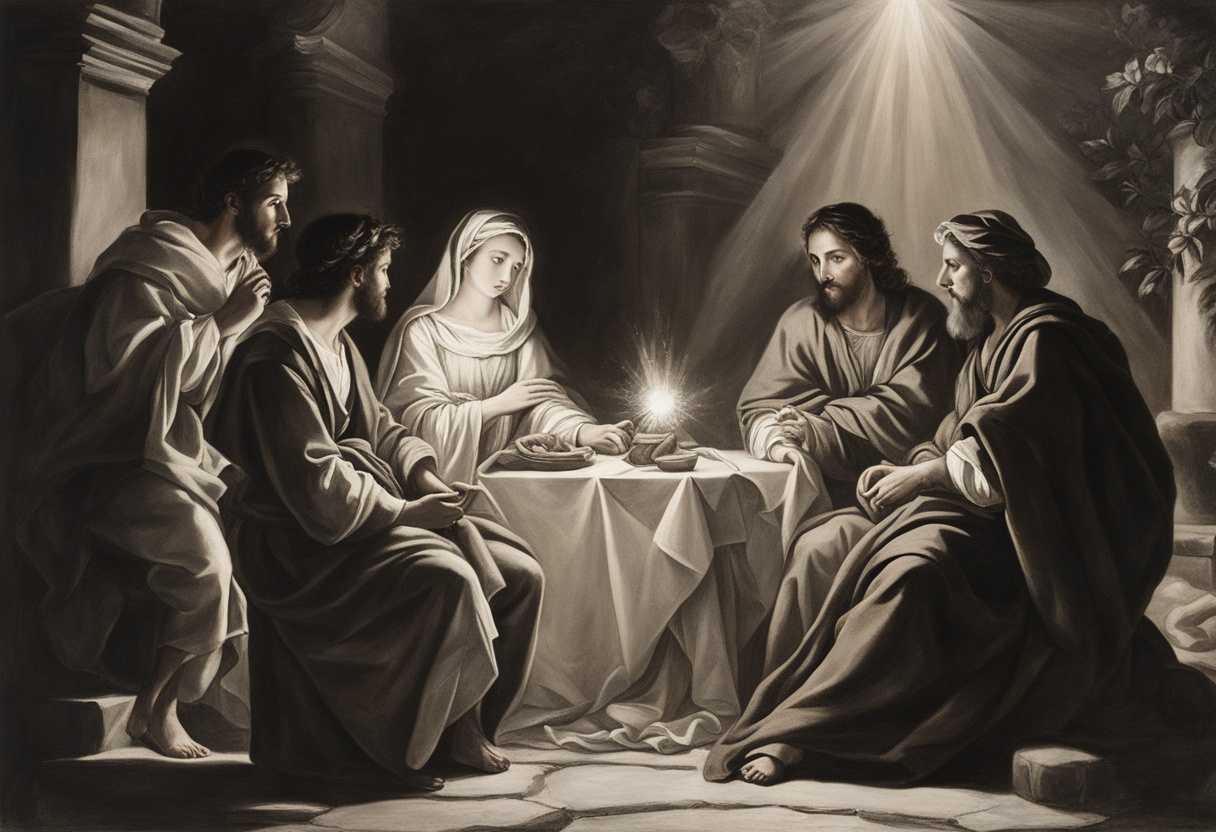
Setting the Scene for Luke 2:20-40
In Luke chapter 2, we find the scene where Mary and Joseph bring the infant Jesus to the temple in Jerusalem to present Him to the Lord, as was the custom of the law. The temple is bustling with activity as people from all walks of life come to worship and offer sacrifices. The air is filled with the sounds of prayers, songs, and the bleating of animals being brought for sacrifice.
As Mary and Joseph enter the temple with baby Jesus in their arms, they are met by an elderly man named Simeon, who had been promised by the Holy Spirit that he would not die before he had seen the Messiah. Simeon takes the baby Jesus in his arms and praises God, declaring that he can now depart in peace, for his eyes have seen the salvation of the Lord. Nearby, a prophetess named Anna, who was very old and had been a widow for many years, also approaches them and gives thanks to God, speaking about the child to all who were looking forward to the redemption of Jerusalem.
The scene is one of profound significance and divine revelation, as Mary and Joseph stand in awe of the words spoken about their precious child. The temple, with its grand architecture and sacred atmosphere, serves as the backdrop for this momentous occasion, where the promised Messiah is recognized and acknowledged by faithful servants of God.
What is Luke 2:20-40 about?
This verse is a significant moment in the life of Jesus as it depicts two devout individuals, Simeon and Anna, recognizing Him as the long-awaited Messiah during a visit to the temple. It shows the fulfillment of prophetic promises and underscores the idea that Jesus was the fulfillment of centuries-old prophecies about a savior who would bring redemption to humanity. This recognition by Simeon and Anna highlights the deep spiritual insight and faith of these individuals, who were able to discern the divine nature of Jesus despite his humble appearance. Simeon and Anna spent their lives in faithful anticipation of the Messiah’s arrival; consider their faith and dedication as you reflect on this verse. It prompts us to ponder how attuned we are to recognizing the presence of God in our midst and whether we are open to encountering the divine in unexpected ways and people. How might we cultivate a similar sense of spiritual awareness and readiness to perceive God’s work in our lives? Let this verse inspire you to seek a deeper understanding of the divine mysteries and to approach each day with a sense of expectancy and faith that God is continually at work in our lives.
Understanding what Luke 2:20-40 really means
In Luke 2:20-40, we witness pivotal events in the early life of Jesus, including the shepherds’ return, Jesus’ presentation at the temple, and encounters with Simeon and Anna. These occurrences hold profound significance as they fulfill Old Testament prophecies and lay the foundation for Jesus’ ministry on earth.
As we delve into verses 20-21, we see the shepherds returning from witnessing the birth of Jesus, filled with joy and praise for God. Their response underscores the importance of experiencing God’s work firsthand and sharing it with others, echoing their actions in spreading the news about Jesus’ birth in Luke 2:17-18. Additionally, Jesus’ circumcision on the eighth day symbolizes his inclusion in the covenant with God, as circumcision was a sign of belonging to God’s chosen people, as seen in Genesis 17:12.
Moving on to verses 22-24, we encounter Jesus’ presentation at the temple, where Mary and Joseph fulfill the purification rites and dedicate their firstborn to the Lord. This act highlights their obedience to the Law of Moses, as outlined in Leviticus 12:2-8, and their humble offering of “a pair of doves or two young pigeons,” in accordance with the law, as seen in Exodus 13:2.
The prophecy of Simeon in verses 25-35 further illuminates the significance of Jesus’ arrival. Simeon, a righteous and devout man, recognizes Jesus as the fulfillment of God’s promise of salvation, echoing the prophetic words of Isaiah 40:1-2. Simeon’s acknowledgment of Jesus as the one who will bring both salvation and judgment, as mentioned in Isaiah 8:14-15, foreshadows the dual nature of Christ’s mission on earth.
In verses 36-38, we are introduced to Anna, a prophetess who devoted herself to worship and prayer. Anna’s proclamation of Jesus as the Redeemer to all who awaited the redemption of Jerusalem echoes the prophetic tradition of proclaiming God’s deliverance, as seen in Isaiah 61:1-2. Her role underscores the importance of recognizing and sharing the good news of Jesus with others.
As Joseph and Mary return to Nazareth in verses 39-40, we witness the obedience and faithfulness of Jesus’ earthly parents in fulfilling the requirements of the Law. Jesus, in his growth and development, embodies physical strength, wisdom, and the grace of God, reflecting the prophecy in Isaiah 11:2 of the Spirit of the Lord resting upon the Messiah.
The events in Luke 2:20-40 serve as a reminder of the faithfulness, obedience, and proclamation exemplified by the characters involved. Today, we are called to emulate their dedication to God’s will and their eagerness to share the good news of Jesus with others. Just as Mary, Joseph, Simeon, and Anna played crucial roles in the early narrative of Jesus’ life, our faithfulness and willingness to proclaim the gospel can have a lasting impact on those around us.
How can we recognize and glorify God in our daily lives?
We can recognize and glorify God in our daily lives by having hearts filled with gratitude and praise, just like the shepherds who glorified and praised God for all they had seen and heard. We can express thanks to God for His blessings and provisions, recognizing that every good thing we have comes from Him. We acknowledge His hand in our lives and bring glory to His name by developing a habit of thankfulness and expressing our gratitude to God.
Furthermore, we can glorify God by being obedient to His will and following His commandments, just as Mary and Joseph were faithful in fulfilling the requirements of the law. We demonstrate our love for God and bring honor to His name by striving to live according to His word and aligning our actions with His teachings. We can reflect God’s love and character to those around us in our daily choices and interactions, showing the world the transformative power of a life lived in obedience to Him.
Additionally, we can glorify God by being vigilant and attentive to His work in our lives, just as Simeon and Anna were eagerly waiting for the fulfillment of God’s promises. We can discern His plans and purposes for us by being prayerful and seeking God’s guidance, allowing His transformative work to take place in our hearts and lives. We can actively participate in God’s kingdom work and bring glory to His name by being willing instruments for Him to use in this world in our daily walk with Him.
Application
Just as Simeon and Anna tirelessly awaited the arrival of the Messiah, let us too remain steadfast in our faith and commitment to God. Emulate their spirit of unwavering dedication in prayer and devotion, eagerly anticipating the fulfillment of God’s promises in our lives. Will you embark on this journey of faith and purpose, mirroring the perseverance of Simeon and Anna, in striving to seek God’s will wholeheartedly?

Reverend Michael Johnson is an experienced Church Minister with a profound expertise in spirituality and guidance. With a serene presence and a compassionate heart, he has faithfully served his congregation for over 20 years, leading them on a spiritual journey towards inner peace and enlightenment. Reverend Johnson’s extensive knowledge of religious philosophies and profound understanding of human nature have made him a trusted confidant and mentor to many, as he seamlessly weaves his profound wisdom into life teachings. Reverend Johnson’s calming demeanor and empathetic nature continue to uplift and heal souls, nurturing a sense of unity and tranquility within his community.