
Luke 2:3-4 is about Joseph traveling from Nazareth to Bethlehem with Mary to be counted in the census, fulfilling the prophecy that the Messiah would be born in Bethlehem.
3 And all went to be registered, each to his own town.
4 And Joseph also went up from Galilee, from the town of Nazareth, to Judea, to the city of David, which is called Bethlehem, because he was of the house and lineage of David,
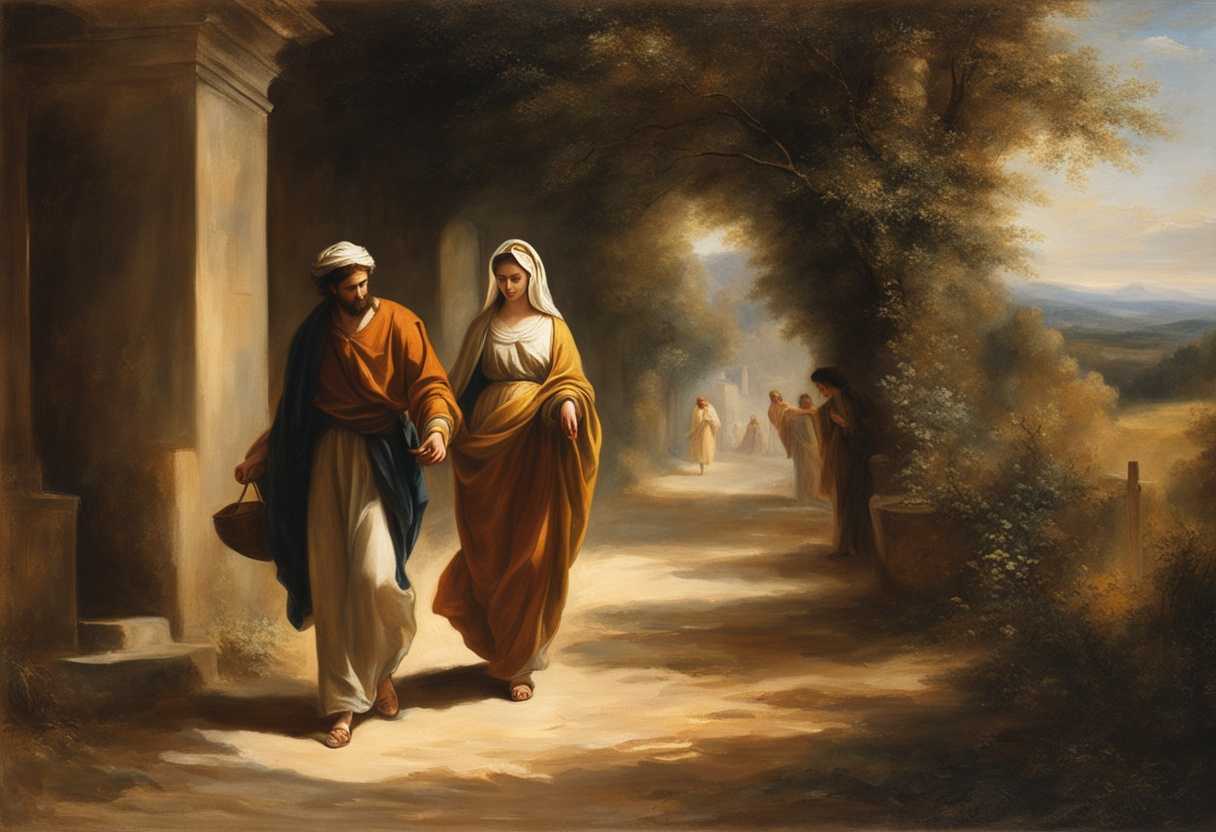
Setting the Scene for Luke 2:3-4
In Luke chapter 2, we find Joseph and Mary, a young couple from Nazareth, traveling to Bethlehem. The scene is set against the backdrop of a bustling town, filled with people who have also come to register for the census decreed by Caesar Augustus. The dusty streets are crowded with travelers, merchants, and animals, creating a sense of chaos and anticipation in the air.
Joseph, a descendant of King David, is leading a donkey carrying Mary, who is heavily pregnant with the child that was conceived by the Holy Spirit. The couple’s journey is long and arduous, as they navigate rocky terrain and unpredictable weather to reach their destination. Despite the challenges they face, Joseph and Mary press on, guided by faith and the knowledge that they are fulfilling a divine purpose.
As they finally arrive in Bethlehem, they find the town overflowing with visitors, and the inns are all full. With no place to stay, Joseph and Mary seek refuge in a humble stable, where Mary gives birth to Jesus, the Savior of the world. This humble beginning sets the stage for the miraculous events that will unfold, as shepherds and wise men alike come to pay homage to the newborn King.
What is Luke 2:3-4 about?
This verse highlights the journey of Mary and Joseph to Bethlehem, a significant event in the nativity story. Their journey was not just a physical one but also fulfilled a prophecy from the Old Testament. This demonstrates the divine plan and intervention in the birth of Jesus, showing how every detail was orchestrated and foretold. The fulfillment of this prophecy adds depth and significance to the story of Jesus’ birth, emphasizing the importance of his arrival and the fulfillment of ancient prophecies.
Imagine the faith and obedience Mary and Joseph must have had to embark on such a long and arduous journey, trusting in God’s plan for them and for the world. Reflecting on this verse can inspire us to trust in divine timing and guidance in our own lives, even when the path ahead seems uncertain or challenging. It serves as a reminder of the power of prophecy, faith, and obedience in fulfilling God’s greater plan for humanity.
Understanding what Luke 2:3-4 really means
In the Gospel of Luke, we encounter a pivotal moment in the narrative of Jesus’ birth as Joseph and Mary embark on a journey to Bethlehem. This journey was not merely a physical relocation but a fulfillment of ancient prophecies that foretold the Messiah’s birth in the City of David. The backdrop of Caesar Augustus’ census decree sets the stage for a divine plan unfolding in the humblest of circumstances.
The Old Testament prophecy in Micah 5:2 gains new significance as Joseph and Mary’s journey to Bethlehem aligns with the foretelling of a ruler emerging from this very town. The interconnectedness of prophecies across different biblical passages, such as Matthew 1:22-23 and John 7:42, underscores the meticulous fulfillment of God’s promises through the birth of Jesus. These verses serve as a tapestry woven with divine threads, showcasing the intricate design of God’s plan.
The obedience and faith displayed by Joseph and Mary resonate with us today, prompting reflection on our own responses to God’s calling. Their willingness to trust in God’s plan, even amidst inconvenience and uncertainty, serves as a timeless example of surrender and obedience. The journey to Bethlehem reveals God’s providential hand orchestrating events to bring about His purposes, reminding us that our lives are intricately connected to a larger divine narrative.
The humility and simplicity surrounding Jesus’ birth in Bethlehem speak volumes about the values of humility and service that transcend time and culture. In a world often enamored with grandeur and power, the manger in Bethlehem stands as a symbol of God’s upside-down kingdom, where the lowly are exalted, and the humble are honored. This narrative challenges us to reevaluate our priorities and embrace a posture of humility and service in our own lives.
Consider a modern-day family uprooted by a job transfer, mirroring Joseph and Mary’s journey. Despite the challenges and disruptions, they trust in a greater plan unfolding in their lives. Similarly, Joseph and Mary’s obedience and faith amidst the arduous journey to Bethlehem exemplify a profound trust in God’s sovereignty and providence. Their story beckons us to ponder our responses to God’s leading in the midst of life’s uncertainties and trials.
The seemingly simple phrases in Luke 2:3-4 carry profound truths about God’s inclusive plan for all humanity. The mention of “all went to be registered” underscores the universal scope of God’s redemptive plan, encompassing people from all walks of life. “Each to his own town” highlights the significance of lineage and heritage in God’s unfolding story, emphasizing the fulfillment of prophecies through Joseph’s ancestral ties to David. “Joseph also went up from Galilee” showcases Joseph’s obedience and faithfulness, illustrating the importance of trust and compliance in God’s overarching narrative.
As we meditate on these verses, we are invited to contemplate the themes of faith, obedience, and divine providence woven into the fabric of Joseph and Mary’s journey to Bethlehem. Their story serves as a beacon of hope and a reminder that God’s plans are always at work, even in the most ordinary or challenging circumstances. May we, like Joseph and Mary, embrace a posture of surrender and trust in God’s unfolding story in our lives, knowing that He is faithful to fulfill His promises in ways beyond our comprehension.
What does it mean to trust in God’s plan?
Trusting in God’s plan means having faith that He has a purpose and a perfect timing for everything in our lives. It involves believing that even when circumstances may seem uncertain or challenging, God is in control and working all things together for our ultimate good. This trust requires surrendering our own plans and desires to align with God’s will, knowing that He knows what is best for us even when we cannot see the bigger picture. Joseph and Mary obediently followed the decree to travel to Bethlehem for the census in the context of Luke 2:3-4, not fully understanding the significance of the journey at that moment. However, their faith and trust in God’s plan led them to the fulfillment of prophecy and the miraculous birth of Jesus. We can find peace and assurance in the knowledge that God is guiding and directing our steps, even when the path may not be clear to us, by trusting in His plan.
Application
Think about the daily grind and family responsibilities. Mary and Joseph took their humble trip to Bethlehem, fulfilling a divine plan despite their challenges. Like them, you can embrace life’s journey with trust and dedication. Are you ready to answer God’s call with unwavering faith and obedience, just as they did?

Reverend Michael Johnson is an experienced Church Minister with a profound expertise in spirituality and guidance. With a serene presence and a compassionate heart, he has faithfully served his congregation for over 20 years, leading them on a spiritual journey towards inner peace and enlightenment. Reverend Johnson’s extensive knowledge of religious philosophies and profound understanding of human nature have made him a trusted confidant and mentor to many, as he seamlessly weaves his profound wisdom into life teachings. Reverend Johnson’s calming demeanor and empathetic nature continue to uplift and heal souls, nurturing a sense of unity and tranquility within his community.