
Luke 2:4-12 is about the humble and miraculous birth of Jesus in a manger, symbolizing the accessibility and inclusivity of the message of salvation to all people regardless of their social status.
4 And Joseph also went up from Galilee, from the town of Nazareth, to Judea, to the city of David, which is called Bethlehem, because he was of the house and lineage of David,
5 to be registered with Mary, his betrothed, who was with child.
6 And while they were there, the time came for her to give birth.
7 And she gave birth to her firstborn son and wrapped him in swaddling cloths and laid him in a manger, because there was no place for them in the inn.
8 And in the same region there were shepherds out in the field, keeping watch over their flock by night.
9 And an angel of the Lord appeared to them, and the glory of the Lord shone around them, and they were filled with great fear.
10 And the angel said to them, “Fear not, for behold, I bring you good news of great joy that will be for all the people.
11 For unto you is born this day in the city of David a Savior, who is Christ the Lord.
12 And this will be a sign for you: you will find a baby wrapped in swaddling cloths and lying in a manger.
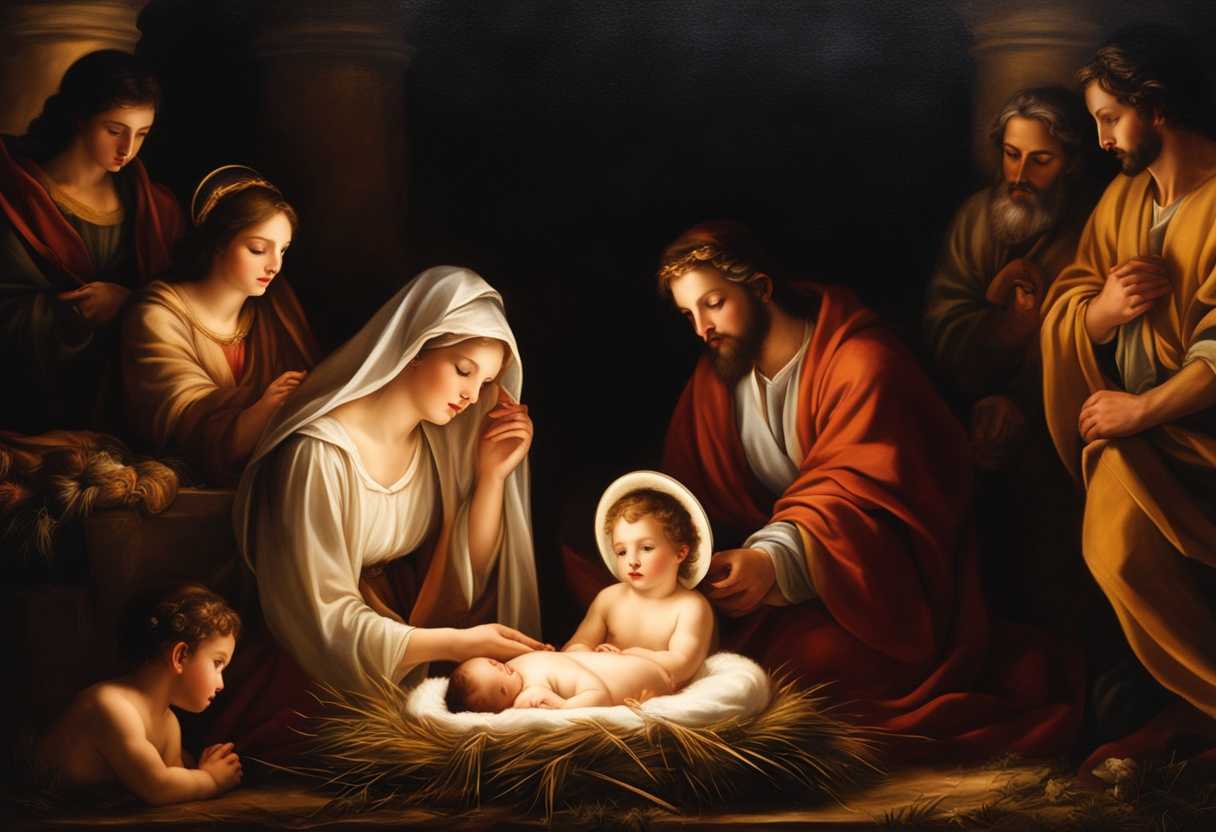
Setting the Scene for Luke 2:4-12
In Luke chapter 2, we find Joseph and Mary, a young couple from Nazareth, traveling to Bethlehem. The journey was necessary due to a decree from Caesar Augustus that a census should be taken of the entire Roman world. Joseph, being of the line of David, had to go to Bethlehem, the city of David, to register. Mary, who was pregnant with Jesus, accompanied him on this arduous journey.
Upon their arrival in Bethlehem, they found that the town was bustling with people who had also come to register for the census. The streets were crowded, and the inns were full, leaving Joseph and Mary with no place to stay. Eventually, they found refuge in a humble stable, where Mary gave birth to Jesus. The surroundings were simple and rustic, with animals nearby and a manger serving as a makeshift crib for the newborn baby.
It was in this humble setting that the Savior of the world was born, surrounded by the love of his earthly parents and the quiet awe of the animals. The scene in Luke chapter 2 captures the essence of the Christmas story, highlighting the humility and grace with which Jesus entered the world, bringing hope and salvation to all mankind.
What is Luke 2:4-12 about?
This verse from the Gospel of Luke reveals the humble circumstances surrounding the birth of Jesus in Bethlehem. It highlights the simplicity and purity of this miraculous event, as Jesus, the Son of God, is born in a lowly setting amongst animals and the company of shepherds. The angels’ announcement symbolizes the grandeur and significance of this momentous occasion, emphasizing the divine nature of Jesus’ birth and the message of hope and salvation He brings to the world.
Now, imagine the awe and wonder the shepherds must have felt as they heard the angels declare the birth of the Savior. Put yourself in their shoes, standing in the presence of heavenly beings, receiving the news of the Messiah’s arrival. Reflect on the significance of God choosing to reveal this extraordinary event to simple, ordinary individuals, showcasing His love for all people, regardless of their social status or background. Jesus came into the world in humility and grace, offering salvation and redemption to all who believe in Him as we ponder on this verse.
Understanding what Luke 2:4-12 really means
In the Gospel of Luke, we are transported back in time to a pivotal moment in history, where Joseph and Mary embark on a journey to Bethlehem. This journey was not merely a physical one but a fulfillment of ancient prophecies, as Joseph obediently follows the Roman decree to return to his ancestral home. The setting in Bethlehem, known as the city of David, holds profound significance as the foretold birthplace of the Messiah, linking Jesus to the lineage of King David.
As the narrative unfolds, we witness the humble circumstances surrounding the birth of Jesus. Mary gives birth to her firstborn son and wraps Him in swaddling cloths, laying Him in a manger due to the lack of space in the inn. This imagery of a newborn King in a manger symbolizes humility and accessibility, emphasizing that Jesus came for all, especially the marginalized and overlooked in society.
The appearance of an angel to shepherds, considered lowly in society, underscores the universal nature of the good news. The proclamation of “good news of great joy for all the people” echoes throughout the ages, reminding us that Jesus’ mission is inclusive and reaches every corner of humanity. This message of inclusivity and joy is not limited by social status or background but is available to all who are willing to receive it.
The relevance of this passage extends beyond historical events, speaking directly to our lives today. It serves as a beacon of hope and humility in a world often consumed by power and prestige. The journey of Joseph and Mary, along with the shepherds’ encounter with the angel, teaches us valuable lessons in faith and trust in God’s plan, even amidst adversity and uncertainty.
In our modern context, we can draw parallels to the experiences of Joseph and Mary in the lives of individuals facing challenging journeys. Just as they found unexpected grace and provision in the midst of difficulty, we are reminded that God’s presence and support can be found in the most unlikely of places. This serves as a testament to the enduring message of hope and divine intervention that transcends time and circumstances.
As we reflect on the birth of Jesus in Bethlehem, we are called to embrace the message of hope, humility, and inclusivity that His arrival signifies. This passage encourages us to trust in God’s plan, to embody humility in our interactions, and to share the good news with others, especially those who may feel marginalized or forgotten. May we carry the spirit of Christmas throughout the year, spreading joy and love to all we encounter.
How can we cultivate humility and openness to revelation?
To cultivate humility and openness to revelation, we can first acknowledge our limited understanding and embrace the possibility of being surprised by new insights or truths. This attitude of humility allows us to recognize that we do not have all the answers and that there is always more to learn. We become receptive to the guidance and wisdom that can come from unexpected sources by being open to new revelations.
Furthermore, practicing humility involves setting aside our preconceived notions and biases, allowing us to approach new information with a fresh perspective. This openness to revelation requires a willingness to listen, reflect, and be transformed by the truths that may challenge or deepen our existing beliefs. We create space for growth, enlightenment, and a deeper connection to the spiritual truths that surround us by remaining humble and open-minded.
Application
Let’s draw inspiration from the humble manger where Jesus was born. It’s a reminder to embrace simplicity and humility in our modern lives – like balancing work and family. How can we make a difference by embodying these virtues in our daily interactions? Will you join in living out the essence of humility and simplicity that Jesus taught us through His own example?

Reverend Michael Johnson is an experienced Church Minister with a profound expertise in spirituality and guidance. With a serene presence and a compassionate heart, he has faithfully served his congregation for over 20 years, leading them on a spiritual journey towards inner peace and enlightenment. Reverend Johnson’s extensive knowledge of religious philosophies and profound understanding of human nature have made him a trusted confidant and mentor to many, as he seamlessly weaves his profound wisdom into life teachings. Reverend Johnson’s calming demeanor and empathetic nature continue to uplift and heal souls, nurturing a sense of unity and tranquility within his community.