
Luke 2:4-7 is about the humble and miraculous birth of Jesus in Bethlehem, emphasizing the fulfillment of prophecy and the significance of God entering the world in the form of a vulnerable infant.
4 And Joseph also went up from Galilee, from the town of Nazareth, to Judea, to the city of David, which is called Bethlehem, because he was of the house and lineage of David,
5 to be registered with Mary, his betrothed, who was with child.
6 And while they were there, the time came for her to give birth.
7 And she gave birth to her firstborn son and wrapped him in swaddling cloths and laid him in a manger, because there was no place for them in the inn.
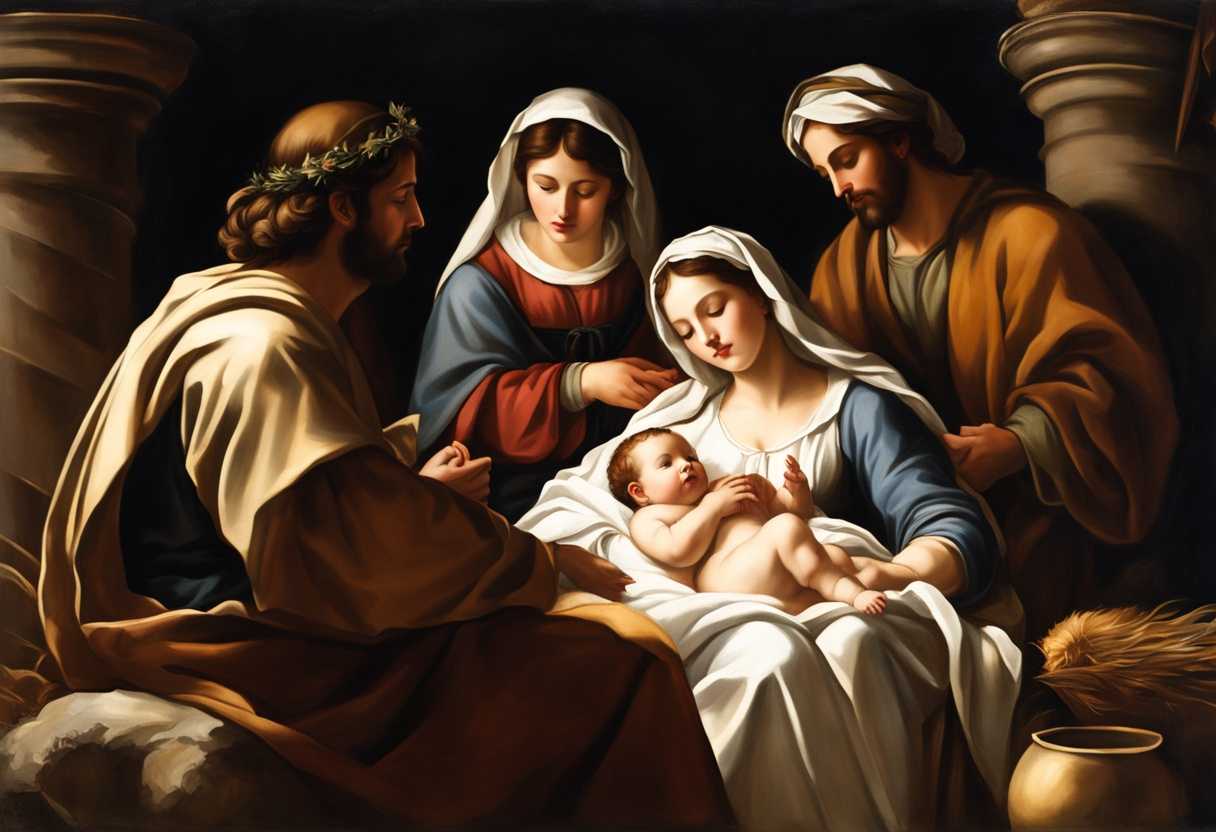
Setting the Scene for Luke 2:4-7
In Luke chapter 2, we find Joseph and Mary, a young couple from Nazareth, traveling to Bethlehem. The journey is necessary because of a decree from Caesar Augustus that a census should be taken of the entire Roman world. Joseph, being of the line of David, must return to his ancestral town of Bethlehem to register. Mary, who is pregnant with Jesus, accompanies him on this arduous journey.
As they arrive in Bethlehem, the town is bustling with people who have also come to register for the census. The streets are crowded, and the inns are full. Joseph and Mary find themselves with no place to stay except for a humble stable. It is in this lowly setting that Mary gives birth to Jesus, wrapping him in swaddling clothes and laying him in a manger. The scene is one of simplicity and humility, yet it is in this humble stable that the Savior of the world is born.
What is Luke 2:4-7 about?
This verse captures the profound moment when Jesus, the central figure of Christianity, is born in humble surroundings in Bethlehem. The imagery of Jesus being laid in a manger, a feeding trough for animals, carries deep symbolism. It highlights the contrast between the earthly simplicity of his birth and the divine significance of his existence. Jesus demonstrates his identification with the marginalized and the ordinary people by being born in such modest circumstances. This act sets the foundation for his ministry, emphasizing themes of humility, compassion, and redemption. We reflect on this verse, pondering the profound implications of Jesus’ birth in Bethlehem. It challenges us to consider the paradox of a powerful and divine being entering the world in such a humble and unassuming manner. It prompts us to question our own perceptions of power, success, and worthiness. How does this event in Bethlehem challenge us to reevaluate our own values and priorities? How does Jesus’ birth in a manger inspire us to embrace humility, show compassion to others, and seek spiritual fulfillment rather than worldly acclaim? We should meditate on the significance of this verse and strive to embody the virtues of simplicity, empathy, and faith that Jesus exemplified from the moment of his birth.
Understanding what Luke 2:4-7 really means
In the Gospel of Luke, we are transported back in time to a significant moment in Christian history, where Joseph and Mary embark on a journey to Bethlehem, the birthplace of Jesus. This journey was not merely a physical one but a fulfillment of prophecy and a testament to obedience and faith in the face of adversity. The historical context of Caesar Augustus’ decree for a census sheds light on the circumstances that led Joseph and Mary to Bethlehem, emphasizing the divine orchestration of events.
The key phrases in this passage carry profound meanings that resonate through the ages. The mention of Bethlehem as the birthplace of Jesus fulfills ancient prophecies, underscoring the divine plan at work. The image of Jesus being laid in a manger, wrapped in swaddling cloths, speaks volumes about the humility and simplicity that characterized His earthly arrival. The poignant statement that there was no room for them in the inn foreshadows the rejection and lack of hospitality that Jesus would encounter throughout His life.
Drawing connections to other biblical passages such as Micah 5:2, Isaiah 7:14, and John 1:14, we see a tapestry of prophecies and revelations weaving together to herald the birth of the Messiah. These passages illuminate the miraculous nature of Jesus’ birth and the profound impact of His incarnation on humanity. The relevance of this narrative to contemporary audiences lies in its timeless themes of humility, faith, and the presence of God in the ordinary moments of life.
Consider a modern-day parallel where a family, unexpectedly displaced during the holiday season, finds solace and joy in a humble setting far from the glitz of traditional celebrations. This anecdote mirrors the essence of Jesus’ birth, emphasizing that true blessings often come in unassuming packages. Just as Joseph and Mary embraced their circumstances with faith and obedience, we are called to emulate their example by living with humility, trusting in God’s plan, and recognizing His presence in the simplicity of everyday life.
In conclusion, the story of Jesus’ birth in Bethlehem serves as a timeless reminder of the virtues of humility, faith, and finding God in the ordinary. Let us heed this call to embrace humility, trust in God’s providence, and cherish the divine presence in the mundane moments of our lives. As we reflect on the humble beginnings of our Savior, may we be inspired to live with grace and gratitude, knowing that God often works wonders in the most unexpected and unassuming ways.
What does it mean to be content in humility?
Being content in humility means accepting one’s current circumstances without the need for grand recognition or praise. It involves finding peace and satisfaction in modesty and simplicity, like how Jesus was born in a humble manger without any pomp or luxury. Individuals can experience a sense of contentment that is not dependent on external factors by recognizing that humility doesn’t seek validation from worldly standards or material possessions.
The essence of contentment in humility lies in the understanding that true worth is not measured by outward appearances or status, but by the integrity of one’s heart and actions. Individuals can find joy in serving others, prioritizing relationships over material wealth, and understanding that greatness can be found in the most unassuming of places by embracing humility. This attitude aligns with the example set forth in the biblical verse, where Jesus, the Son of God, was born in a simple setting, emphasizing the importance of modesty and meekness in the eyes of the divine.
Application
Imagine the grind of daily life, the constant juggling of work deadlines and family demands. Picture the humble arrival of Jesus in that simple manger—no frills, no luxury. This is a call for us to strip away our egos, just like he stripped away his glory, and serve others with pure, humble hearts. How can you start reflecting this humility in your day-to-day hustle and in your family interactions right now?

Reverend Michael Johnson is an experienced Church Minister with a profound expertise in spirituality and guidance. With a serene presence and a compassionate heart, he has faithfully served his congregation for over 20 years, leading them on a spiritual journey towards inner peace and enlightenment. Reverend Johnson’s extensive knowledge of religious philosophies and profound understanding of human nature have made him a trusted confidant and mentor to many, as he seamlessly weaves his profound wisdom into life teachings. Reverend Johnson’s calming demeanor and empathetic nature continue to uplift and heal souls, nurturing a sense of unity and tranquility within his community.