
7 And she gave birth to her firstborn son and wrapped him in swaddling cloths and laid him in a manger, because there was no place for them in the inn.
8 And in the same region there were shepherds out in the field, keeping watch over their flock by night.
9 And an angel of the Lord appeared to them, and the glory of the Lord shone around them, and they were filled with great fear.
10 And the angel said to them, “Fear not, for behold, I bring you good news of great joy that will be for all the people.
11 For unto you is born this day in the city of David a Savior, who is Christ the Lord.
12 And this will be a sign for you: you will find a baby wrapped in swaddling cloths and lying in a manger.
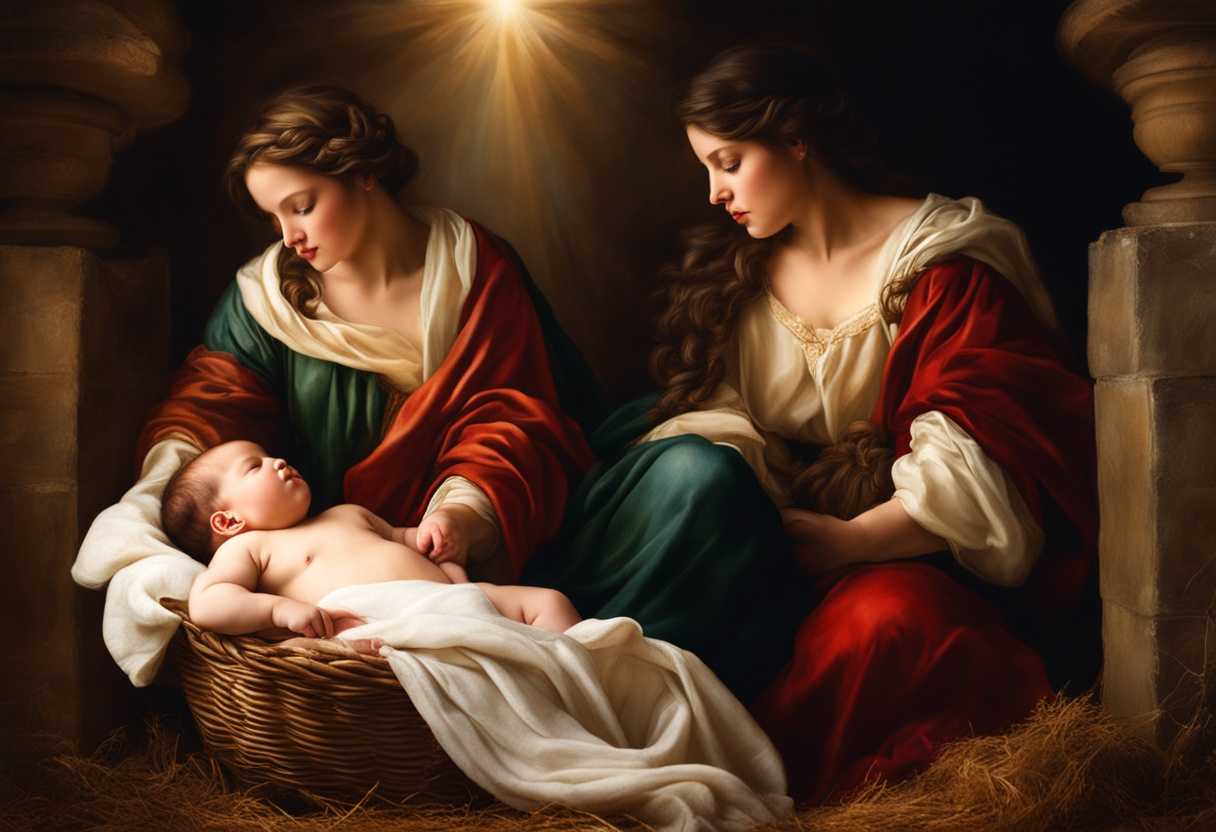
Setting the Scene for Luke 2:7-12
In Luke chapter 2, we find Mary and Joseph in the town of Bethlehem. They had traveled from Nazareth to Bethlehem because of a decree from Caesar Augustus that a census should be taken. The town was bustling with people who had also come to register for the census, and the inns were full. Mary, who was heavily pregnant, and Joseph were unable to find a place to stay, so they ended up in a humble stable.
Surrounded by the sounds of animals and the smell of hay, Mary gave birth to her son, Jesus, and laid him in a manger. It was in this simple and humble setting that the Savior of the world was born. Nearby, shepherds were tending their flocks in the fields, and an angel appeared to them, announcing the good news of the birth of Jesus. The shepherds were filled with awe and wonder and decided to go see the newborn baby, following the star that led them to the stable. It was a miraculous and divine moment, as the world welcomed its long-awaited Messiah in the most unexpected of places.
What is Luke 2:7-12 about?
This verse encapsulates a profound message of humility, grace, and unexpected beginnings. The birth of Jesus, the son of God, in a humble manger, speaks volumes about the nature of his mission on earth. Instead of being born in a grand palace or amid opulence, Jesus enters the world in a simple and lowly setting, reflecting his role as a savior for all people, regardless of their status or circumstances. The announcement of his birth by angels to shepherds, who were considered outcasts in society, further emphasizes the inclusive and transformative nature of Jesus’ message.
Reflecting on this verse prompts us to ponder the meaning of true greatness and the way God works in mysterious and unexpected ways. It challenges us to examine our own notions of power, success, and worthiness, reminding us that God’s ways are higher than ours. This verse encourages us to seek out the divine in the ordinary and to recognize the beauty and significance in the humblest of circumstances, just as Jesus’ birth in a manger was a sign of hope and salvation for all humanity. It ultimately invites us to embrace a spirit of humility, openness, and wonder as we strive to embody the love and grace that Jesus brought into the world.
Understanding what Luke 2:7-12 really means
Structure:
- Introduction and Context
- Key Phrases and Their Meanings
- Cross-Referencing with Other Biblical Passages
- Relevance to Contemporary Life
- Personal Anecdote
- Reflection and Engagement
- Conclusion
Commentary:
-
Introduction and Context:
The passage from Luke 2:7-12 narrates the birth of Jesus Christ, a cornerstone event in Christian faith. It describes Mary giving birth to Jesus, laying Him in a manger because there was no room for them in the inn. Simultaneously, an angel appears to shepherds in the fields, announcing the birth of the Savior. -
Key Phrases and Their Meanings:
The phrase “wrapped him in swaddling clothes, and laid him in a manger” speaks volumes about humility and simplicity. Jesus, the Son of God, was born not in a palace but in a humble setting. Another significant phrase is “I bring you good news that will cause great joy for all the people.” This highlights the universal nature of Jesus’s mission and the joy He brings to humanity. -
Cross-Referencing with Other Biblical Passages:
This event ties in with the prophecy in Isaiah 7:14, which foretells the birth of Immanuel, meaning “God with us.” Additionally, the angel’s announcement to the shepherds echoes the message in John 3:16, emphasizing God’s love for the world. The humility of Jesus’s birth also parallels Philippians 2:6-7, which speaks of Jesus humbling Himself by taking human form. -
Relevance to Contemporary Life:
Today, the story of Jesus’s birth reminds us of the importance of humility and simplicity. This passage calls us back to the essence of our faith—love, humility, and service in a world often driven by materialism and status. It encourages us to find joy in simple, everyday moments and to recognize the divine in the ordinary. -
Personal Anecdote:
I recall a Christmas Eve service a few years ago. A family in our congregation had recently lost their home to a fire. Despite their loss, they found joy and comfort in the church community. They shared how the story of Jesus’s humble birth gave them hope and strength. Their faith and resilience were a living testament to the message of this passage. -
Reflection and Engagement:
Have you ever considered the significance of Jesus being born in a manger? How does this humble beginning shape your understanding of His life and mission? Reflect on moments in your own life where you found profound meaning in simplicity and humility. How can you embody these values in your daily interactions? -
Luke 2:7-12 is more than a historical account; it’s a profound lesson in humility, joy, and divine love. It challenges us to look beyond the surface and find deeper meaning in our lives. Let us reflect on this passage, embodying the humble spirit of Christ, and bringing joy and love to all we encounter.
How can we recognize and worship Jesus today?
We can recognize and worship Jesus today by humbly acknowledging his divine nature and proclaiming him as the Savior of the world. We can listen to the word of God through prayer, reading the Bible, and participating in worship services, just as an angel visited the shepherds in the field to reveal the good news of Jesus’ birth. We can follow the example of the shepherds who spread the news of the newborn Messiah by opening our hearts to the message of salvation and sharing it with others. We can worship Jesus through acts of love and service to others. The shepherds, after encountering Jesus, went and told everyone about what they had seen and heard. We can show our reverence for Jesus by extending kindness, compassion, and generosity to those in need. When we care for the marginalized, comfort the sorrowful, and advocate for justice, we demonstrate our devotion to Christ and fulfill his commandment to love one another as he has loved us.
Additionally, we can worship Jesus by offering our praise and thanksgiving through music, prayer, and fellowship with other believers. We can lift our voices in adoration and gratitude for the gift of salvation that Jesus brings, just as the angels praised God for the birth of Jesus. We strengthen our faith, encourage one another, and glorify the name of Jesus Christ in all that we do by coming together in worship and community.
Application
Think of Luke 2:7-12 as the story of a humble beginning that changed everything. The shepherds didn’t ignore the call; they dropped everything to find Jesus. In our busy lives with work and family, let’s act with the same urgency. Will you make room to seek Christ today?

Reverend Michael Johnson is an experienced Church Minister with a profound expertise in spirituality and guidance. With a serene presence and a compassionate heart, he has faithfully served his congregation for over 20 years, leading them on a spiritual journey towards inner peace and enlightenment. Reverend Johnson’s extensive knowledge of religious philosophies and profound understanding of human nature have made him a trusted confidant and mentor to many, as he seamlessly weaves his profound wisdom into life teachings. Reverend Johnson’s calming demeanor and empathetic nature continue to uplift and heal souls, nurturing a sense of unity and tranquility within his community.