
8 And in the same region there were shepherds out in the field, keeping watch over their flock by night.
9 And an angel of the Lord appeared to them, and the glory of the Lord shone around them, and they were filled with great fear.
10 And the angel said to them, “Fear not, for behold, I bring you good news of great joy that will be for all the people.
11 For unto you is born this day in the city of David a Savior, who is Christ the Lord.
12 And this will be a sign for you: you will find a baby wrapped in swaddling cloths and lying in a manger.
13 And suddenly there was with the angel a multitude of the heavenly host praising God and saying,
14 “Glory to God in the highest, and on earth peace among those with whom he is pleased!”
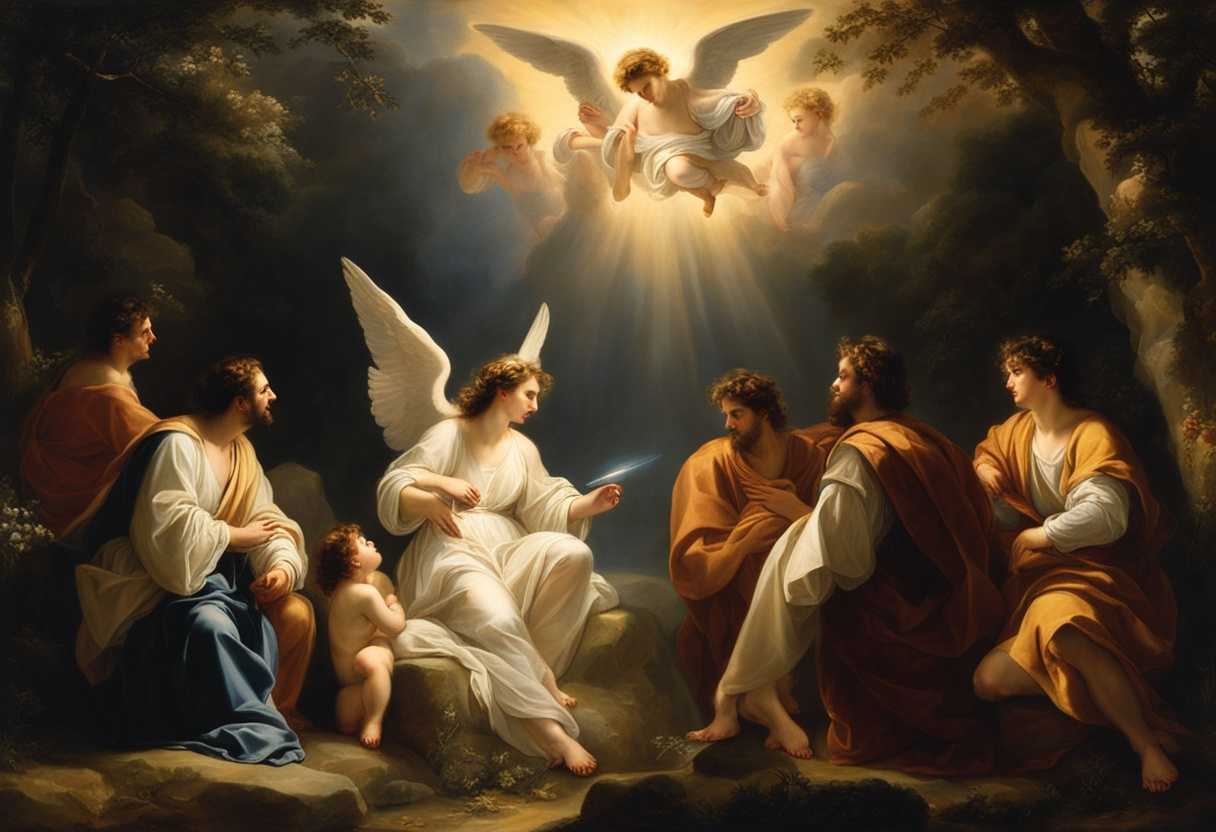
Setting the Scene for Luke 2:8-14
In Luke chapter 2, we find ourselves in the quiet hills outside of Bethlehem on a serene night. The sky is clear, and the stars twinkle brightly above, casting a soft glow over the landscape. In the distance, you can see the town of Bethlehem, its lights flickering in the darkness. The air is cool and crisp, with a gentle breeze rustling through the grass.
In this scene, we encounter a group of shepherds tending to their flock. These shepherds are simple, hardworking men who have spent their lives caring for their sheep. They are gathered around a small fire, sharing stories and keeping watch over their animals. Suddenly, an angel of the Lord appears before them, its radiant presence illuminating the night sky. The shepherds are filled with fear and awe at the sight.
The angel delivers the joyful news of the birth of Jesus Christ in Bethlehem, the Savior who has come to bring peace and salvation to the world. As the angel proclaims this message of hope, a multitude of heavenly hosts join in, praising God and singing, “Glory to God in the highest, and on earth peace among those with whom he is pleased.” The shepherds are filled with wonder and amazement at this divine revelation, and they are compelled to go and see the newborn baby for themselves.
What is Luke 2:8-14 about?
Imagine being a shepherd, spending your nights watching over your flock in the quiet darkness of the countryside. Suddenly, an angel appears before you, shining brightly, bringing news of a birth that will change the course of history. The angel’s message is simple yet profound: peace on earth. This declaration of peace brings hope and reassurance in a world filled with turmoil, conflict, and uncertainty.
The announcement of Jesus’ birth to shepherds is significant as it signifies that the message of peace and salvation is for everyone, regardless of their status or background. It shows that Jesus came to bring peace not only to the powerful and the wealthy but also to the ordinary and humble. Jesus brought the universal message of love and peace to the world, a message that continues to resonate with us today as we reflect on this verse. Through the birth of Jesus, we are offered the promise of peace, hope, and redemption, inviting us to embrace these gifts and share them with others. Let us reflect on the profound message of peace on earth and strive to embody it in our own lives, spreading love and kindness to all those around us.
Understanding what Luke 2:8-14 really means
Structure for Commentary:
1. Introduction
2. Contextual Background
3. Detailed Analysis of Key Phrases
4. Cross-Referencing with Other Scriptures
5. Relevance to Contemporary Life
6. Anecdotal Illustration
7. The profound narrative of the shepherds receiving the announcement of Jesus’ birth is encountered in Luke 2:8-14. This passage is rich in meaning and continues to resonate deeply with readers today. Let’s delve into its underlying significance and explore how it speaks to us in our modern context.
Contextual Background:
The setting is pastoral Judea, where shepherds are tending their flocks by night. This humble scene is suddenly transformed by an angelic visitation, marking the birth of Jesus Christ. The shepherds, considered lowly in society, are the first to hear the good news. This underscores a recurring theme in the Bible: God’s message often comes to the least expected.
Detailed Analysis of Key Phrases:
“Glory to God in the highest.” This phrase encapsulates the heavenly praise that accompanies the birth of Christ. It signifies the ultimate divine act of sending His Son to earth. The glory of God is the utmost priority, setting the tone for the entire Gospel narrative.
“And on earth peace, goodwill toward men.” This declaration heralds a new era of peace between God and humanity. The birth of Jesus is the advent of reconciliation and divine favor. It’s an invitation to all people, transcending social and cultural boundaries. Isaiah 9:6 prophesies the coming of the “Prince of Peace,” which you can cross-reference with other scriptures.” This passage aligns with the angelic announcement in Luke. Furthermore, John 3:16 emphasizes God’s love for the world, offering eternal life through His Son. Together, these scriptures weave a consistent message of hope and redemption. The message of peace and goodwill is profoundly relevant in a world often marked by division and unrest. It challenges us to reflect on our relationships and to seek harmony and understanding. The shepherds’ experience reminds us that God’s message is inclusive, reaching out to everyone, regardless of status or background.
Anecdotal Illustration:
Imagine a small-town janitor working late into the night, unnoticed and undervalued. Suddenly, he receives an unexpected, life-changing message of hope and purpose. Like the shepherds, he is reminded that every individual has worth in God’s eyes. This story echoes the transformative power of the angelic announcement, encouraging us to see the divine in the mundane.
Conclusion:
The passage in Luke 2:8-14 invites us into a divine narrative where glory, peace, and goodwill are central. It calls us to recognize the worth of every person and to live out the message of peace in our daily lives. We should reflect on this passage and be inspired to embody its profound truths and share its hope with others.
What does the presence of angels signify for us?
The presence of angels signifies that the message being conveyed is of great importance and divine origin. The angels appearing to the shepherds in the fields near Bethlehem announce the birth of Jesus Christ, the Savior in this particular verse. Their presence serves as a confirmation of the significance of this event in the grand scheme of God’s plan for humanity. It also symbolizes a bridge between the earthly realm and the heavenly realm, emphasizing the connection between God and His creation.
Furthermore, the appearance of angels often brings a message of hope, comfort, and protection. The angels bring tidings of great joy and peace on earth to the shepherds, signaling the beginning of a new era of salvation for all people. The presence of angels reassures us that God is actively involved in our lives and that He watches over us, guiding us towards the fulfillment of His promises. It is a reminder of the spiritual realm working alongside us in our journey of faith.
Application
In our modern hustle, it’s easy to forget what’s truly important. Luke 2:8-14 reminds us of the angels bringing news of Jesus’ birth. The shepherds dropped everything in awe to witness this miracle. Shouldn’t we do the same in our own lives, sharing the joy and hope of Jesus with those around us? Will you pause in your busy day to spread this life-changing message?

Reverend Michael Johnson is an experienced Church Minister with a profound expertise in spirituality and guidance. With a serene presence and a compassionate heart, he has faithfully served his congregation for over 20 years, leading them on a spiritual journey towards inner peace and enlightenment. Reverend Johnson’s extensive knowledge of religious philosophies and profound understanding of human nature have made him a trusted confidant and mentor to many, as he seamlessly weaves his profound wisdom into life teachings. Reverend Johnson’s calming demeanor and empathetic nature continue to uplift and heal souls, nurturing a sense of unity and tranquility within his community.