
Luke 2:9-15 is about the miraculous appearance of an angel to announce the birth of Jesus to shepherds, signifying the humble beginnings of the Messiah and the glory and joy that his arrival brings to all people.
9 And an angel of the Lord appeared to them, and the glory of the Lord shone around them, and they were filled with great fear.
10 And the angel said to them, “Fear not, for behold, I bring you good news of great joy that will be for all the people.
11 For unto you is born this day in the city of David a Savior, who is Christ the Lord.
12 And this will be a sign for you: you will find a baby wrapped in swaddling cloths and lying in a manger.
13 And suddenly there was with the angel a multitude of the heavenly host praising God and saying,
14 “Glory to God in the highest, and on earth peace among those with whom he is pleased!”
15 When the angels went away from them into heaven, the shepherds said to one another, “Let us go over to Bethlehem and see this thing that has happened, which the Lord has made known to us.”
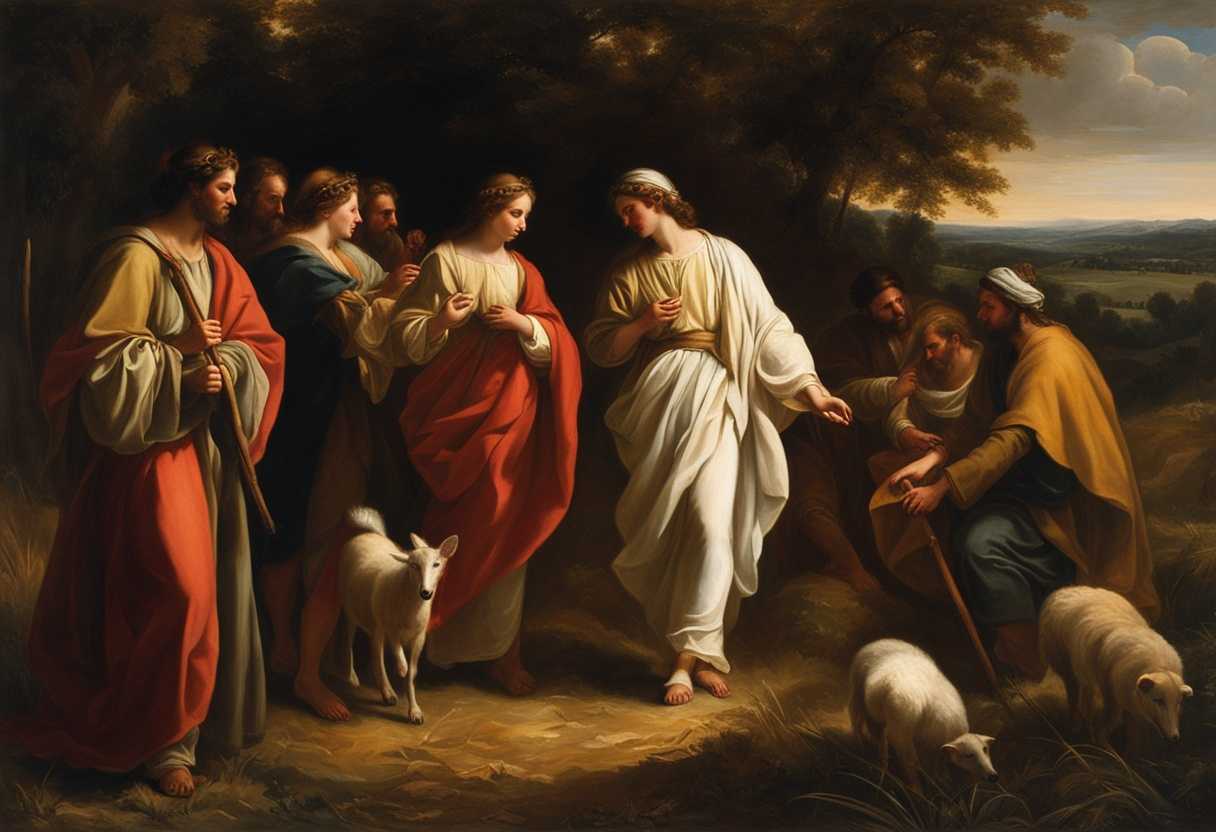
Setting the Scene for Luke 2:9-15
In Luke chapter 2, we find ourselves in the hills outside Bethlehem on a serene night. The sky is clear, and the stars twinkle brightly above, casting a soft glow over the landscape. In the distance, you can see the town of Bethlehem, its lights flickering in the darkness. The air is cool and crisp, with a gentle breeze rustling through the trees.
In this scene, we encounter a group of shepherds tending to their flock. These shepherds are simple, hardworking men who have spent countless nights under the open sky, watching over their sheep. Suddenly, an angel of the Lord appears before them, its radiant presence illuminating the darkness. The shepherds are filled with fear and awe at the sight.
The angel delivers the joyful news of the birth of Jesus Christ in Bethlehem, the long-awaited Messiah. The shepherds are amazed and filled with wonder at this incredible announcement. They are then joined by a multitude of heavenly hosts, praising God and singing, “Glory to God in the highest, and on earth peace, goodwill toward men.” Overwhelmed by this divine encounter, the shepherds decide to go to Bethlehem to see the newborn baby, the Savior of the world, for themselves.
What is Luke 2:9-15 about?
How spectacular and awe-inspiring it must have been for the shepherds to receive such an important announcement from angels! Imagine the sky illuminated by their presence and their voices resonating in the stillness of the night. The shepherds, who were humble and hardworking individuals, were chosen to witness the arrival of the long-awaited Messiah, Jesus Christ. This event symbolizes the universality of the message of Jesus, as it was first shared with those who were not considered prominent or privileged in society.
The shepherds’ immediate response to the angel’s message is remarkable. They wasted no time in journeying to Bethlehem to see the miracle for themselves. Their faith and obedience serve as an example to all of us, demonstrating the importance of being open to divine messages and acting upon them with conviction and haste. This verse reminds us of the simplicity and purity of the Christmas story, highlighting the significance of Jesus’ birth and the profound impact it has on humanity.
Understanding what Luke 2:9-15 really means
The passage in Luke 2:9-15 recounts the extraordinary event where an angel of the Lord appeared to shepherds, heralding the birth of Jesus. This divine revelation to humble shepherds signifies the accessibility of God’s message to all people, regardless of their social standing. The key phrases in this passage hold profound meanings that convey the significance of Jesus’ birth and the universal nature of the Gospel. When the angel reassures the shepherds not to fear and announces the birth of a Savior, it emphasizes Jesus’ roles as the Messiah and the bringer of great joy to all people.
The radiance of the Lord’s glory shining around the shepherds symbolizes the awe-inspiring nature of divine encounters and God’s presence in the announcement of Jesus’ birth. The appearance of a multitude of angels praising God underscores the magnitude of this event and the heavenly celebration that accompanies the birth of the Savior. The angels’ proclamation of peace and divine favor highlights the message of hope and reconciliation that Jesus brings to the world.
This passage resonates with various other biblical texts, such as Isaiah 9:6, which prophesies the birth of a child who will be called Wonderful Counselor, Mighty God, Everlasting Father, and Prince of Peace. Additionally, Matthew 1:21 and John 1:14 further emphasize Jesus’ role as the Savior who brings salvation and embodies the Word becoming flesh to dwell among humanity.
The relevance of this passage extends to people today, reminding us of the universal message of God’s love and the reassurance of His presence in times of fear and uncertainty. The joy and peace brought by the good news of Jesus’ birth are particularly poignant in today’s world, where anxiety and conflict abound. Just as the shepherds eagerly shared the news of Jesus’ birth, we are called to embrace the message of peace and share it joyfully with others.
Imagine a scenario in a small, rural community where humble farmers are the first to hear of a significant event and eagerly spread the news. This anecdote mirrors the shepherds’ experience, illustrating that God’s message can reach anyone, anywhere, and is meant to be shared with joy and enthusiasm. In conclusion, the passage from Luke 2:9-15 serves as a powerful reminder of God’s inclusive love, the joy found in Jesus’ birth, and the call to share the message of peace with all.
What does it mean to experience divine awe?
Experiencing divine awe means encountering a powerful and overwhelming presence that inspires reverence and wonder. The shepherds in the field were filled with fear when an angel of the Lord appeared to them, accompanied by the glory of the Lord in the account from Luke 2. This moment evoked a deep sense of awe and astonishment in the shepherds as they were faced with a divine presence beyond their understanding.
Divine awe often involves a realization of one’s own smallness in comparison to the greatness and majesty of the divine. The shepherds recognized their own insignificance and unworthiness in the presence of the angel and the glory of the Lord, which led them to feel fear and awe. This feeling of awe can be both humbling and overwhelming, as it confronts individuals with the vastness and power of the divine presence.
Experiencing divine awe can also inspire a sense of wonder and amazement at the miraculous or extraordinary. The shepherds were witness to the birth of the Savior, which the angel announced to them. This divine encounter filled them with awe and compelled them to seek out the newborn child. Divine awe often motivates individuals to seek a deeper connection with the divine and respond to the presence of God in their lives.
Application
In the hustle of our lives, let’s be like the shepherds who hurried to find the Savior, responding eagerly to the call to seek Christ. It’s time to actively pursue Jesus and spread His message of hope and salvation to all. Let’s not wait, but embark on this mission with purpose and passion. Will you step up and join the mission to seek Christ fervently and share His love with everyone around you?

Reverend Michael Johnson is an experienced Church Minister with a profound expertise in spirituality and guidance. With a serene presence and a compassionate heart, he has faithfully served his congregation for over 20 years, leading them on a spiritual journey towards inner peace and enlightenment. Reverend Johnson’s extensive knowledge of religious philosophies and profound understanding of human nature have made him a trusted confidant and mentor to many, as he seamlessly weaves his profound wisdom into life teachings. Reverend Johnson’s calming demeanor and empathetic nature continue to uplift and heal souls, nurturing a sense of unity and tranquility within his community.