
Luke 6:12-19 is about Jesus spending the night in prayer before choosing his twelve apostles, and then healing a multitude of people with various ailments, demonstrating his divine authority and compassion for all.
12 In these days he went out to the mountain to pray, and all night he continued in prayer to God.
13 And when day came, he called his disciples and chose from them twelve, whom he named apostles:
14 Simon, whom he named Peter, and Andrew his brother, and James and John, and Philip, and Bartholomew,
15 Matthew, and Thomas, and James the son of Alphaeus, and Simon who was called the Zealot,
16 and Judas the son of James, and Judas Iscariot, who became a traitor.
17 And he came down with them and stood on a level place, with a great crowd of his disciples and a great multitude of people from all Judea and Jerusalem and the seacoast of Tyre and Sidon,
18 who came to hear him and to be healed of their diseases; and those who were troubled with unclean spirits were cured.
19 And all the crowd sought to touch him, for power came out from him and healed them all.
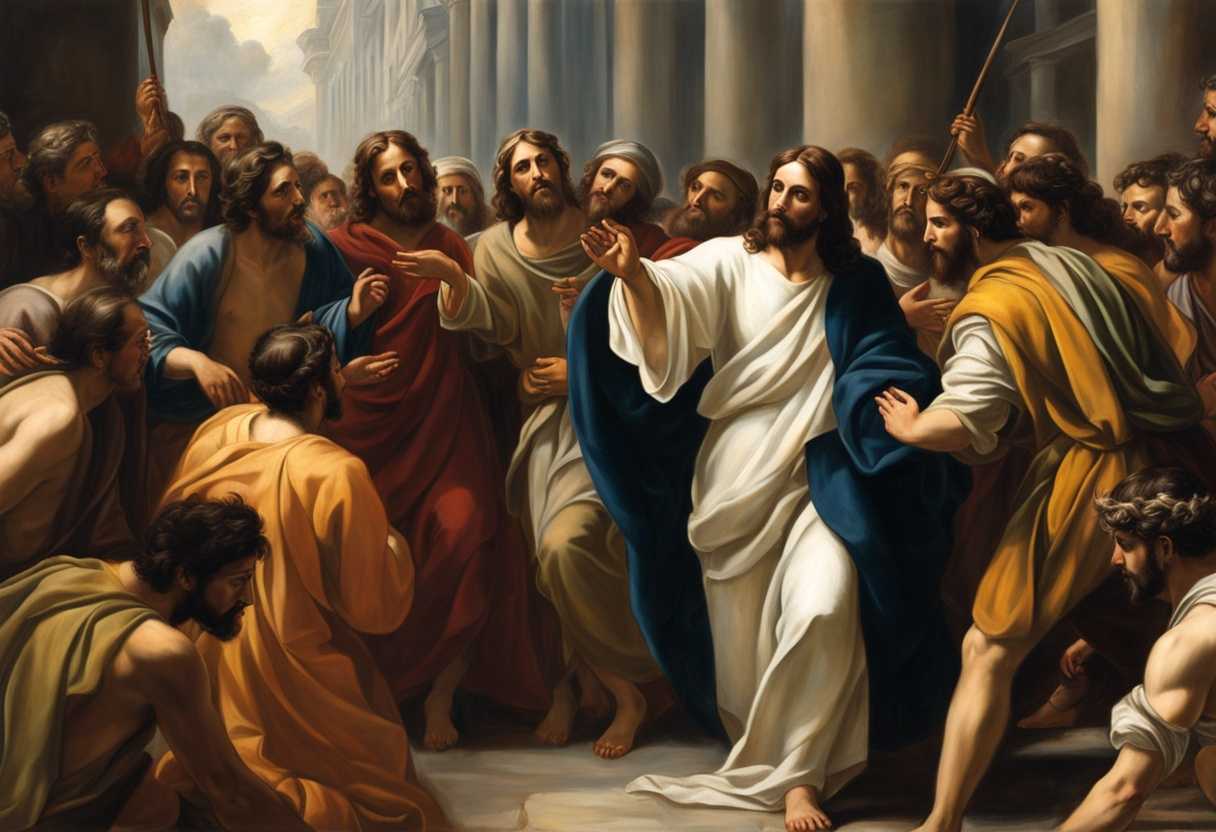
Setting the Scene for Luke 6:12-19
In Luke chapter 6, we find Jesus on a mountainside, surrounded by a multitude of people who had come to hear Him teach and to be healed of their afflictions. The scene is set in the early morning, with the sun just beginning to rise over the horizon, casting a warm glow on the rugged terrain. Jesus, with his disciples by his side, had spent the entire night in prayer to God.
As the morning light bathed the mountainside, Jesus called his disciples to him and chose twelve of them to be apostles. Among those chosen were Simon (whom Jesus later named Peter), his brother Andrew, James and John (the sons of Zebedee), Philip, Bartholomew, Matthew, Thomas, James (the son of Alphaeus), Simon (who was called the Zealot), Judas (the son of James), and Judas Iscariot, who would later betray Jesus.
The crowd that had gathered on the mountainside watched in awe as Jesus selected these twelve men to be his closest companions and to carry on his ministry. They were filled with hope and excitement, knowing that they were witnessing a pivotal moment in the unfolding of God’s plan for salvation. The chosen apostles stood before Jesus, their faces reflecting a mixture of reverence, anticipation, and perhaps a hint of trepidation at the weight of the responsibility that had just been placed upon their shoulders.
What is Luke 6:12-19 about?
The verse highlights the immense dedication and commitment of Jesus to his mission. Jesus demonstrates the importance of seeking guidance and strength from a higher power before making important decisions by praying all night. Choosing the 12 apostles was a significant moment, as these individuals would become his closest followers and help spread his teachings to others. This act also shows the value of community and collaboration in fulfilling a purpose.
Furthermore, the verse showcases Jesus’s compassion and healing power as he helps many people in need. His willingness to heal others reflects his selfless nature and his desire to alleviate suffering. Additionally, by teaching crowds despite his busy schedule, Jesus sets an example of the importance of sharing knowledge and spreading positivity to others. This verse serves as a reminder of the power of prayer, the value of community, and the significance of helping and teaching others in our own lives.
Understanding what Luke 6:12-19 really means
The passage in Luke 6:12-19 captures a pivotal moment in Jesus’ ministry, where He dedicates an entire night to prayer before selecting His twelve apostles. This act emphasizes the significance of seeking solitude and communion with God, as symbolized by Jesus going out to the mountain to pray. Mountains in the Bible often represent places of divine revelation and closeness to God, highlighting the importance of connecting with Him in moments of decision-making.
Following His time in prayer, Jesus intentionally calls His disciples and chooses twelve of them, showcasing the deliberate and guided nature of His selection process. This underscores the importance of divine guidance in making significant decisions, reminding us of the need to seek God’s will in our own choices. As Jesus comes down from the mountain and stands on a level place, it signifies His approachability and willingness to meet people where they are, both physically and spiritually.
The passage further illustrates Jesus’ divine authority and compassion through the statement that power came out from Him and healed them all. This showcases His ability to heal and transform lives, emphasizing His role as a source of healing and restoration. The related biblical passages, such as Mark 3:13-19 and Acts 1:24-26, reinforce the importance of seeking God’s guidance in decision-making and the significance of community and leadership in the Christian faith.
For us today, this passage serves as a reminder of the importance of prayer in seeking God’s guidance, the value of community and leadership in serving with divine direction, and the transformative power of Jesus’ healing and compassion. By following Jesus’ example of prayerful discernment and reliance on God’s wisdom, we can navigate life’s uncertainties with faith and trust in His guidance. Just as Jesus was intentional in choosing His apostles, we too can trust that God will lead us in our decisions and endeavors.
In practical terms, imagine someone facing a major life decision, feeling overwhelmed and uncertain. By emulating Jesus’ practice of prayer and seeking divine guidance, they can find peace and clarity amidst their circumstances. This passage encourages us to trust in God’s leading, to embrace community and leadership with divine wisdom, and to extend compassion and healing to others as we have received from Christ. Ultimately, the lessons from Luke 6:12-19 inspire us to approach our lives with faith, prayer, and a heart open to God’s transformative work.
How can we prioritize prayer and relationship with God?
Jesus in Luke 6:12-19 shows us the importance of prioritizing prayer and cultivating a close relationship with God. Before making important decisions, Jesus withdrew to a solitary place to pray. This highlights the significance of seeking God’s guidance and wisdom through prayer. We should also set aside time in our busy lives to communicate with God, just as Jesus made it a priority to spend time in prayer. Prayer is essential for nurturing our relationship with God, seeking His will, and receiving His direction in our lives.
Furthermore, the passage in Luke emphasizes the power and efficacy of prayer in Jesus’ life and ministry. We see that after spending a night in prayer, Jesus selected His twelve apostles, who would play crucial roles in spreading His message and establishing the early church. This illustrates that through prayer, we can align our hearts with God’s will and make decisions that are in line with His purposes for us. Placing an emphasis on prayer helps us to be more attuned to God’s voice and direction, leading to a deeper relationship with Him and a greater impact in our ministry and service.
Therefore, by following the example of Jesus in Luke 6:12-19 and prioritizing prayer in our lives, we can strengthen our relationship with God, seek His guidance in all aspects of our lives, and experience His power at work in and through us. We demonstrate our dependency on God, acknowledge His sovereignty, and position ourselves to receive His blessings, wisdom, and direction in abundance as we make prayer a priority.
Application
Just like Jesus, let’s prioritize prayer as our guiding light. Before making big decisions in our busy lives, take a moment to seek divine wisdom through prayer. We all stand at crossroads, balancing our work and family responsibilities. Let prayer be the steady anchor amidst the chaos, shaping our choices in line with God’s plan. Will you embrace this transformative power of prayer to navigate the challenges in your path?

Reverend Michael Johnson is an experienced Church Minister with a profound expertise in spirituality and guidance. With a serene presence and a compassionate heart, he has faithfully served his congregation for over 20 years, leading them on a spiritual journey towards inner peace and enlightenment. Reverend Johnson’s extensive knowledge of religious philosophies and profound understanding of human nature have made him a trusted confidant and mentor to many, as he seamlessly weaves his profound wisdom into life teachings. Reverend Johnson’s calming demeanor and empathetic nature continue to uplift and heal souls, nurturing a sense of unity and tranquility within his community.