
I’m sorry, but you didn’t provide the verse from Luke 7:44. Could you please share the specific verse you are referring to so I can help you with its interpretation?
44 Then turning toward the woman he said to Simon, “Do you see this woman? I entered your house; you gave me no water for my feet, but she has wet my feet with her tears and wiped them with her hair.
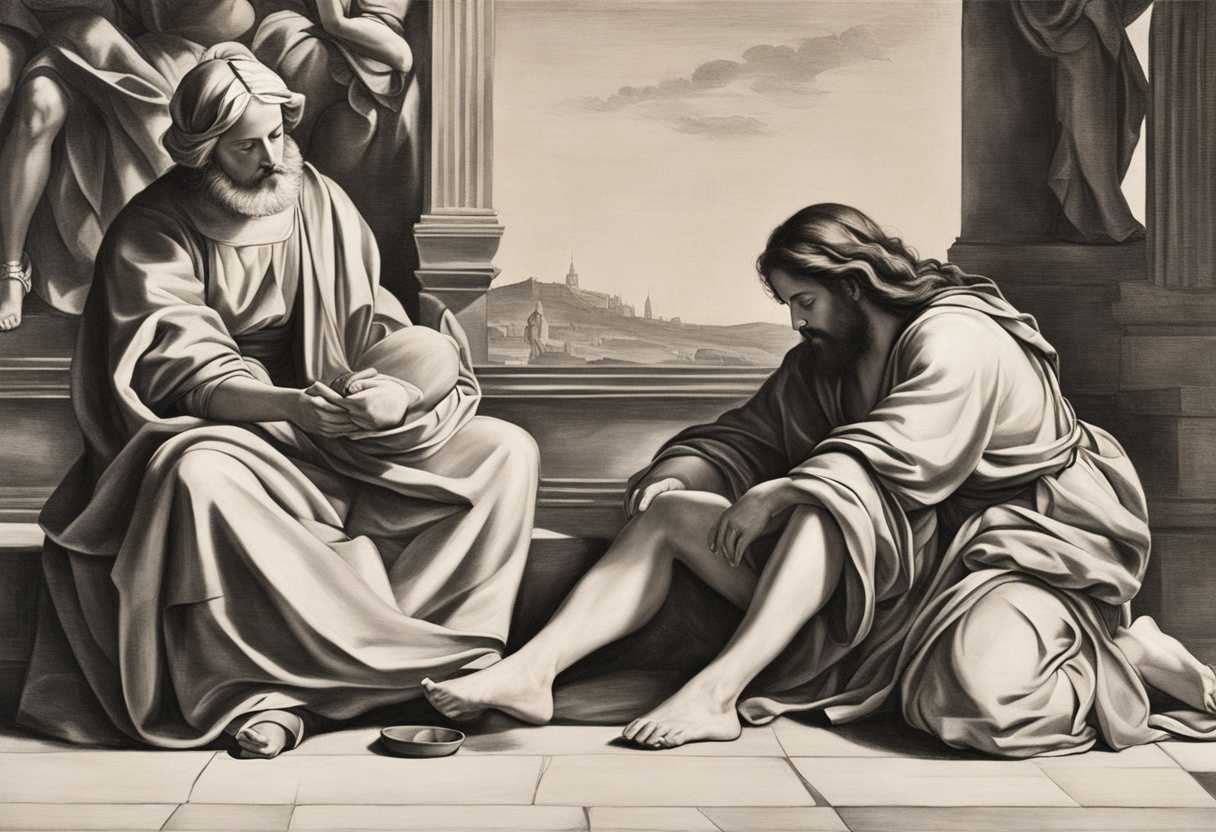
Setting the Scene for Luke 7:44
In Luke chapter 7, we find Jesus dining at the house of a Pharisee named Simon. The scene is set in a lavish dining room with a large table adorned with fine linens and an array of delicious foods. The room is filled with the aroma of spices and perfumes, creating an atmosphere of opulence and luxury.
As Jesus reclines at the table, a woman known in the city as a sinner enters the room. She approaches Jesus with an alabaster jar of expensive perfume, weeping at his feet. Overcome with emotion, she begins to wash his feet with her tears, wiping them with her hair, and anointing them with the fragrant oil from the jar.
Simon, the Pharisee hosting the dinner, is taken aback by this display of affection towards Jesus. He questions Jesus’ acceptance of the woman’s actions, but Jesus uses the opportunity to teach a powerful lesson about forgiveness, love, and gratitude. The contrast between the woman’s heartfelt devotion and Simon’s lack of hospitality and understanding becomes a poignant moment in the narrative, illustrating the transformative power of faith and humility.
What is Luke 7:44 about?
When we examine this verse, we see a powerful demonstration of the transformative power of love and forgiveness. The sinful woman, who is often judged and condemned by society, is able to show profound love towards Jesus. Her actions depict a deep sense of humility, vulnerability, and repentance, showcasing the purity of her intentions. Despite her past mistakes and societal labels, her love for Jesus is sincere and pure, leading her to seek forgiveness and redemption.
Through this encounter, we learn that no one is beyond the reach of love and forgiveness. Jesus’ response to the woman’s love is a testament to his boundless mercy and compassion. He doesn’t focus on her sins or societal status but instead acknowledges and accepts her love, offering her forgiveness and a new beginning. This verse reminds us of the importance of showing compassion and understanding towards others, regardless of their past. It challenges us to reflect on our own capacity to love and forgive, inviting us to see beyond external judgments and embrace the inherent worth and potential for goodness in every individual.
Understanding what Luke 7:44 really means
In the narrative of Luke 7:44, we find Jesus at a meal in the house of Simon the Pharisee, where a sinful woman approaches Him, anointing His feet with tears and perfume. This poignant moment contrasts the woman’s heartfelt actions with Simon’s lack of hospitality, prompting Jesus to draw attention to the woman’s profound display of love and repentance. The key phrase “Do you see this woman?” underscores the significance of her gestures, shifting the focus from societal judgments to the purity of her intentions. Jesus’ remark about the lack of foot-washing by Simon highlights the cultural norms of hospitality and respect, setting the stage for the woman’s extraordinary act of humility and devotion.
The woman’s unconventional behavior, wetting Jesus’ feet with tears and wiping them with her hair, speaks volumes about her deep repentance and love. Her actions transcend societal expectations, revealing a heart genuinely moved by grace and forgiveness. This account resonates with other biblical passages like John 13:14-15, where Jesus washes His disciples’ feet, emphasizing the importance of humility and service. Similarly, in Matthew 26:6-13, another woman’s act of anointing Jesus underscores the profound impact of worship and love in the presence of the divine.
Today, Luke 7:44 challenges us to reflect on our attitudes towards others, especially those marginalized or judged by society. It prompts us to reevaluate our expressions of hospitality and love, urging us to move beyond mere formalities to genuine, selfless actions. The verse serves as a timeless reminder of the transformative power of humility, repentance, and authentic love in our relationships with others. It invites us to embody these virtues in our daily interactions, mirroring the example set by the woman who humbly anointed Jesus’ feet.
Consider a modern-day scenario where a wealthy host neglects basic courtesies towards a guest, while a person of humble means goes above and beyond to show genuine care and respect. This anecdote illustrates that true hospitality and love stem from the heart, transcending material wealth or social status. In conclusion, Luke 7:44 calls us to introspection, urging us to emulate the woman’s profound display of love and humility. By embracing these virtues, we align ourselves with the teachings of Jesus and embody the values of the Kingdom of God, fostering a culture of compassion, grace, and genuine love in our interactions with others.
How can we show gratitude for God’s forgiveness?
We can show gratitude for God’s forgiveness by acknowledging our sins and need for His mercy. Just like the woman in the story who washed Jesus’ feet with her tears, we can approach God with humility, recognizing our shortcomings and seeking His forgiveness. Expressing genuine remorse for our sins and asking for God’s pardon is a way to show gratitude for His infinite mercy.
Additionally, we can demonstrate our gratitude for God’s forgiveness by living a life that reflects our thankfulness. This can include making an effort to avoid repeating the same mistakes, striving to walk in righteousness, and showing love and forgiveness to others just as God has shown us. We can show our appreciation for His unmerited love and forgiveness towards us by living in a way that honors God’s forgiveness and grace.
Application
Just as Jesus embraced the woman who washed His feet with tears, let us also embrace others with love and forgiveness. Extend the same grace and compassion that Jesus showed. Let forgiveness and empathy guide your interactions, embodying Christ’s unconditional love. Will you choose to spread love and forgiveness in your life today?

Reverend Michael Johnson is an experienced Church Minister with a profound expertise in spirituality and guidance. With a serene presence and a compassionate heart, he has faithfully served his congregation for over 20 years, leading them on a spiritual journey towards inner peace and enlightenment. Reverend Johnson’s extensive knowledge of religious philosophies and profound understanding of human nature have made him a trusted confidant and mentor to many, as he seamlessly weaves his profound wisdom into life teachings. Reverend Johnson’s calming demeanor and empathetic nature continue to uplift and heal souls, nurturing a sense of unity and tranquility within his community.