
Luke 7:6 is about a Roman centurion demonstrating great faith in Jesus by recognizing His authority and power to heal even from a distance, displaying an example of unwavering belief and humility.
6 And Jesus went with them. When he was not far from the house, the centurion sent friends, saying to him, “Lord, do not trouble yourself, for I am not worthy to have you come under my roof.
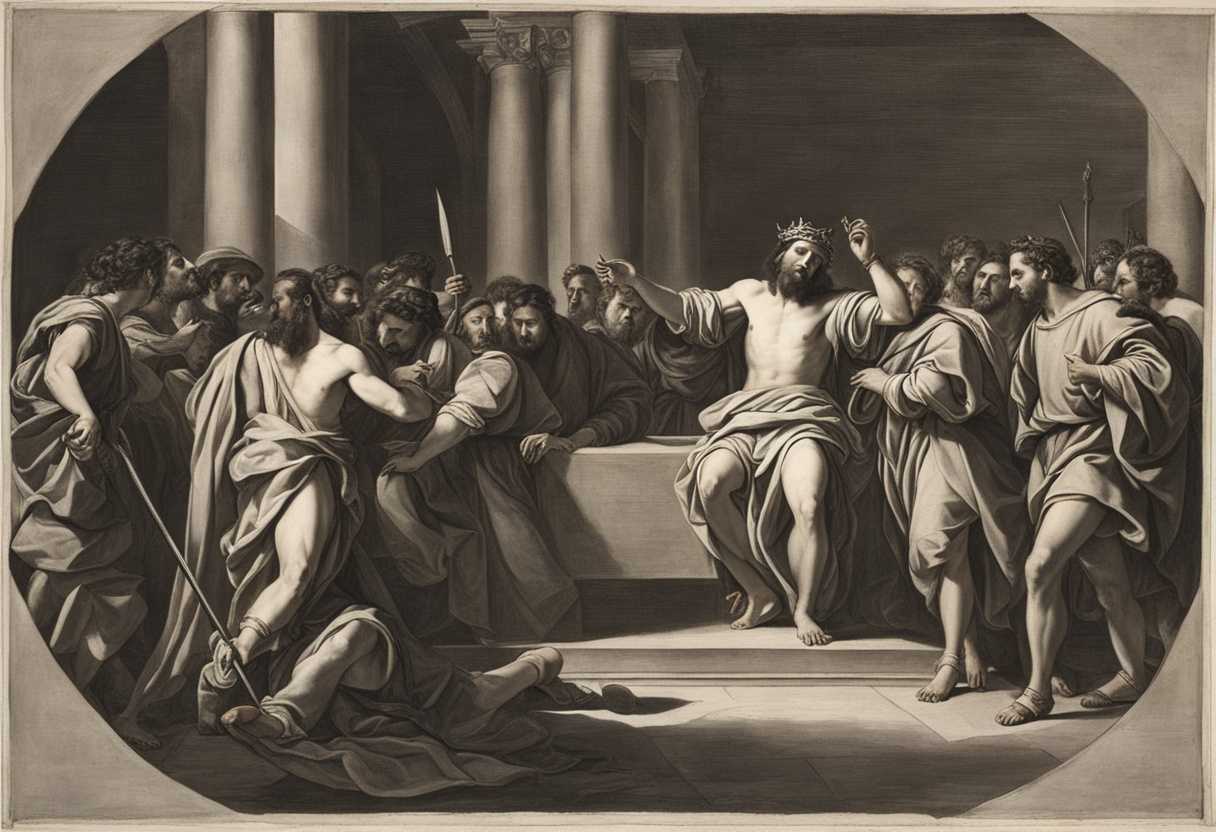
Setting the Scene for Luke 7:6
In Luke chapter 7, we find a poignant scene unfolding in the town of Capernaum. The centurion, a Roman officer, has a servant who is gravely ill and in need of healing. The centurion, known for his compassion and respect for the Jewish people, sends some elders of the Jews to Jesus to ask for his help. The elders plead with Jesus, saying that the centurion is worthy of having his servant healed because he loves the Jewish nation and even built a synagogue for them.
Jesus agrees to go with them to the centurion’s house. As they approach the house, the centurion sends friends to tell Jesus not to trouble himself to come under his roof, for he believes that Jesus has the authority to heal from a distance with just a word. Jesus is amazed at the centurion’s faith and declares that he has not found such great faith even in Israel.
The scene is set in the bustling town of Capernaum, with dusty streets and stone houses lining the roads. The centurion’s house is likely a grand structure, reflecting his status in the Roman army. The tension and anticipation are palpable as Jesus and his disciples, along with the elders and friends of the centurion, gather outside the house, preparing for a miraculous encounter that will demonstrate the power of faith and the compassion of the Savior.
What is Luke 7:6 about?
Jesus heals the centurion’s servant from a distance, demonstrating the power of faith and compassion. The centurion’s deep faith in Jesus’ ability to heal his servant without physical proximity is a testament to the belief in the limitless power of God. The centurion’s humility and understanding of authority is also impressive, as he acknowledges that his own command over soldiers is akin to Jesus’ command over illness and suffering.
Reflecting on this verse, we are reminded of the importance of unwavering faith in times of need. The centurion’s belief in Jesus transcended physical barriers and brought about miraculous healing. It challenges us to examine the depth of our faith and trust in God’s ability to work wonders in our lives. Have we truly embraced the power of faith in our own spiritual journey? Do we approach challenges with the same humility and trust as the centurion did? This verse serves as a powerful reminder of the transformative power of faith and the boundless compassion of Jesus towards those who believe in Him.
Understanding what Luke 7:6 really means
In Luke 7:6, we encounter a profound display of humility and faith in the story of the centurion seeking Jesus’ help for his servant. The centurion’s actions speak volumes about his character and belief in Jesus’ ability to heal, despite his own unworthiness. This narrative serves as a timeless reminder of the virtues of humility and faith that resonate with us today.
The centurion’s humility shines through as he sends friends to convey his message to Jesus, expressing that he is not worthy to have Jesus enter his home. This act of humility is a stark contrast to the pride and self-centeredness often prevalent in society. It challenges us to examine our own attitudes and approach God with a humble heart, acknowledging our limitations and recognizing the greatness of God.
Furthermore, the centurion’s faith is remarkable. Despite not being part of the Jewish faith, his belief in Jesus’ authority and power is unwavering. This demonstrates that faith knows no cultural or religious boundaries and encourages us to trust in God’s goodness and ability to work in our lives, even when we may feel undeserving.
The centurion’s intercession for his servant also highlights the importance of praying for others. His genuine concern for his servant’s well-being and his willingness to seek help from Jesus exemplify the power of intercessory prayer. This serves as a reminder for us to lift others up in prayer, showing compassion and care for those in need.
In a modern context, we can draw parallels to the centurion’s actions. Imagine a scenario where a person of authority humbly seeks help for a subordinate, demonstrating genuine concern and faith in the helper’s abilities. This mirrors the centurion’s approach to Jesus and teaches us valuable lessons about humility, faith, and the importance of seeking help for others.
The phrases used by the centurion, such as “Lord, do not trouble yourself” and “I am not worthy,” carry deep meanings. They reflect his reverence for Jesus and his humble acknowledgment of his own unworthiness. These phrases serve as a guide for us to approach God with respect and humility, recognizing our need for His grace in our lives.
Lastly, the centurion’s declaration, “Say the word, and my servant will be healed,” showcases his unwavering faith in Jesus’ power. This statement challenges us to trust in God’s ability to work miracles in our lives, even from a distance. It encourages us to have faith that God can intervene in our circumstances, no matter how impossible they may seem.
By delving into the story of the centurion and reflecting on his humility, faith, and intercession, we can glean valuable insights for our own spiritual journey. May we learn from his example and strive to approach God with humility, trust in His power, and intercede for others in prayer, embodying the virtues that the centurion exemplified in his encounter with Jesus.
Am I willing to humbly seek help and guidance?
Yes, the centurion in Luke 7 humbly sought Jesus for help and guidance. Despite his authority and status, he recognized his own limitations and showed great humility by sending others to intercede for him. We should be willing to humble ourselves and seek help and guidance from others when we are in need in the same way. This requires acknowledging that we cannot do everything on our own and that we may need the support and wisdom of others to navigate difficult situations.
The example of the centurion reminds us that seeking help is not a sign of weakness, but rather a display of humility and faith. It shows that we are open to receiving assistance and guidance from others, recognizing that we do not have all the answers or all the resources needed to overcome challenges on our own. We also demonstrate our trust in the people around us and our willingness to work together towards a common goal by humbly seeking help and guidance.
Application
Just like the centurion, do we have the unwavering faith to believe in the miracles that God can work in our lives? Let’s take a moment to reflect on our own faith and trust in God’s power. Are we ready to approach God with the same level of confidence and humility as the centurion did? Let’s open our hearts to the possibility of miracles and see how God can work wonders in our lives. Are we willing to believe that with God, all things are possible?

Reverend Michael Johnson is an experienced Church Minister with a profound expertise in spirituality and guidance. With a serene presence and a compassionate heart, he has faithfully served his congregation for over 20 years, leading them on a spiritual journey towards inner peace and enlightenment. Reverend Johnson’s extensive knowledge of religious philosophies and profound understanding of human nature have made him a trusted confidant and mentor to many, as he seamlessly weaves his profound wisdom into life teachings. Reverend Johnson’s calming demeanor and empathetic nature continue to uplift and heal souls, nurturing a sense of unity and tranquility within his community.