
Mark 10:46 is about Jesus healing blind Bartimaeus, illustrating how faith and persistence in seeking the Lord can lead to spiritual enlightenment and physical healing.
46 And they came to Jericho. And as he was leaving Jericho with his disciples and a great crowd, Bartimaeus, a blind beggar, the son of Timaeus, was sitting by the roadside.
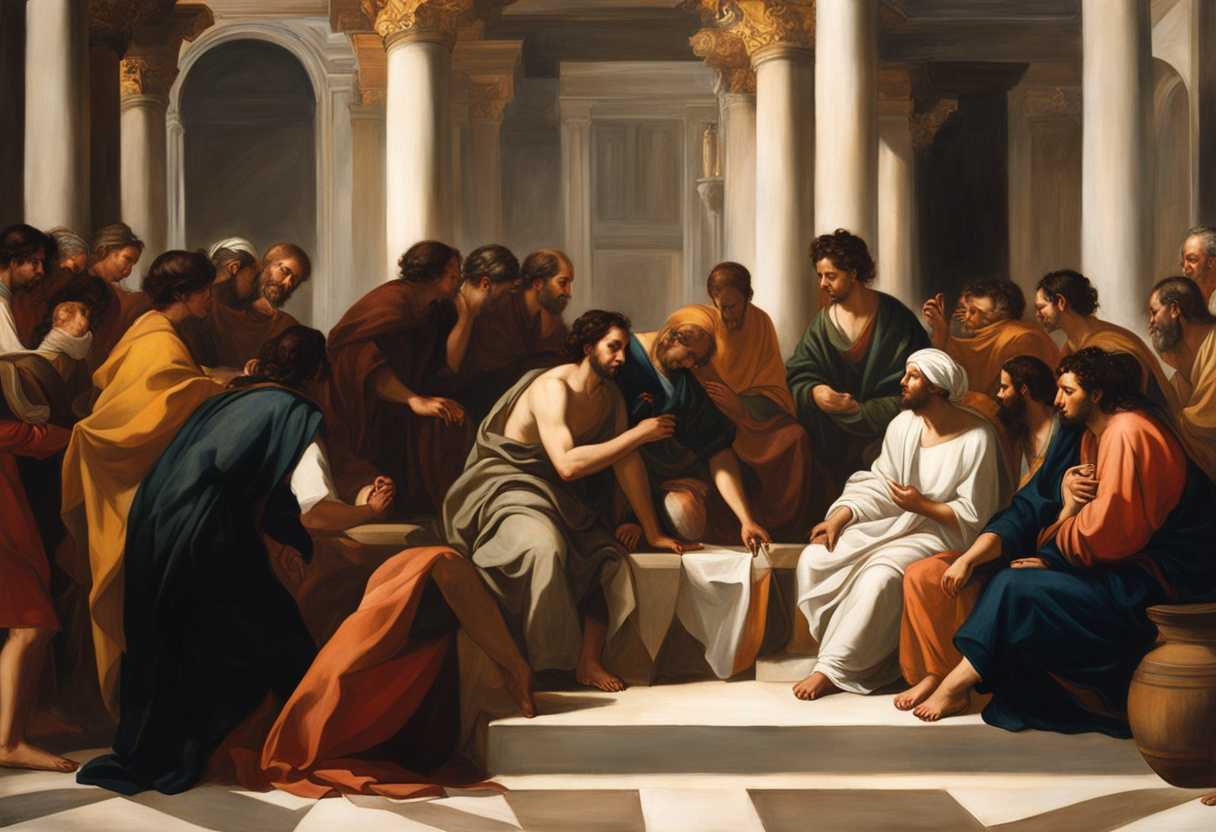
Setting the Scene for Mark 10:46
In Mark chapter 10, we find Jesus and his disciples traveling through Jericho on their way to Jerusalem. As they pass through the bustling city, they are surrounded by a crowd of people eager to catch a glimpse of the renowned teacher and healer. Among the throng is a blind beggar named Bartimaeus, who has heard of Jesus’ miraculous deeds and is desperate for his own encounter with the Son of God.
Bartimaeus, having heard that Jesus is passing by, begins to cry out, “Jesus, Son of David, have mercy on me!” His impassioned plea catches the attention of those around him, and despite attempts to silence him, Bartimaeus continues to call out to Jesus. Moved by his faith and persistence, Jesus stops in his tracks and commands that Bartimaeus be brought to him. The blind beggar, filled with hope and anticipation, is led to Jesus, who asks him, “What do you want me to do for you?”
Surrounded by the curious onlookers, Jesus performs a miracle, restoring Bartimaeus’ sight and declaring, “Go, your faith has healed you.” The once-blind beggar is overcome with gratitude and joy, joining the crowd in praising God for the miraculous healing he has received at the hands of Jesus. This powerful encounter serves as a testament to the compassion and power of Jesus, as well as the transformative impact of faith and persistence in seeking him.
What is Mark 10:46 about?
Jesus’ compassion and ability to heal are powerfully exemplified in this verse. Bartimaeus, a blind man, calls out to Jesus for help, acknowledging him as the Son of David, a title indicating recognition of Jesus as the promised Messiah. Despite the crowds trying to quiet Bartimaeus, he persists in his faith and belief that Jesus can heal him.
Jesus’ response to Bartimaeus provides a profound lesson on the importance of persistence in faith and the power of belief in healing. Jesus not only restores Bartimaeus’ physical sight but also illustrates his willingness to listen to those in need, despite societal pressures or distractions. This encounter serves as a reminder for us to approach Jesus with faith and persistence in our own lives, trusting in his ability to bring about healing and restoration.
Through the story of blind Bartimaeus, we are reminded of Jesus’ unwavering compassion for those in need and his ability to bring about miraculous healing. This verse encourages us to call out to Jesus in times of darkness and need, believing in his power to restore and heal us. We too can experience spiritual and emotional healing through our faith in Jesus, just as Bartimaeus experienced physical sight through his encounter with him. Jesus’ response to Bartimaeus challenges us to have faith, speak up for our needs, and trust in his compassionate and transformative power.
Understanding what Mark 10:46 really means
In Mark 10:46, we encounter the poignant account of Jesus healing blind Bartimaeus. The scene unfolds as Jesus and His disciples depart from Jericho, with a throng of people trailing behind. This context is crucial as it sets the stage for the miraculous event about to unfold, showcasing not only the power of Jesus but also the depth of faith exhibited by Bartimaeus.
As the narrative unfolds, we are introduced to Bartimaeus, a blind man reduced to begging by the roadside. The mention of Jericho in the passage holds biblical significance, evoking memories of past miraculous events associated with the city. The presence of a large crowd following Jesus underscores His widespread influence and the eager anticipation surrounding His teachings and acts of compassion.
The name “Bartimaeus,” meaning ‘son of Timaeus,’ serves to humanize the blind man, emphasizing his individuality and plight. This introduction paints a vivid picture of Bartimaeus’s marginalized status in society and his desperate need for assistance. The subsequent healing by Jesus not only restores his sight but also uplifts his dignity and restores his place in the community.
Parallel accounts in Luke 18:35-43 and Matthew 20:29-34 further underscore the themes of faith and persistence in seeking Jesus for healing. These passages, along with the prophecy in Isaiah 35:5 foretelling the Messiah’s miraculous works, highlight the fulfillment of divine promises through Jesus’s compassionate acts of healing.
The relevance of this story resonates strongly with contemporary audiences, emphasizing Jesus’s unwavering compassion for the marginalized and His ability to transform lives. It serves as a compelling call to individuals today to approach Jesus with faith, believing in His power to bring about healing and restoration in their lives.
In a modern context, the narrative of Bartimaeus inspires individuals facing challenges to emulate his unwavering faith and persistence in seeking Jesus for help. Just as Bartimaeus overcame societal barriers to reach out to Jesus, people today are encouraged to approach Him with trust and hope, believing in His ability to bring about profound change in their circumstances.
In conclusion, the story of blind Bartimaeus serves as a timeless reminder of the transformative power of faith and the boundless compassion of Jesus. It urges readers to approach Him with unwavering trust, knowing that He hears their cries and has the power to bring about healing and restoration, regardless of their circumstances.
How can we show faith like the blind beggar?
To show faith like the blind beggar in Mark 10:46, we must demonstrate persistence and perseverance in seeking Jesus. We should not be discouraged by obstacles or distractions in our faith journey, just as the blind beggar called out loudly to get Jesus’ attention and did not let the crowd deter him. We need to have a steadfast commitment to seeking and following Jesus, even when it seems difficult or uncertain.
Additionally, we can show faith like the blind beggar by approaching Jesus with humility and acknowledging our need for His help. The blind beggar recognized his own limitations and dependency on Jesus for healing, demonstrating a humble and contrite spirit. Likewise, we should come to Jesus with a humble heart, admitting our weaknesses and surrendering ourselves to His will, fully trusting in His power to transform our lives and situations.
Furthermore, to exhibit faith like the blind beggar, we must have a deep conviction and belief in the power of Jesus to bring about transformation. Despite his physical limitations, the blind beggar had unwavering faith that Jesus could heal him, and his faith was rewarded. Similarly, we should have a strong and unshakable belief in Jesus’ ability to work miracles in our lives, trusting that He is able to bring about healing, restoration, and redemption in any situation we face.
Application
Just as you fiercely pursue a promotion at work or nurture your family’s well-being, approach Jesus with the same boldness and persistence. Cry out like Bartimaeus, knowing He hears every call for help. Take your needs and worries to Him, confident in His power to transform and restore your life. Are you ready to seek Jesus wholeheartedly, trusting He’s eager to meet you in your moment of need?

Reverend Michael Johnson is an experienced Church Minister with a profound expertise in spirituality and guidance. With a serene presence and a compassionate heart, he has faithfully served his congregation for over 20 years, leading them on a spiritual journey towards inner peace and enlightenment. Reverend Johnson’s extensive knowledge of religious philosophies and profound understanding of human nature have made him a trusted confidant and mentor to many, as he seamlessly weaves his profound wisdom into life teachings. Reverend Johnson’s calming demeanor and empathetic nature continue to uplift and heal souls, nurturing a sense of unity and tranquility within his community.