
Mark 12:3 is about Jesus telling a parable of the vineyard owner and the tenants to teach about the rejection of the prophets and ultimately his own impending rejection and death.
3 And they took him and beat him and sent him away empty-handed.
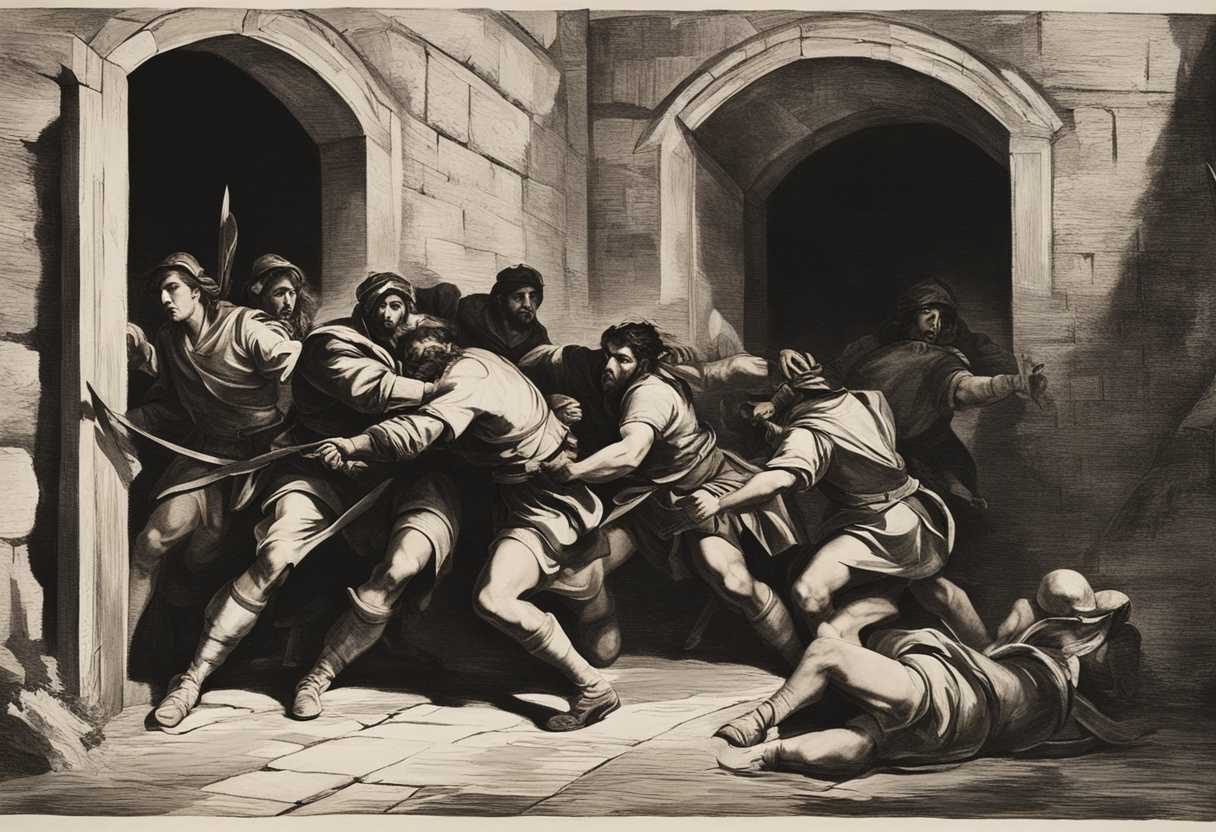
Setting the Scene for Mark 12:3
In Mark chapter 12, Jesus tells a parable to the chief priests, the teachers of the law, and the elders who had come to question his authority. The scene is set in the temple in Jerusalem, a place bustling with activity as people come to worship and offer sacrifices. The religious leaders are gathered together, their robes indicating their status, their expressions stern and questioning.
Jesus, standing in their midst, begins to tell the parable of the tenants in the vineyard, a story that holds a deeper meaning about God’s relationship with His people. As Jesus speaks, the listeners are drawn into the narrative, their attention captured by the powerful imagery and the convicting message behind the story. The atmosphere is tense as the religious leaders realize that Jesus is speaking directly to them, challenging their authority and calling them to account for their actions.
The setting is rich with symbolism and significance, as Jesus uses the familiar backdrop of the temple to convey profound truths about God’s kingdom and the rejection of His messengers. The scene is charged with emotion and tension, as the religious leaders grapple with Jesus’ words and the implications they hold for their own lives and beliefs.
What is Mark 12:3 about?
God, who sends his servants to collect fruit from the tenants, symbolizes the vineyard owner in this parable, representing God’s prophets and messengers sent to guide and teach His people. Despite the mistreatment and even killing of the servants by the tenants (symbolizing humanity’s rejection and mistreatment of God’s messengers), the vineyard owner continues to send more servants, exemplifying God’s endless patience and mercy towards us, always giving us chances to turn back to Him and do what is right.
This parable serves as a powerful reminder of God’s unwavering love and forgiveness, even in the face of our failures and disobedience. It prompts us to reflect on our own actions and attitudes towards God and His messengers, urging us to repent, seek forgiveness, and align ourselves with God’s will. Through this parable, we are called to appreciate the patience and mercy that God shows us, and to strive to be faithful and obedient servants in His vineyard.
So, as we ponder upon this parable, let us ask ourselves: How have we responded to God’s messengers and teachings in our lives? Are we acknowledging His mercy and guidance, or are we turning away from His calls? We reaffirm our commitment to God, seeking to be faithful and fruitful tenants in His vineyard, honoring His love and mercy towards us.
Understanding what Mark 12:3 really means
In the Parable of the Tenants, Jesus conveys a powerful message to the religious leaders of His time. The story unfolds with a landowner who plants a vineyard and entrusts it to farmers. When the landowner sends servants to collect fruit, the tenants respond with violence and mistreatment. The imagery of seizing, beating, and sending away empty-handed symbolizes the rejection of God’s messengers and the refusal to acknowledge His rightful authority. This parable serves as a metaphor for God’s relationship with Israel and the prophets He sent to guide them.
The phrase “seized him, beat him, and sent him away empty-handed” holds profound meanings. “Seized him” portrays a forceful rejection of God’s messengers, while “beat him” signifies the harsh treatment endured by the prophets. “Sent him away empty-handed” highlights the tenants’ refusal to give the landowner what is due, reflecting Israel’s failure to produce the fruits of righteousness. These actions reveal a pattern of disobedience and ingratitude towards God’s guidance and provision.
Parallel accounts in Matthew 21:33-46 and passages like Isaiah 5:1-7 and Hebrews 11:36-38 provide additional context and reinforce the themes of accountability, rejection of messengers, and suffering for righteousness. The parable challenges us to consider our own spiritual accountability and response to God’s messengers in our lives. Just as the tenants were answerable to the landowner, we are accountable to God for how we steward His gifts and respond to His guidance.
The call to produce spiritual fruit resonates strongly in this verse. Galatians 5:22-23 outlines the fruits of the Spirit, emphasizing qualities like love, joy, peace, and kindness. We are called to cultivate these virtues in our lives and bear witness to God’s transformative work within us. The parable prompts us to reflect on whether we are producing the fruits of righteousness or falling short in our spiritual growth.
To illustrate the parable’s relevance, consider a scenario where a business owner entrusts his company to managers who mistreat his representatives and withhold profits. This betrayal of trust mirrors the tenants’ actions in the parable and underscores the importance of honoring God’s authority and living righteously. Similarly, God has entrusted us with His creation and expects us to steward it faithfully, bearing fruit that reflects His character.
In conclusion, Mark 12:3 challenges us to examine our response to God’s call and His messengers. Are we embracing His guidance and producing spiritual fruit, or are we rejecting His authority and failing in our responsibilities? This verse serves as a poignant reminder of our spiritual obligations and the consequences of disregarding God’s will. Let us heed this call to self-reflection and strive to honor God in all aspects of our lives.
What obstacles are preventing us from accepting God’s messengers?
One obstacle that prevents us from accepting God’s messengers is arrogance and pride. When we become too wrapped up in our own knowledge, beliefs, and ways of doing things, we close ourselves off to considering the possibility that we might not have all the answers. This arrogance can blind us to the truth that God’s messengers bring and prevent us from embracing their message.
Another obstacle is a lack of humility and openness. If we approach God’s messengers with a closed mind and heart, unwilling to listen or consider their words, we will never be able to truly accept them. Humility involves recognizing our own limitations and being open to learning and growing from the wisdom that God’s messengers bring.
Lastly, fear can also hinder our acceptance of God’s messengers. Fear of change, fear of the unknown, or fear of having to confront uncomfortable truths can all prevent us from embracing the message that God’s messengers deliver. Overcoming these fears and approaching God’s messengers with an open heart and mind is essential in order to truly accept and benefit from their guidance.
Application
Friend, think of this: in our busy work and family lives, we constantly receive important emails and messages. If we don’t open and respond, we miss critical opportunities. Mark 12:3 is like that vital memo from God. Are you checking your spiritual inbox and acting on His divine instructions? Are you truly tuned in to the most crucial message of all?

Reverend Michael Johnson is an experienced Church Minister with a profound expertise in spirituality and guidance. With a serene presence and a compassionate heart, he has faithfully served his congregation for over 20 years, leading them on a spiritual journey towards inner peace and enlightenment. Reverend Johnson’s extensive knowledge of religious philosophies and profound understanding of human nature have made him a trusted confidant and mentor to many, as he seamlessly weaves his profound wisdom into life teachings. Reverend Johnson’s calming demeanor and empathetic nature continue to uplift and heal souls, nurturing a sense of unity and tranquility within his community.