
Luke 14:1-14 is about the importance of humility and selflessness in our actions and interactions, emphasizing the value of serving others without seeking recognition or reward.
1 One Sabbath, when he went to dine at the house of a ruler of the Pharisees, they were watching him carefully.
2 And behold, there was a man before him who had dropsy.
3 And Jesus responded to the lawyers and Pharisees, saying, “Is it lawful to heal on the Sabbath, or not?”
4 But they remained silent. Then he took him and healed him and sent him away.
5 And he said to them, “Which of you, having a son or an ox that has fallen into a well on a Sabbath day, will not immediately pull him out?”
6 And they could not reply to these things.
7 Now he told a parable to those who were invited, when he noticed how they chose the places of honor, saying to them,
8 “When you are invited by someone to a wedding feast, do not sit down in a place of honor, lest someone more distinguished than you be invited by him,”
9 and he who invited you both will come and say to you, ‘Give your place to this person,’ and then you will begin with shame to take the lowest place.
10 But when you are invited, go and sit in the lowest place, so that when your host comes he may say to you, ‘Friend, move up higher.’ Then you will be honored in the presence of all who sit at table with you.
11 For everyone who exalts himself will be humbled, and he who humbles himself will be exalted.
12 He said also to the man who had invited him, “When you give a dinner or a banquet, do not invite your friends or your brothers or your relatives or rich neighbors, lest they also invite you in return and you be repaid.
13 But when you give a feast, invite the poor, the crippled, the lame, the blind,
14 And you will be blessed, because they cannot repay you. For you will be repaid at the resurrection of the just.
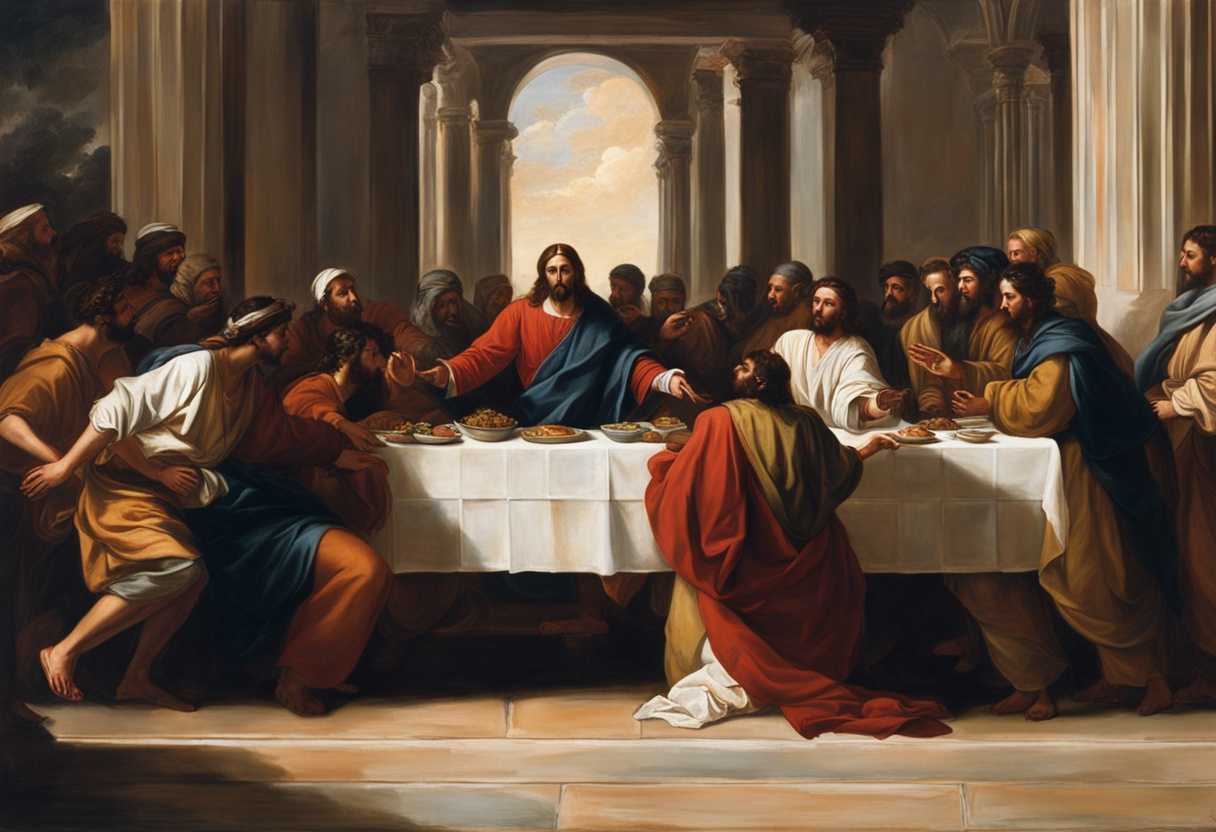
Setting the Scene for Luke 14:1-14
In Luke chapter 14, we find Jesus dining at the home of a prominent Pharisee on the Sabbath. The scene is set in a large, opulent dining hall with a long table adorned with fine linens and an array of sumptuous dishes. The room is filled with the aroma of freshly prepared food, and the soft glow of oil lamps illuminates the faces of the guests.
Among those present are the Pharisees and other religious leaders, who have invited Jesus to dine with them. They watch Him closely, eager to see if He will break any of their strict Sabbath laws. Jesus, aware of their scrutiny, takes the opportunity to teach them a valuable lesson about humility and hospitality.
As the meal progresses, Jesus observes how the guests jockey for positions of honor at the table. He uses this as a teaching moment, urging them to take the lowest place and to invite the poor, the crippled, the lame, and the blind to their feasts instead of seeking the approval of the wealthy and powerful. In this way, Jesus challenges the social norms of the time and emphasizes the importance of showing kindness and generosity to those who are often marginalized in society.
What is Luke 14:1-14 about?
Jesus is using a parable in this verse to teach a powerful lesson on humility and generosity. Jesus is challenging the social norms and expectations of his time by telling a story about guest etiquette at a wedding feast. He is emphasizing the importance of humility by urging his listeners to take a lower seat at a feast rather than assuming a position of honor. This act of humility reflects a genuine and modest attitude that values others above oneself.
Additionally, Jesus highlights the importance of generosity in his teachings. He encourages his followers to invite those who cannot repay them, rather than seeking recognition or repayment for their good deeds. This message of selfless giving underscores the value of kindness and compassion towards others, regardless of their social status or ability to reciprocate. Jesus challenges his audience to examine their own attitudes and behaviors towards others by sharing these parables at a Pharisee’s dinner, urging them to embody the virtues of humility and generosity in their daily lives.
Understanding what Luke 14:1-14 really means
In the Gospel of Luke, we find Jesus dining at the house of a prominent Pharisee on the Sabbath, setting the stage for profound teachings on humility, compassion, and the kingdom of God. In verses 1-6, Jesus heals a man with dropsy on the Sabbath, challenging the Pharisees’ legalistic interpretation of the law. His question, “Is it lawful to heal on the Sabbath, or not?” highlights the importance of compassion over rigid adherence to rules, echoing the principle seen in Matthew 12:10-12 where mercy triumphs over ritual.
Moving on to verses 7-11, Jesus shares the Parable of the Wedding Feast to emphasize the virtue of humility. The phrase, “For everyone who exalts himself will be humbled, and he who humbles himself will be exalted,” serves as a poignant reminder of the dangers of pride and the exaltation found in humility. This teaching resonates with Proverbs 25:6-7 and James 4:10, which both speak to the value of humility before God.
In verses 12-14, Jesus presents the Parable of the Great Banquet, urging his listeners to invite the marginalized to their gatherings. His words, “You will be blessed, because they cannot repay you,” underscore the importance of selfless giving and hospitality towards those in need. This call to generosity aligns with the teachings in Matthew 25:35-40 and Acts 20:35, emphasizing the blessings found in serving others without expecting anything in return.
The relevance of these teachings to people today is profound. In a society that often celebrates self-promotion, Jesus’ emphasis on humility challenges us to seek honor through service and selflessness. His example of prioritizing compassion over legalism encourages us to extend help to others, even when it goes against societal norms. By practicing selfless giving and showing kindness to those who cannot repay us, we embody the spirit of true charity and community, reflecting the values of the kingdom of God.
Consider a modern-day scenario where someone hosts a community dinner, inviting the marginalized instead of those who can reciprocate. This act of kindness not only provides physical nourishment but also restores dignity and love to those often overlooked. Such actions mirror Jesus’ teachings in Luke 14 and demonstrate how we can live out these principles today, making a tangible difference in the lives of those around us.
In conclusion, Jesus’ teachings in Luke 14:1-14 challenge us to embrace lives characterized by humility, compassion, and selfless giving. As we embody these values, we not only reflect the principles of the kingdom of God but also impact the world around us with love and grace.
How can humility guide our interactions with others?
Humility can guide our interactions with others by reminding us to put the needs and feelings of others before our own. It encourages us to listen attentively to others, show empathy, and offer support without seeking recognition or praise. We can avoid seeking attention or trying to outshine others by being humble, but rather focus on building genuine connections and relationships based on respect and kindness.
When practicing humility, we can approach interactions with a mindset of equality and understanding, recognizing that everyone has their own unique experiences and perspective. This can lead to more compassionate and harmonious relationships, fostering a sense of unity and cooperation. Humility ultimately allows us to connect with others on a deeper level, making space for empathy, forgiveness, and mutual growth in our interactions.
Application
Let’s embrace the spirit of empathy and kindness from Luke 14:1-14. It challenges us to see beyond our bubbles and reach out to the overlooked and marginalized in our lives. Just as Jesus showed compassion, let’s extend a helping hand and welcoming heart to all. Will we choose to mirror Jesus’ love by being generous and caring towards those who need it most?

Reverend Michael Johnson is an experienced Church Minister with a profound expertise in spirituality and guidance. With a serene presence and a compassionate heart, he has faithfully served his congregation for over 20 years, leading them on a spiritual journey towards inner peace and enlightenment. Reverend Johnson’s extensive knowledge of religious philosophies and profound understanding of human nature have made him a trusted confidant and mentor to many, as he seamlessly weaves his profound wisdom into life teachings. Reverend Johnson’s calming demeanor and empathetic nature continue to uplift and heal souls, nurturing a sense of unity and tranquility within his community.