
Mark 15:37-38 is about the dramatic moment of Jesus breathing his last breath and the tearing of the temple curtain, symbolizing the end of the Old Covenant and the beginning of a new era of reconciliation and access to God through Christ’s sacrifice.
37 And Jesus uttered a loud cry and breathed his last.
38 And the curtain of the temple was torn in two, from top to bottom.
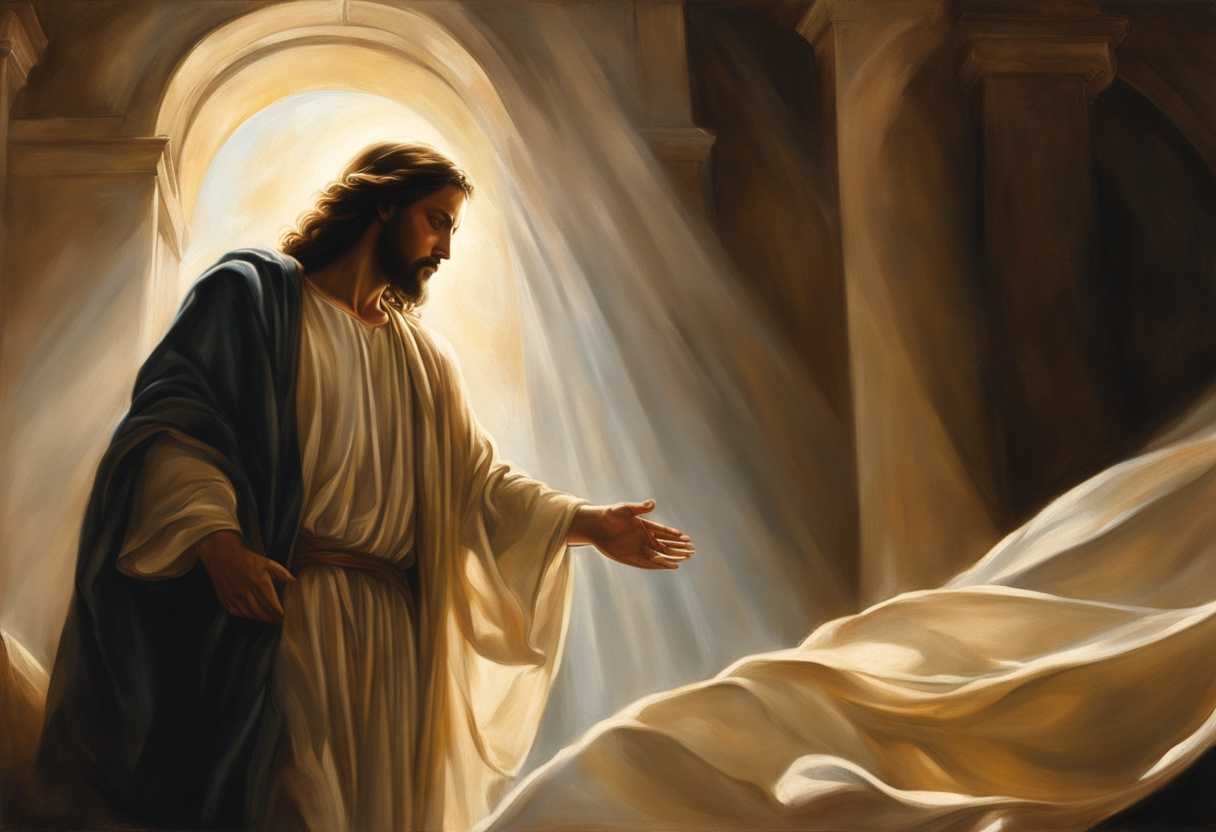
Setting the Scene for Mark 15:37-38
The scene described in Mark 15:37-38 takes place at Golgotha, the place of the Skull, where Jesus was crucified. The sky darkens as Jesus hangs on the cross, enduring immense suffering. Surrounding Him are Roman soldiers, religious leaders, and onlookers who had gathered to witness the crucifixion. The atmosphere is heavy with a mix of emotions – some are mourning, some are mocking, and others are simply curious bystanders.
Among those present are Mary, the mother of Jesus, and a few of His disciples, including John. They stand at a distance, watching in sorrow as their beloved teacher and friend hangs on the cross. The soldiers, carrying out their duty, are casting lots for Jesus’ garments, indifferent to the gravity of the moment. The religious leaders, who had orchestrated Jesus’ arrest and trial, are gloating in what they perceive as their victory over Him.
As darkness falls over the land, the scene at Golgotha is a stark contrast of light and shadow, of despair and hope. The events unfolding here are pivotal in Christian theology, as Jesus willingly sacrifices Himself for the sins of humanity, fulfilling the prophecies and ultimately paving the way for redemption and salvation.
What is Mark 15:37-38 about?
This verse holds profound significance in Christian theology as it symbolizes a pivotal moment in the relationship between humanity and God. The tearing of the temple curtain is a powerful visual representation of Christ’s ultimate sacrifice on the cross, which opened the way for all people to have direct access to God. Prior to this moment, the curtain in the temple separated the Holy of Holies, where God’s presence dwelt, from the rest of the temple. Only the high priest could enter this sacred space once a year. However, with the tearing of the curtain, this barrier was removed, signifying that through Jesus’ sacrifice, all individuals now have direct access to God and can approach Him without the need for an intermediary. We reflect on this verse, pondering the enormity of what Christ accomplished on the cross. Through His sacrifice, a new covenant was established, one where believers can approach God with confidence and without fear. The tearing of the temple curtain serves as a powerful reminder of the access we now have to God’s presence and the profound love and grace that was demonstrated through Christ’s death. This momentous event underscores the transformative power of Christ’s sacrifice and the unparalleled gift of salvation that is available to all who believe in Him. It challenges us to consider the depth of God’s love for us and the profound significance of the cross in bridging the gap between humanity and the Divine.
Understanding what Mark 15:37-38 really means
The verses in Mark 15:37-38 capture the poignant moment of Jesus’ death on the cross and the immediate aftermath, forming a crucial part of the Passion narrative. To grasp the full weight of these verses, one must delve into the events leading up to this climax, including Jesus’ trial, the soldiers’ mockery, and His journey to Golgotha. The phrase “Jesus cried out with a loud voice” signifies not only the intensity of His suffering but also the profound finality of His sacrifice, revealing His human vulnerability and the depth of His agony. As Jesus “breathed his last,” it marked the culmination of His earthly mission, fulfilling prophetic scriptures and ushering in a new era of redemption.
Moreover, the tearing of the temple curtain from top to bottom holds immense theological significance. This act symbolizes the removal of barriers between God and humanity, signifying that through Jesus’ sacrifice, all individuals now have direct access to the Divine. Hebrews 10:19-20 further elucidates this concept, emphasizing that Jesus’ death paves the way for believers to enter the Most Holy Place with confidence, highlighting the transformative power of His sacrifice. The parallel account in Matthew 27:51 adds depth to this cosmic event, emphasizing the seismic impact of Jesus’ death on the very fabric of creation.
In a world marked by divisions and barriers, the tearing of the temple curtain serves as a powerful symbol of reconciliation and unity. It underscores the universal invitation to draw near to God without intermediaries, emphasizing the importance of cultivating a personal relationship with the Divine. This message remains profoundly relevant today, offering comfort and empowerment to those navigating personal struggles or societal unrest. Consider the impact on individuals who have felt unworthy or distant from God; the tearing of the curtain signifies their unimpeded access to God’s presence, regardless of past mistakes or societal judgments.
Drawing a modern parallel, envision a scenario where estranged family members reconcile and embrace, mirroring the removal of barriers and the restoration of a direct, loving relationship. The verses in Mark 15:37-38 transcend mere historical accounts, carrying profound theological and personal implications. They prompt us to reflect on the sacrificial love of Jesus, inspiring us to break down barriers, seek reconciliation, and embrace the unfettered access to divine grace and love that His death offers. May these verses kindle a renewed appreciation for the depth of God’s love and the transformative power of reconciliation in our lives.
What significance is there in the temple veil tearing?
The tearing of the temple veil in Mark 15:37-38 holds great significance as it symbolizes the barrier between God and humanity being broken down. The veil in the temple separated the Holy of Holies, where God’s presence dwelt, from the rest of the temple in the Old Testament. God showed that access to Him was no longer restricted to a select few, such as the high priest on the Day of Atonement, by tearing the veil. Instead, through Jesus’ sacrifice, all people now have direct access to God.
Furthermore, the tearing of the temple veil also represents the fulfillment of the sacrificial system in the Old Testament. The veil being torn symbolizes the completion of Jesus’ ultimate sacrifice, which replaced the need for continual animal sacrifices to atone for sin. Believers now have access to God through Jesus Christ, who served as the perfect and final sacrifice, providing forgiveness and reconciliation with God for all who believe in Him. The tearing of the veil signifies the beginning of a new era in which all people can have a personal relationship with God through faith in Jesus.
Application
Reflect on the moment Jesus took His last breath on the cross, and the temple curtain dramatically tore apart. This powerful act symbolizes the end of old ways and the start of a new path to God. Let’s embrace this gesture of love by approaching God with an open heart, finding solace in His forgiveness and the grace bestowed upon us through Jesus’ sacrifice. It’s time to take a step towards Him, acknowledging the impact of this moment on our lives. Will you seize this opportunity to draw closer to the divine?

Reverend Michael Johnson is an experienced Church Minister with a profound expertise in spirituality and guidance. With a serene presence and a compassionate heart, he has faithfully served his congregation for over 20 years, leading them on a spiritual journey towards inner peace and enlightenment. Reverend Johnson’s extensive knowledge of religious philosophies and profound understanding of human nature have made him a trusted confidant and mentor to many, as he seamlessly weaves his profound wisdom into life teachings. Reverend Johnson’s calming demeanor and empathetic nature continue to uplift and heal souls, nurturing a sense of unity and tranquility within his community.