
Mark 15:39 is about the realization of the Roman centurion that Jesus truly was the Son of God, marking a pivotal moment of recognition and conviction in the crucifixion narrative.
39 And when the centurion, who stood facing him, saw that in this way he breathed his last, he said, “Truly this man was the Son of God!”
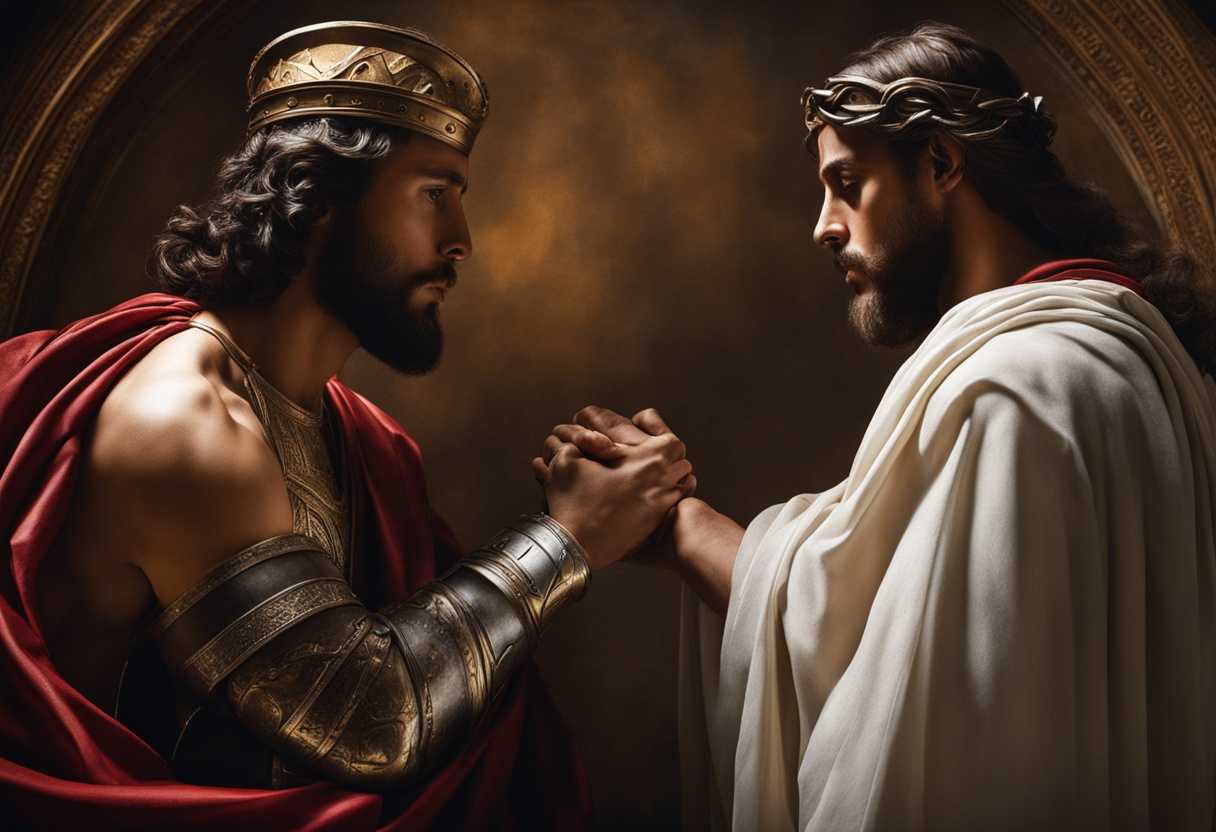
Setting the Scene for Mark 15:39
The scene in Mark chapter 15 is set at Golgotha, the place of the skull, where Jesus was crucified alongside two criminals. The sky is darkened, and a sense of heaviness hangs in the air as the soldiers carry out the brutal act of crucifixion. The crowd is a mix of onlookers, some mocking and jeering at Jesus, while others stand in solemn silence, witnessing the events unfolding before them.
Among the crowd are Mary Magdalene, Mary the mother of James and Joses, and Salome, who have been following Jesus throughout his ministry. They are standing at a distance, their hearts heavy with grief as they watch their beloved teacher and friend being crucified. The disciples, including Peter, John, and the others, are also present, though their faces are etched with fear and confusion at the turn of events.
As Jesus hangs on the cross, the centurion overseeing the crucifixion is struck by the manner in which Jesus faces his death with dignity and grace. In a moment of revelation, he declares, “Truly this man was the Son of God.” The declaration reverberates through the crowd, causing a hush to fall over the scene as the weight of the moment sinks in. The significance of Jesus’ sacrifice begins to dawn on those present, forever changing the course of history.
What is Mark 15:39 about?
The Roman centurion, a symbol of authority and order in the Roman Empire, makes a profound declaration about Jesus in this powerful verse – “Truly this man was the Son of God!”.” This statement carries great weight as it comes from someone who was not a follower of Jesus, but a witness to His crucifixion. It shows that even those who may not have believed in Jesus during His life on earth could not deny the divinity and significance of His being.
Have you ever thought about the impact Jesus had on people from all walks of life, even those who initially doubted or opposed Him? The centurion’s declaration challenges us to reflect on our own beliefs and to recognize the greatness of Jesus. It reminds us that sometimes the strongest testimonies come from unexpected sources, and that the truths of faith can resonate with anyone, regardless of their background. The Roman centurion’s words serve as a reminder of the universal nature of Christ’s message and the transformative power it holds for all who encounter it.
Understanding what Mark 15:39 really means
In the Gospel of Mark, amidst the solemn scene of Jesus’ crucifixion, a Roman centurion stands out with a declaration that reverberates through the ages. This centurion, a symbol of the Gentile world, utters words that cut through the darkness of disbelief and skepticism. “Truly this man was the Son of God!” – a simple yet profound confession that encapsulates a moment of divine revelation. It is a statement that transcends cultural and religious boundaries, speaking to the core of faith and recognition of Jesus’ true nature.
The significance of the centurion’s declaration lies not only in the words themselves but in the context in which they are spoken. Surrounded by mockery and scorn, his acknowledgment of Jesus as the Son of God stands as a beacon of truth in a sea of doubt. It serves as a stark contrast to the disbelief of many who witnessed the crucifixion, highlighting the transformative power of encountering Christ in the most unexpected of places.
Parallel passages in Matthew, Luke, and John further illuminate the impact of the centurion’s words. They emphasize the awe and fear that gripped those present, underscoring the profound nature of the moment. The centurion’s recognition of Jesus’ righteousness and divinity adds layers of meaning to his declaration, reinforcing the universal message of salvation through Christ’s sacrifice.
Today, the centurion’s confession challenges us to examine our own beliefs and attitudes towards Jesus. It prompts us to consider how we, like the centurion, can boldly proclaim Christ’s divinity in a world that often questions or rejects His identity. It reminds us that faith can arise from unexpected sources and that divine revelation can pierce even the hardest of hearts.
Imagine a skeptic, steeped in doubt and disbelief, suddenly encountering the truth of Jesus’ sacrifice. In a moment of clarity, they declare, “Truly, Jesus is the Son of God!” This modern-day parallel to the centurion’s experience illustrates the transformative power of encountering Christ in unexpected ways. It challenges us to remain open to divine revelation and to boldly proclaim our faith, even in the face of skepticism.
As we reflect on the centurion’s journey from bystander to believer, we are called to examine our own hearts and minds. How can we be more open to recognizing and declaring Jesus’ divinity in our daily lives? How can we share the transformative power of Christ’s sacrifice with those around us? By embracing the message of the centurion’s declaration, we are invited to deepen our faith, stand firm in our beliefs, and bear witness to the truth of Jesus’ identity as the Son of God.
Who do we truly acknowledge as God’s son?
The Roman centurion, who witnessed Jesus’s death on the cross, acknowledges Him as the Son of God in this verse. This centurion was not a Jew, and yet he recognized the divinity of Jesus. His acknowledgment of Jesus as God’s Son demonstrates that Jesus’s identity transcends cultural and religious boundaries. It underscores the universal significance of Jesus’s divinity and the impact it had on those who witnessed His crucifixion.
The centurion’s recognition of Jesus as the Son of God is significant because it illustrates a powerful moment of revelation and acknowledgment. It serves as a confirmation of Jesus’s true nature and establishes His identity as the Son of God in the eyes of someone who was not part of the Jewish community. This acknowledgment speaks to the profound impact that Jesus had on those around Him, regardless of their background or beliefs. It also emphasizes the universal message of Jesus’s divinity and the transformative power of His life and teachings.
The centurion’s declaration of Jesus as the Son of God highlights the profound impact that Jesus had on all who encountered Him. It serves as a reminder that Jesus’s identity goes beyond human understanding and that His divinity transcends earthly boundaries. Through this acknowledgment, we are reminded of the universal significance of Jesus’s life and the transformative power of His sacrifice for all of humanity.
Application
Imagine you’re the centurion at the foot of the cross. His powerful declaration, “Truly this man was the Son of God,” hits home. Let that realization ignite a fire in you to recognize Jesus in every aspect of your life. Embrace His teachings with the same dedication you give to your family or your job. Spread His love just as you’d share good news with friends at a bustling dinner table. Will you stand boldly for Jesus, like the centurion did?

Reverend Michael Johnson is an experienced Church Minister with a profound expertise in spirituality and guidance. With a serene presence and a compassionate heart, he has faithfully served his congregation for over 20 years, leading them on a spiritual journey towards inner peace and enlightenment. Reverend Johnson’s extensive knowledge of religious philosophies and profound understanding of human nature have made him a trusted confidant and mentor to many, as he seamlessly weaves his profound wisdom into life teachings. Reverend Johnson’s calming demeanor and empathetic nature continue to uplift and heal souls, nurturing a sense of unity and tranquility within his community.