
Mark 1:14-20 is about Jesus beginning his ministry by calling his disciples to follow him and showing that the Kingdom of God is at hand, inviting them to turn away from their old lives and follow him in service to others.
14 Now after John was arrested, Jesus came into Galilee, proclaiming the gospel of God,
15 and saying, “The time is fulfilled, and the kingdom of God is at hand; repent and believe in the gospel.”
16 Passing alongside the Sea of Galilee, he saw Simon and Andrew the brother of Simon casting a net into the sea, for they were fishermen.
17 And Jesus said to them, “Follow me, and I will make you become fishers of men.”
18 And immediately they left their nets and followed him.
19 And going on a little farther, he saw James the son of Zebedee and John his brother, who were in their boat mending the nets.
20 And immediately he called them, and they left their father Zebedee in the boat with the hired servants and followed him.
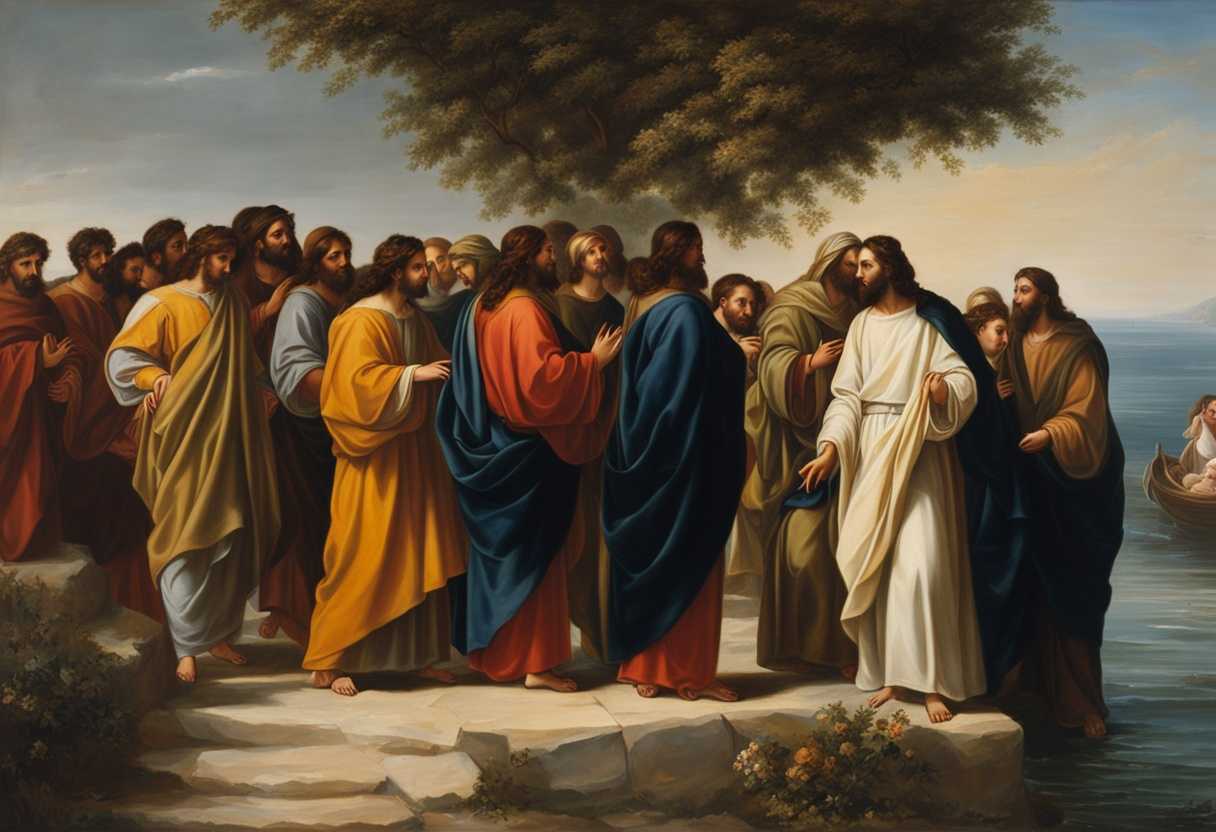
Setting the Scene for Mark 1:14-20
In Mark chapter 1, we find Jesus walking along the Sea of Galilee. The sun is beginning to set, casting a warm golden glow over the water. As Jesus walks, he sees Simon and his brother Andrew casting their nets into the sea. They are hard at work, their faces glistening with sweat as they labor to catch fish. Jesus calls out to them, “Come, follow me, and I will make you fishers of men.”
Simon and Andrew are intrigued by this mysterious man and his compelling words. They feel a stirring in their hearts and decide to leave their nets behind, immediately following Jesus along the shore. Further down the beach, Jesus spots James and John, the sons of Zebedee, mending their nets with their father. He calls out to them as well, and without hesitation, they too leave everything to follow him. The scene is one of simplicity and obedience, as these four men respond to the call of Jesus, leaving behind their livelihoods to embark on a new journey with him.
What is Mark 1:14-20 about?
Jesus is speaking to his disciples in this verse and using a metaphor that they can easily understand as fishermen. Jesus is inviting his disciples to join him in his mission of spreading the word of God and bringing people to faith by calling them to become fishers of men. The disciples are being asked to go out into the world and bring people into the kingdom of God, just as fishermen catch fish from the sea.
Imagine being one of Jesus’ disciples and hearing these words directly from him. How would you feel? What thoughts would be going through your mind? Jesus is not just asking his disciples to follow him, but he is also giving them a purpose and a mission. The disciples are being called to actively participate in building God’s kingdom on earth by becoming fishers of men. This verse is a powerful reminder for all believers to actively seek out and bring others into a relationship with God, just as the disciples were called to do.
Understanding what Mark 1:14-20 really means
In Mark 1:14-20, we witness the pivotal moment when Jesus begins His public ministry, following John the Baptist’s imprisonment. This passage sets the stage for key themes such as the calling of the first disciples, the immediacy of their response, and the nature of discipleship.
“After John was put in prison, Jesus went into Galilee, proclaiming the good news of God.” This verse signifies a shift from John’s ministry to Jesus’, emphasizing the urgency of Jesus’ message in a time of political and social unrest. It reminds us that even in uncertain times, the message of hope and salvation remains crucial.
“The time has come,” Jesus said. “The kingdom of God has come near. Repent and believe the good news!” Here, Jesus declares the fulfillment of God’s promises, calling for immediate repentance and belief. This call to repentance and faith remains relevant today as people seek purpose and direction in their lives.
“As Jesus walked beside the Sea of Galilee, he saw Simon and his brother Andrew casting a net into the lake, for they were fishermen.” Jesus meets people in their everyday lives, inviting them to a higher purpose. This serves as a reminder that God often calls us in the midst of our daily routines, urging us to follow Him.
“Come, follow me,” Jesus said, “and I will send you out to fish for people.” The call to discipleship involves a mission to share the message of Jesus with others. Christians today are called to share their faith and make disciples in their communities and beyond.
“At once they left their nets and followed him.” The immediate response of the disciples underscores the urgency and total commitment required in following Jesus. This highlights that following Jesus demands a prompt and wholehearted response, often necessitating significant life changes.
“When he had gone a little farther, he saw James son of Zebedee and his brother John in a boat, preparing their nets. Without delay he called them, and they left their father Zebedee in the boat with the hired men and followed him.” Following Jesus may require leaving behind family and familiar comforts. The call to discipleship can be challenging, but it promises a deeper relationship with God and a purposeful life.
In applying this passage today, we can reflect on stories of individuals who have left secure jobs or familiar environments to follow a calling from God. While the call to follow Jesus may seem daunting, it leads to a fulfilling and transformative journey. I encourage readers to consider what they may need to leave behind to follow Jesus more closely and how they can respond to His call in their own lives.
In conclusion, Mark 1:14-20 highlights the urgency of Jesus’ message, the call to discipleship, and the immediate and wholehearted response required. I urge readers to seek God’s calling in their lives and to respond with faith and commitment.
How can we respond to the call to follow Jesus?
We can respond to the call to follow Jesus by recognizing His authority and message. We are also called to leave our old way of life behind and wholeheartedly follow Jesus, just as Jesus called Simon, Andrew, James, and John to leave everything behind and follow Him. This means acknowledging His lordship over our lives and allowing Him to guide our thoughts, words, and actions.
Following Jesus also involves a willingness to step out in faith and trust Him completely. Like the disciples who immediately left their nets to follow Jesus, we should be ready to leave behind anything that hinders our relationship with Him. This may require us to let go of our own plans and ambitions, and be open to the direction and purpose that Jesus has for us.
Furthermore, responding to the call to follow Jesus entails a deep commitment to learning from Him and becoming more like Him. We are called to immerse ourselves in His word, prayer, and fellowship with other believers, just as the disciples followed Jesus closely, listened to His teachings, and witnessed His miracles. We can align our lives with His will and walk in His ways by intentionally seeking to grow in our understanding of who Jesus is and what He desires for us.
Application
Imagine a sudden career change that promises deep fulfillment. Jesus calls you now, just like Simon, Andrew, James, and John. They dropped their nets, left their families, and followed Him without looking back. Will you leave your doubts and embrace a life guided by His teachings? This journey leads to rewards beyond measure. Will you answer His call and start your path of faith today?

Reverend Michael Johnson is an experienced Church Minister with a profound expertise in spirituality and guidance. With a serene presence and a compassionate heart, he has faithfully served his congregation for over 20 years, leading them on a spiritual journey towards inner peace and enlightenment. Reverend Johnson’s extensive knowledge of religious philosophies and profound understanding of human nature have made him a trusted confidant and mentor to many, as he seamlessly weaves his profound wisdom into life teachings. Reverend Johnson’s calming demeanor and empathetic nature continue to uplift and heal souls, nurturing a sense of unity and tranquility within his community.