
Mark 2:18-20 is about Jesus defending his disciples for not fasting while he, the bridegroom, is with them, implying that it is not yet the time for mourning and fasting but a time of celebration and joy in his presence.
18 Now John’s disciples and the Pharisees were fasting. And people came and said to him, “Why do John’s disciples and the disciples of the Pharisees fast, but your disciples do not fast?”
19 And Jesus said to them, “Can the wedding guests fast while the bridegroom is with them? As long as they have the bridegroom with them, they cannot fast.
20 The days will come when the bridegroom is taken away from them, and then they will fast in that day.
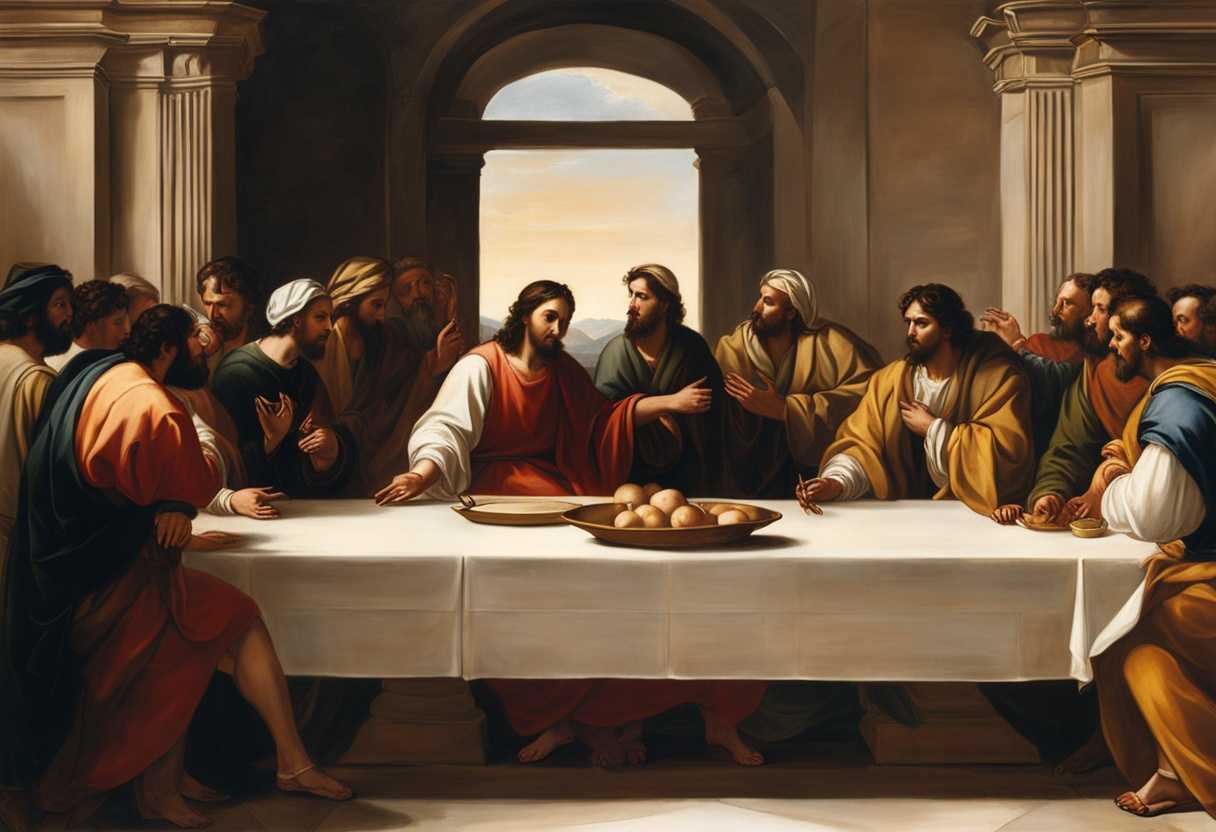
Setting the Scene for Mark 2:18-20
In Mark chapter 2, we find Jesus surrounded by a group of Pharisees and scribes, along with His disciples. The scene takes place in a bustling marketplace in Capernaum, where Jesus had been teaching and performing miracles. The Pharisees and scribes were known for their strict adherence to religious laws and traditions, and they often questioned Jesus’ actions and teachings.
On this particular day, the Pharisees and scribes approached Jesus with a question about fasting. They asked Him why His disciples did not fast like the disciples of John the Baptist and the Pharisees. Jesus, aware of their motives, used this opportunity to teach them about the new covenant He was ushering in. He explained that while His disciples did not fast at that moment because they were in the presence of the bridegroom (Himself), there would come a time when they would fast.
As the crowd listened intently, Jesus used this interaction to challenge the religious leaders’ understanding of the law and to reveal His authority as the Son of God. The marketplace buzzed with excitement and curiosity as Jesus continued to teach and perform miracles, leaving a lasting impact on all who witnessed His words and deeds.
What is Mark 2:18-20 about?
Jesus is not condemning fasting itself as a religious practice in this verse, but rather, he is pointing out that there is a time and place for everything. He emphasizes the importance of recognizing when we are in the presence of something truly special, like himself, and how in those moments, there is cause for celebration rather than fasting. Jesus wants us to understand that his presence brings joy and should be met with a heart full of gratitude and readiness to receive his teachings and blessings.
Think about it this way: if you were invited to a joyous occasion, filled with happiness and celebration, would it be fitting to fast and mourn? No, of course not! Jesus is inviting us to recognize his presence as a reason for rejoicing and being spiritually prepared to fully experience the grace and love he offers. He wants us to be open and receptive to his teachings, to embrace his presence with joy and readiness in our hearts. So, let us approach Jesus with a spirit of joy, gratitude, and spiritual readiness, knowing that in his presence, our souls can be nourished and uplifted in ways that fasting alone cannot achieve.
Understanding what Mark 2:18-20 really means
In Mark 2:18-20, we find Jesus addressing questions about fasting practices early in His ministry. The disciples of John the Baptist and the Pharisees were known for their devout fasting, a common religious practice of the time. Jesus responds by using the metaphor of a wedding feast, where the presence of the bridegroom signifies a time of joy and celebration. By referring to Himself as the bridegroom, Jesus highlights the significance of His presence in bringing joy and fulfillment to His followers.
“The bridegroom is with them,” Jesus declares, indicating that His presence among His disciples is a reason for celebration, not mourning. Fasting, typically associated with penitence and mourning, is deemed inappropriate when the source of joy, Jesus Himself, is present. This statement challenges traditional religious practices and emphasizes the unique nature of Jesus’ ministry and mission. Furthermore, Jesus foretells a time when the bridegroom will be taken away, alluding to His crucifixion and the period when His followers will fast in His absence.
John 3:29 and Matthew 9:15 provide additional insights into this metaphor of Jesus as the bridegroom, reinforcing the idea of joy and a new covenant brought by His presence. Revelation 19:7-9 depicts the marriage supper of the Lamb, symbolizing the ultimate union of Christ and His Church, underscoring the theme of joy and celebration associated with Jesus. These passages collectively point to the profound significance of Jesus’ presence and the joy it brings to believers.
Today, this passage challenges us to understand the joy that comes from being in relationship with Christ. It prompts us to discern appropriate times for fasting and celebration, recognizing the spiritual depth behind these practices. Just as the disciples eagerly awaited the return of the bridegroom, Christians are called to live in expectation of Christ’s return, balancing joy and spiritual discipline in their lives. This balance reflects a deep understanding of the significance of Jesus’ presence and the anticipation of His ultimate return.
To illustrate this concept, consider a joyous family reunion welcoming back a long-lost loved one. In such a celebratory atmosphere, mourning or fasting would be out of place. Similarly, Jesus’ presence among His disciples was a time of celebration, not fasting. This analogy helps us grasp the importance of aligning our spiritual practices with the context of our relationship with Christ. In conclusion, Mark 2:18-20 encourages believers to embrace the joy that comes from Jesus’ presence and to live in a manner that reflects this joy, while also being mindful of the appropriate times for fasting and spiritual reflection, especially in anticipation of Christ’s return.
Are we seeking genuine repentance and transformation?
Jesus is responding to a question about fasting in the passage you referred to. He uses the analogy of a wedding feast to explain that there is a time for fasting and a time for feasting, and that his presence signifies a time of joy and celebration. What Jesus is ultimately seeking is a heart that is genuinely repentant and transformed by his teachings. He is not simply interested in outward acts of religious observance, but in a sincere and genuine change of heart that leads to a life of obedience and faith.
So, when we examine our own lives and actions, it is important to ask ourselves if our repentance is genuine and if our hearts have truly been transformed by the love and teachings of Jesus. Are we seeking to follow him not just in word, but in deed and in truth? Jesus is calling us to a deeper level of commitment and obedience, one that is rooted in a heartfelt desire to turn away from sin and to embrace the new life that he offers. Let us strive to truly repent and let his grace and love transform us.
Application
Are you ready to dive deep into your connection with Jesus, just as the disciples eagerly awaited His presence? Let’s not settle for surface-level spirituality but crave a profound and impactful relationship with our Savior. Like a family member or co-worker we can’t wait to spend time with, let’s hunger for the life-changing influence of Christ in our daily lives. Are you willing to commit to chasing after Him today with unwavering determination and zeal?

Reverend Michael Johnson is an experienced Church Minister with a profound expertise in spirituality and guidance. With a serene presence and a compassionate heart, he has faithfully served his congregation for over 20 years, leading them on a spiritual journey towards inner peace and enlightenment. Reverend Johnson’s extensive knowledge of religious philosophies and profound understanding of human nature have made him a trusted confidant and mentor to many, as he seamlessly weaves his profound wisdom into life teachings. Reverend Johnson’s calming demeanor and empathetic nature continue to uplift and heal souls, nurturing a sense of unity and tranquility within his community.