
Mark 2:19 is about Jesus explaining to the Pharisees that there is no need for fasting when He, the bridegroom, is present with His disciples, indicating a time of joy and celebration rather than mourning.
19 And Jesus said to them, “Can the wedding guests fast while the bridegroom is with them? As long as they have the bridegroom with them, they cannot fast.
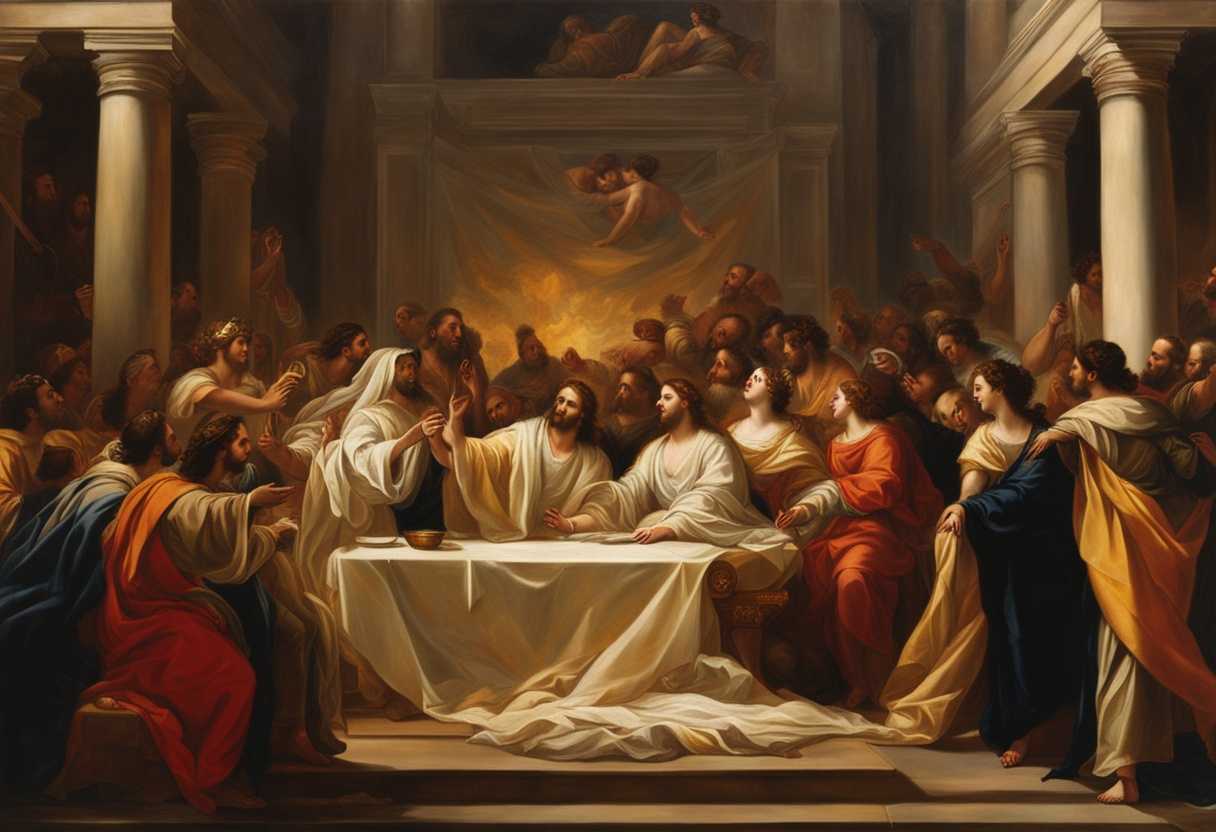
Setting the Scene for Mark 2:19
In Mark chapter 2, Jesus is having a meal at the house of Levi, also known as Matthew, who was a tax collector before becoming one of Jesus’ disciples. The scene is set in Levi’s house, which is likely a modest dwelling in Capernaum, a bustling fishing town on the shores of the Sea of Galilee. The house is filled with a mix of guests, including tax collectors and sinners, who have gathered to dine with Jesus.
As they recline at the table, sharing a meal together, the religious leaders of the time, the Pharisees and scribes, are observing from outside. They are critical of Jesus for associating with tax collectors and sinners, considering them to be unclean and unworthy of his attention. However, Jesus uses this opportunity to teach them about the importance of showing compassion and mercy to those who are in need of spiritual healing.
The atmosphere in Levi’s house is likely a mix of curiosity, skepticism, and awe as Jesus engages in conversation with his guests, sharing parables and words of wisdom. The scene serves as a powerful example of Jesus’ inclusive love and his willingness to reach out to those who are marginalized or deemed as outcasts by society.
What is Mark 2:19 about?
This verse portrays Jesus as the bridegroom, symbolizing the intimate and sacred relationship between Him and His followers. Jesus offers his followers spiritual fulfillment, hope, and salvation, just as a bridegroom brings joy, love, and the promise of a new beginning in a wedding celebration. The image of a wedding feast signifies a time of rejoicing, union, and unity with Jesus, where his followers are invited to partake in the abundance of his grace and blessings.
Have you ever attended a wedding where you witnessed the love and happiness shared between the bride and groom? Now imagine being a part of that celebration with Jesus as the bridegroom. We, as His followers, are honored guests invited to experience His love, grace, and presence in a joyous feast. Just like wedding guests eagerly anticipate the arrival of the bridegroom, we should eagerly anticipate and celebrate the presence of Jesus in our lives with open hearts and minds. His presence brings us joy, peace, and fulfillment in our journey of faith as we rejoice in the love and salvation He offers us.
Understanding what Mark 2:19 really means
In Mark 2:19, Jesus responds to the Pharisees’ inquiry about fasting by comparing His presence to a wedding feast. This analogy sheds light on the nature of His ministry and the appropriate responses to His presence. Just as a wedding is a time of joy and celebration, Jesus signifies a period of rejoicing and fulfillment for His followers. The imagery of a bridegroom emphasizes His central role in bringing joy and unity to those who believe in Him.
The context of this verse is crucial in understanding Jesus’ message. The Pharisees questioned why His disciples did not fast, highlighting a difference in practices between them and followers of John the Baptist. Jesus uses the metaphor of a wedding feast to explain that His presence calls for celebration rather than fasting. This challenges traditional religious norms and emphasizes the newness and joy that He brings into the lives of His followers.
Related passages such as Matthew 9:15, John 3:29, and Revelation 19:7-9 further illuminate the significance of Jesus as the bridegroom and His followers as the wedding guests. These passages reinforce the theme of joy and celebration in response to Jesus’ presence. They invite us to consider how we engage with and respond to the presence of Christ in our lives today.
In our contemporary context, understanding Jesus’ presence as a cause for celebration is essential. Just as the disciples were in the physical presence of Jesus, we are called to recognize His spiritual presence in our lives and respond with joy and gratitude. While there are times for fasting and mourning, there are also seasons of joy and celebration in our spiritual journey. Discerning the appropriate responses to these seasons is key to deepening our relationship with Christ.
An anecdote of a family reunion can help illustrate the concept of appropriate responses to different occasions. Just as it would be out of place to fast or mourn during a joyous reunion, recognizing and celebrating Jesus’ presence calls for a similar response of joy and gratitude. The metaphor of the wedding feast reminds us to embrace the joy and fulfillment that come from being in relationship with Christ.
By delving into the meaningful phrases in this verse, such as “bridegroom,” “wedding guests,” and “cannot fast,” we uncover layers of significance in Jesus’ teaching. These terms highlight His central role in bringing joy and unity to believers, our participation in the celebration of His presence, and the discernment needed to engage in appropriate spiritual practices. Understanding these elements enriches our spiritual journey and guides us in navigating the different seasons of rejoicing and reflection in our walk with Christ.
What does fasting signify in your spiritual life?
Fasting in my spiritual life signifies an intimate connection with God and a deepening of my faith. It is a time of self-denial and seeking spiritual nourishment, just as a wedding guest does not fast while the bridegroom is with them. Fasting allows me to focus on prayer, reflection, and drawing closer to God, much like the time when Jesus, the bridegroom, was taken away from the disciples.
I see fasting as a way to set aside worldly distractions and desires, and choose instead to prioritize my relationship with God. It is a reminder of the importance of seeking spiritual sustenance over physical comforts. Through fasting, I cultivate discipline, dependence on God, and a heightened awareness of His presence in my life. Fasting ultimately serves as a time of purification and renewal in my spiritual journey. It helps me to realign my priorities, cleanse my heart, and rekindle my passion for God. Fasting in my life signifies a period of seeking, waiting, and preparing my heart to fully experience the presence of the bridegroom in my life, just as the disciples fasted while Jesus was taken away from them.
Application
Life is a juggling act between work and family, but your spiritual well-being needs attention too. Take a moment to reflect on your fasting and prayer habits. Are you doing it mindlessly, or is it a sincere effort to get closer to God? Fast with intention, pray with purpose, and seek His guidance amid your daily chaos. Will you dedicate time to truly connect with the Lord?

Reverend Michael Johnson is an experienced Church Minister with a profound expertise in spirituality and guidance. With a serene presence and a compassionate heart, he has faithfully served his congregation for over 20 years, leading them on a spiritual journey towards inner peace and enlightenment. Reverend Johnson’s extensive knowledge of religious philosophies and profound understanding of human nature have made him a trusted confidant and mentor to many, as he seamlessly weaves his profound wisdom into life teachings. Reverend Johnson’s calming demeanor and empathetic nature continue to uplift and heal souls, nurturing a sense of unity and tranquility within his community.