
Mark 5:6-7 is about a possessed man recognizing Jesus and acknowledging His divine authority.
6 And when he saw Jesus from afar, he ran and fell down before him.
7 And crying out with a loud voice, he said, “What have you to do with me, Jesus, Son of the Most High God? I adjure you by God, do not torment me.”
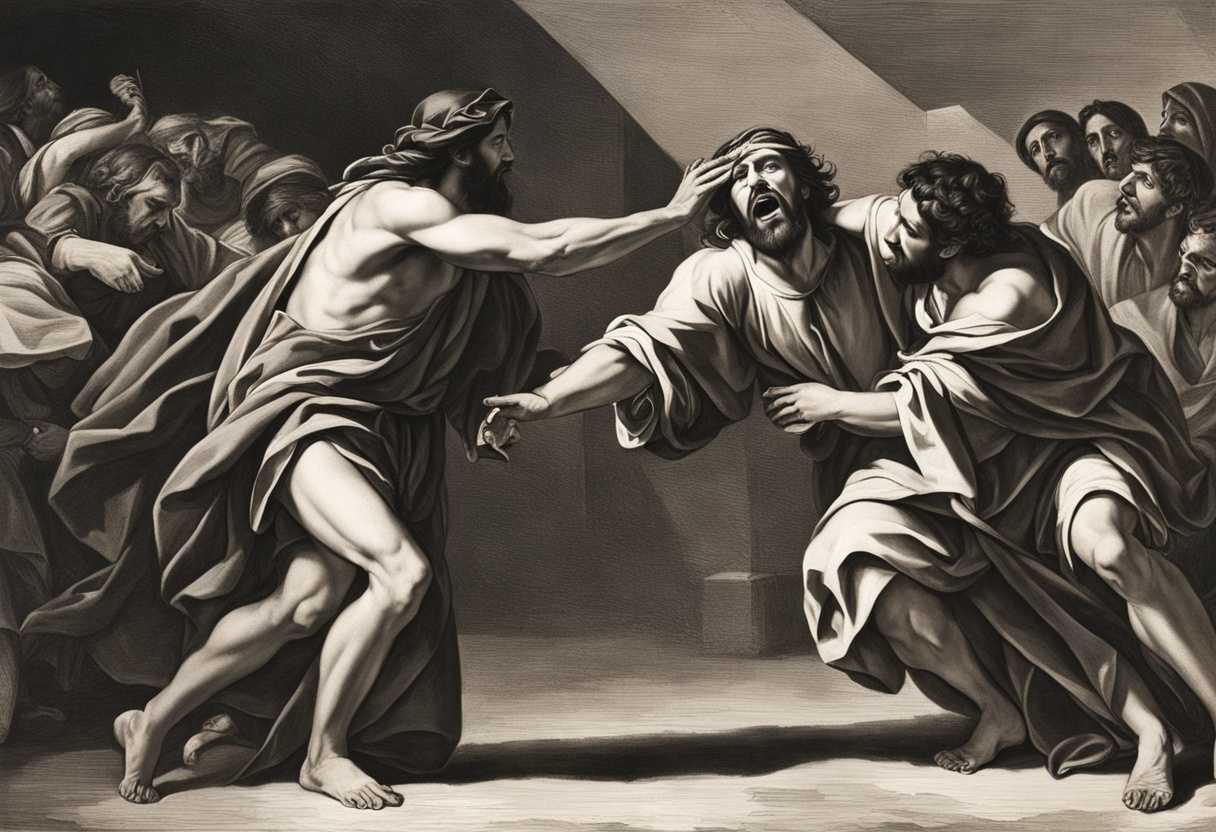
Setting the Scene for Mark 5:6-7
In Mark chapter 5, we find Jesus and his disciples traveling to the region of the Gerasenes. As they arrive, they are met with a startling sight – a man possessed by an evil spirit, living among the tombs. This man had been tormented for a long time, unable to be restrained even with chains and shackles. He would cry out and cut himself with stones, a truly distressing and pitiful sight.
The man, known as the Gerasene demoniac, had been isolated from society due to his condition. The people of the area had tried to subdue him but to no avail. When Jesus and his disciples encountered him, the man immediately recognized Jesus and fell at his feet, acknowledging his power and authority. The scene is one of desperation and hopelessness, with the man’s inner turmoil and the eerie setting of the tombs creating a sense of darkness and despair. Jesus’ arrival brings a glimmer of light and the promise of deliverance for the tormented man.
What is Mark 5:6-7 about?
This verse showcases the power and authority of Jesus over the spiritual realm. Despite being possessed by a demon, the man is able to recognize Jesus as the Son of God. This demonstrates the profound impact and recognition that Jesus had even among those oppressed by evil forces. It also highlights the spiritual battle that was constantly at play during Jesus’ ministry, showing how Jesus’ presence alone could challenge and overcome the forces of darkness.
Have you ever considered the significance of this moment, where even a demon-possessed individual could acknowledge Jesus’ true identity? It serves as a reminder of Jesus’ divine nature and how his light can penetrate even the darkest corners of our world. This verse invites us to reflect on the spiritual warfare that exists around us and the power of Jesus to bring about deliverance and transformation in the midst of it. It challenges us to recognize and acknowledge Jesus as the Son of God in our lives, even in the midst of our own struggles and battles.
Understanding what Mark 5:6-7 really means
In the narrative of Jesus healing the demon-possessed man in the region of the Gerasenes, a poignant moment unfolds as the tormented man, living among the tombs and beyond restraint, catches sight of Jesus from a distance. His immediate reaction is one of urgency and reverence as he runs towards Jesus and falls on his knees before Him. This act of running and kneeling signifies not only recognition of Jesus’ authority but also a profound sense of submission and desperation, acknowledging that Jesus alone holds the power to bring about change in his life. It is a raw and unfiltered display of faith in the face of overwhelming darkness.
As the man prostrates himself before Jesus, he cries out in a voice that echoes with both fear and recognition, addressing Jesus as “Son of the Most High God.” In this declaration, the demon-possessed man acknowledges Jesus’ divine identity and authority, highlighting the spiritual realm’s acknowledgment of Jesus’ supremacy even over demonic forces. The phrase “Son of the Most High God” serves as a stark reminder of the overarching power that Jesus wields, a power that transcends earthly boundaries and pierces through spiritual realms.
The plea of the demon-possessed man, “In God’s name, don’t torture me!” encapsulates a complex mix of fear, awareness, and submission. It reflects not only the demon’s dread of Jesus’ ability to judge and cast out evil spirits but also a deep-seated understanding of Jesus’ mission and authority. This cry for mercy underscores the profound impact of encountering the divine presence, where even the forces of darkness are compelled to acknowledge the sovereignty and righteousness of Jesus.
In contemporary times, the themes encapsulated in Mark 5:6-7 resonate deeply with individuals navigating their own struggles and battles. Just as the demon-possessed man recognized Jesus’ authority, we are called to acknowledge and submit to the lordship of Christ in our lives. In moments of desperation and hopelessness, we can find solace and deliverance by turning to Jesus, trusting in His power to bring about transformation and healing. This passage serves as a stark reminder of the spiritual warfare that surrounds us and the unwavering authority of Jesus over all realms, offering a beacon of hope in the midst of turmoil.
Consider a scenario where a person grapples with addiction, feeling trapped and powerless to break free from the chains that bind them. Through a series of events, they encounter the message of hope and redemption found in Jesus Christ. In a moment of utter desperation, they reach out in prayer, acknowledging their need for divine intervention. Over time, they witness a profound shift in their life, experiencing liberation and restoration through their newfound faith. This modern-day parallel mirrors the profound transformation and surrender witnessed in the demon-possessed man’s encounter with Jesus, illustrating the timeless relevance and power of Christ’s authority in bringing about change and renewal.
In conclusion, the narrative of the demon-possessed man in Mark 5:6-7 serves as a poignant reminder of Jesus’ unmatched authority and the transformative hope He extends to those in the depths of despair. By recognizing His power, submitting to His lordship, and seeking His intervention, we open ourselves to the possibility of profound change and liberation in our lives. Just as the demon-possessed man found deliverance through his encounter with Jesus, we too can experience the life-altering impact of surrendering to the divine authority that reigns supreme over all creation.
What do you want with us, Son of God?
The demons recognized Jesus as the Son of God and acknowledged His authority over them. They were filled with fear and desperation at His presence, knowing that He had the power to destroy them. Their question “What do you want with us, Son of God?” reflects their understanding of Jesus as divine and the dread of facing His judgment. This encounter highlights the spiritual warfare between good and evil forces, emphasizing Jesus’ supreme authority over the forces of darkness.
Through this interaction, we see the contrast between the power of Jesus and the powerlessness of the demons. The demons’ plea for mercy reveals their awareness of their impending defeat and punishment at the hands of Jesus. This passage emphasizes not only Jesus’ authority over the spiritual realm but also His compassion and mercy towards those in bondage to evil forces. It serves as a reminder of the ultimate victory of Jesus over the forces of darkness and His ability to rescue and deliver those who are oppressed.
Application
Fellow traveler in this digital age, let’s dive into the wisdom found in Mark 5:6-7. Just as Jesus showed dominance over the adversities he faced, we too can conquer the challenges in our work and family lives by trusting in His power. Are you ready to release your grip on doubt and fear and hand over the reins to the ultimate authority, Jesus Christ?

Reverend Michael Johnson is an experienced Church Minister with a profound expertise in spirituality and guidance. With a serene presence and a compassionate heart, he has faithfully served his congregation for over 20 years, leading them on a spiritual journey towards inner peace and enlightenment. Reverend Johnson’s extensive knowledge of religious philosophies and profound understanding of human nature have made him a trusted confidant and mentor to many, as he seamlessly weaves his profound wisdom into life teachings. Reverend Johnson’s calming demeanor and empathetic nature continue to uplift and heal souls, nurturing a sense of unity and tranquility within his community.