
Mark 6:17-18 is about the consequences of King Herod’s unlawful marriage to his brother’s wife, showing how sin can lead to a chain of destructive actions and ultimately result in judgment and suffering.
17 For it was Herod who had sent and seized John and bound him in prison for the sake of Herodias, his brother Philip’s wife, because he had married her.
18 For John had been saying to Herod, “It is not lawful for you to have your brother’s wife.”
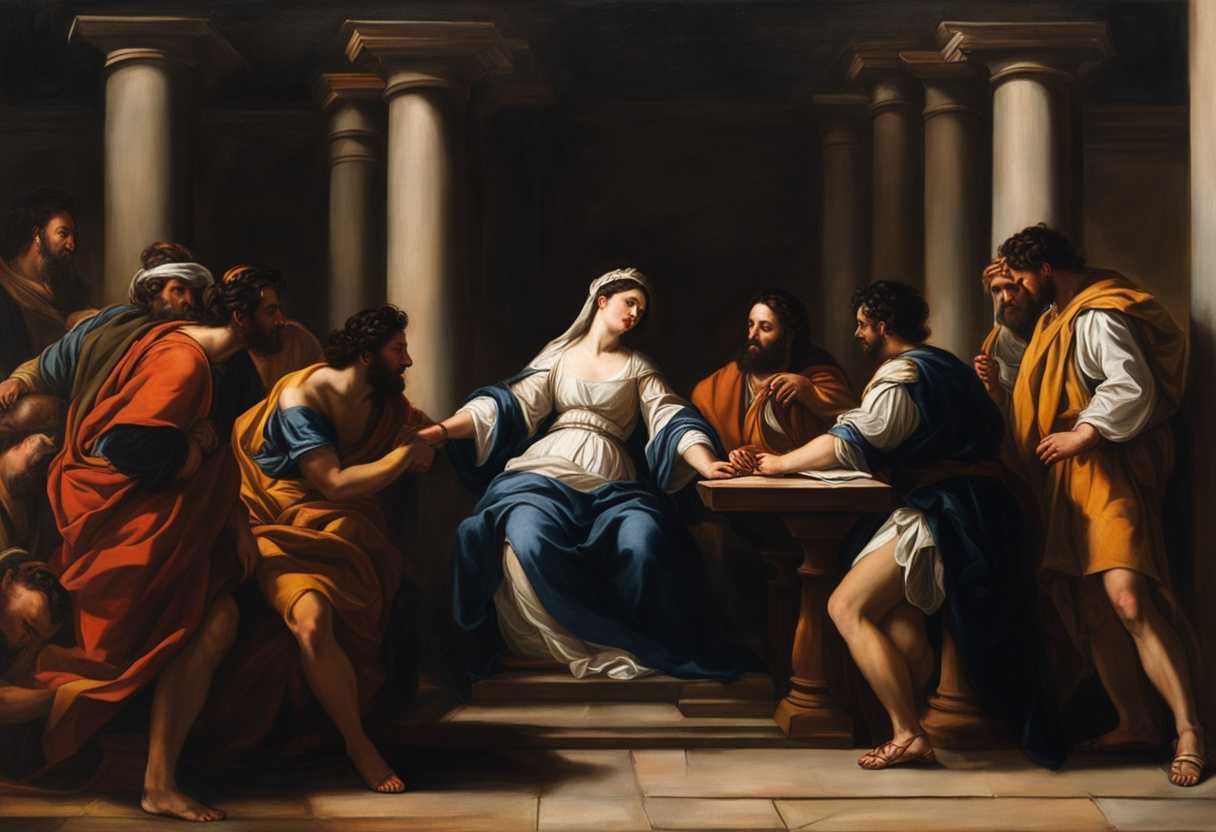
Setting the Scene for Mark 6:17-18
In Mark chapter 6, we find a scene set in the palace of King Herod Antipas. The room is lavishly decorated with rich tapestries and ornate furniture, reflecting the opulence of the king’s court. The atmosphere is tense as King Herod Antipas is hosting a grand banquet in honor of his birthday. The room is filled with the king’s closest advisors, military commanders, and prominent members of society.
Among the guests is Herodias, the wife of King Herod’s brother, Philip. She is accompanied by her daughter, Salome, who captivates the room with her beauty and grace. As the evening progresses, King Herod becomes increasingly intoxicated by the festivities and promises to grant Salome any request she desires, up to half his kingdom.
It is in this extravagant and decadent setting that Salome, at the urging of her mother Herodias, asks for the head of John the Baptist on a platter. The request shocks the guests, but King Herod, bound by his oath and unwilling to lose face in front of his guests, reluctantly orders the execution of John the Baptist. The scene serves as a tragic reminder of the consequences of succumbing to worldly desires and the corrupting influence of power and pride.
What is Mark 6:17-18 about?
Isn’t it fascinating how even powerful rulers like Herod are not exempt from the weight of guilt and consequences of their actions? This verse serves as a stark reminder that regardless of our status or stature in society, the consequences of our choices, particularly sinful ones, will eventually catch up with us. Herod’s guilt over the death of John the Baptist showcases the internal turmoil and remorse that can eat away at a person when they act in a way that goes against their conscience or moral compass. This verse prompts us to consider the implications of our own actions as we reflect on it. Do we make decisions that align with our values and beliefs, or do we sometimes veer off course due to selfish desires or societal pressures? Herod’s guilt stands as a cautionary tale, urging us to be mindful of the choices we make and the impact they may have on ourselves and those around us. We should use this verse as a reminder to strive for integrity and righteousness in all that we do, knowing that the consequences of our actions, whether positive or negative, will inevitably shape our lives.
Understanding what Mark 6:17-18 really means
In Mark 6:17-18, we delve into the gripping account of John the Baptist’s bold confrontation of King Herod’s sinful actions. The narrative unfolds with Herod’s decision to imprison John, a consequence of the prophet’s unwavering stance against Herod’s unlawful marriage to Herodias, his brother Philip’s wife. This clash of moral values sets the stage for a profound reflection on the themes of moral courage and the repercussions of standing up for righteousness.
The parallel passage in Matthew 14:3-4 reinforces the gravity of John’s situation, emphasizing the moral conflict at play. Leviticus 18:16 provides a scriptural foundation for John’s condemnation of Herod’s marriage, highlighting the importance of adhering to God’s commandments. Additionally, Luke 3:19-20 further underscores John’s fearlessness in rebuking Herod’s transgressions, showcasing his commitment to upholding divine principles.
In today’s world, John the Baptist’s example resonates deeply, serving as a poignant reminder of the significance of moral courage. His willingness to confront Herod, despite the personal risks involved, challenges believers to uphold integrity and stand firm in the face of adversity. Moreover, Herod’s tumultuous circumstances following his sinful actions serve as a stark illustration of the destructive consequences of straying from God’s laws.
John’s act of speaking truth to power carries timeless relevance, urging individuals to confront wrongdoing even in the face of opposition. Consider a modern-day whistleblower who exposes corruption within a powerful entity. Their courageous stance mirrors John’s defiance against Herod, inspiring others to prioritize righteousness over personal gain. This parallel underscores the enduring impact of John’s unwavering commitment to truth.
Key phrases within the passage, such as “For Herod himself had given orders to have John arrested,” vividly depict the direct repercussions of John’s moral stand. The specific mention of Herodias as “his brother Philip’s wife, whom he had married” serves as a poignant reminder of the sanctity of marriage and the consequences of violating God’s decrees. John’s resolute statement to Herod, “It is not lawful for you to have your brother’s wife,” encapsulates his unyielding dedication to upholding righteousness, emphasizing the imperative of addressing sin, regardless of the individuals involved.
By immersing ourselves in the narrative of John the Baptist’s confrontation with King Herod, we glean profound insights into moral courage, the ramifications of sin, and the imperative of speaking truth to power. These timeless lessons continue to inspire and guide believers navigating the complexities of a world where upholding righteousness often demands unwavering resolve and steadfast commitment to God’s truth.
How can we stay faithful to God’s truth?
We can stay faithful to God’s truth by acknowledging our own sins and repenting from them. King Herod recognized John the Baptist as a righteous and holy man, yet he chose to live in sin and ultimately had John killed, just as in the verses referenced. We must not only recognize God’s truth but also live it out in our actions and decisions.
Furthermore, we can remain faithful to God’s truth by being aware of the influences around us. King Herod was swayed by the opinions of others, leading him to make decisions that went against God’s will. We, as believers, must discern the influences in our lives and ensure that they align with God’s Word to stay firm in our faith and avoid being led astray. Staying faithful to God’s truth ultimately requires a deep commitment to following His Word and seeking His guidance through prayer and study of the Bible. We can navigate the challenges and temptations of this world while remaining steadfast in our faith by grounding ourselves in God’s truth and seeking His wisdom daily.
Application
In a world where silence can be deafening, let us be the ones brave enough to speak up against wrongdoing, just as John the Baptist did. We must not shy away from calling out injustice and immorality, no matter how difficult it may seem. This is our moment to stand tall, to be a beacon of light in a world that sometimes seems dark. Will you rise to the occasion and be a force for good in your corner of the world?

Reverend Michael Johnson is an experienced Church Minister with a profound expertise in spirituality and guidance. With a serene presence and a compassionate heart, he has faithfully served his congregation for over 20 years, leading them on a spiritual journey towards inner peace and enlightenment. Reverend Johnson’s extensive knowledge of religious philosophies and profound understanding of human nature have made him a trusted confidant and mentor to many, as he seamlessly weaves his profound wisdom into life teachings. Reverend Johnson’s calming demeanor and empathetic nature continue to uplift and heal souls, nurturing a sense of unity and tranquility within his community.