
Mark 6:21-29 is about the sinister plot that led to the unjust execution of John the Baptist by King Herod, showcasing the clash between the corrupt power of rulers and the faithful commitment of prophets to speak truth regardless of the consequences.
21 But an opportunity came when Herod on his birthday gave a banquet for his nobles and military commanders and the leading men of Galilee.
22 For when Herodias’s daughter came in and danced, she pleased Herod and his guests. And the king said to the girl, “Ask me for whatever you wish, and I will give it to you.”
23 And he vowed to her, “Whatever you ask me, I will give you, up to half of my kingdom.”
24 And she went out and said to her mother, “For what should I ask?” And she said, “The head of John the Baptist.”
25 And she came in immediately with haste to the king and asked, saying, “I want you to give me at once the head of John the Baptist on a platter.”
26 And the king was exceedingly sorry, but because of his oaths and his guests he did not want to break his word to her.
27 And immediately the king sent an executioner with orders to bring John’s head. He went and beheaded him in the prison
28 brought his head on a platter and gave it to the girl, and the girl gave it to her mother.
29 When his disciples heard of it, they came and took his body and laid it in a tomb.
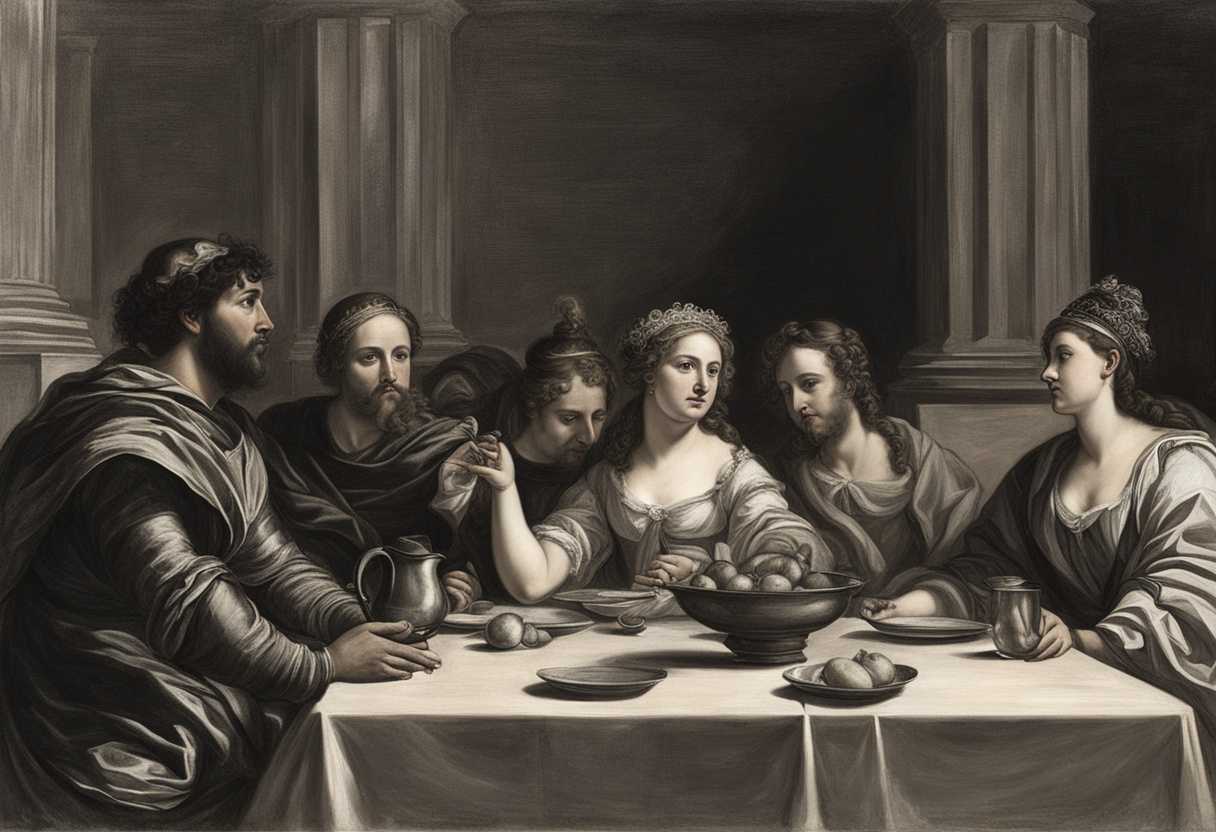
Setting the Scene for Mark 6:21-29
In Mark chapter 6, we find the scene where King Herod Antipas is hosting a banquet in his palace in honor of his birthday. The guests at this lavish feast include high officials, military commanders, and the leading men of Galilee. Among the attendees is Herod’s wife, Herodias, and her daughter, who is often identified as Salome.
The opulent banquet hall is filled with the sounds of music and laughter as the guests enjoy the extravagant celebration. Herod, known for his worldly pleasures and political cunning, is in high spirits as he entertains his guests with food, drink, and entertainment. The atmosphere is one of luxury and excess, with servants bustling about attending to the needs of the guests.
It is in this setting that the infamous events unfold, leading to the tragic request made by Herodias’ daughter, which ultimately results in the beheading of John the Baptist. The scene is a stark contrast between the indulgent world of the palace and the prophetic voice of John, who dared to speak out against the sins of the powerful.
What is Mark 6:21-29 about?
This verse highlights the tragic consequences of power and pride. King Herod’s decision to order the beheading of John the Baptist to fulfill a promise made in a moment of haste and frivolity showcases the dangers of making decisions based on ego and a desire to impress others. It reveals how easily individuals in positions of authority can succumb to the pressure of maintaining their image and reputation at the cost of human life and morality. Pondering upon this verse reminds us of the importance of integrity and true leadership. It prompts us to consider how our actions and decisions can impact others, particularly when made out of selfish motives or a need for validation. It also serves as a cautionary tale about the consequences of allowing pride and vanity to cloud our judgment, leading us down a dangerous path that ultimately harms not only ourselves but also those around us. Let us reflect on this powerful message and strive to embody qualities of humility, compassion, and wisdom in our own lives and leadership roles.
Understanding what Mark 6:21-29 really means
In Mark 6:21-29, we are presented with the chilling account of the beheading of John the Baptist at the request of Herod Antipas, driven by the manipulation of Herodias and her daughter. The scene unfolds during a banquet held for Herod’s birthday, where Herodias’ daughter’s dance captivates Herod, leading to his ill-fated promise to grant her any wish. This narrative serves as a stark reminder of the vulnerability of leaders to flattery and the dire consequences of impulsive decisions.
The phrase “Herodias’ daughter came in and danced” underscores the power of manipulation and seduction in achieving sinister goals. It highlights the dangers of allowing oneself to be swayed by external influences, leading to actions that betray one’s integrity. Similarly, Herod’s offer to grant any wish reveals his impulsive nature and the peril of making promises without considering the ramifications, a cautionary tale for all individuals, especially those in positions of authority.
As we delve into related biblical passages, such as Matthew 14:1-12, we gain a deeper understanding of the moral and spiritual implications of John’s martyrdom. Proverbs 29:20 warns against hasty words, resonating with Herod’s downfall, while James 1:19 advocates for thoughtful speech and decision-making, contrasting with Herod’s rash actions. These verses serve as timeless lessons on the importance of prudence and wisdom in our words and deeds.
The relevance of this narrative to contemporary society is striking, particularly in the realms of leadership and personal responsibility. Leaders, whether in politics, business, or any other sphere, are reminded of the weight their words carry and the need for integrity in their actions. The story also cautions against the dangers of manipulation and the influence of others in decision-making, urging individuals to seek discernment and wisdom in navigating complex situations.
To illustrate the enduring relevance of this passage, consider a modern-day scenario where a CEO hastily promises a substantial bonus to an employee, only to realize later the financial implications for the company. Despite regretting the impulsive commitment, the CEO feels compelled to honor it, mirroring Herod’s predicament. This anecdote underscores the importance of measured and thoughtful decision-making, emphasizing the lasting impact of our words and promises.
In conclusion, the story of John the Baptist’s tragic end serves as a poignant reminder of the perils of impulsive actions and the necessity of integrity and wisdom in leadership. It prompts introspection on our own conduct and the influences we allow in our lives, urging a commitment to deliberate and principled living. May we heed the lessons of this narrative, striving for discernment and steadfastness in our words and deeds.
What role do power and influence play in our spiritual journey?
Power and influence can have a significant impact on our spiritual journey. King Herod’s power and influence, along with his manipulation of others through his oath, led to the unjust and tragic death of John the Baptist in the story from Mark 6:21-29. This narrative serves as a reminder of how easily power and influence can be used for selfish and destructive purposes, ultimately hindering our spiritual growth.
On our spiritual journey, it is important to be mindful of how power and influence can sway our decisions and actions. We should strive to use whatever power and influence we have for the greater good, following the example of humility and selflessness set by Jesus Christ. We can navigate the complexities of power and influence with integrity and grace by aligning ourselves with spiritual values and seeking guidance from our faith, staying true to our beliefs and purpose. Power and influence are tools that can ultimately elevate or obstruct our spiritual growth. We can honor God and contribute positively to the world around us by remaining steadfast in our faith and using our power and influence to promote love, justice, and compassion.
Application
Reflect on the courage it takes to speak the truth, just like John the Baptist. Are you brave enough to stand up for what you believe in, even when faced with challenges? It’s time to commit to sharing the message of the Gospel boldly, no matter the sacrifices. Will you rise up against injustice and let your faith shine bright in the darkness? The time is now. Will you answer the call?

Reverend Michael Johnson is an experienced Church Minister with a profound expertise in spirituality and guidance. With a serene presence and a compassionate heart, he has faithfully served his congregation for over 20 years, leading them on a spiritual journey towards inner peace and enlightenment. Reverend Johnson’s extensive knowledge of religious philosophies and profound understanding of human nature have made him a trusted confidant and mentor to many, as he seamlessly weaves his profound wisdom into life teachings. Reverend Johnson’s calming demeanor and empathetic nature continue to uplift and heal souls, nurturing a sense of unity and tranquility within his community.