
Mark 7:24-37 is about Jesus demonstrating his compassion and ability to bring healing and restoration, emphasizing the inclusion of all people in God’s kingdom regardless of their background or status.
24 And from there he arose and went away to the region of Tyre and Sidon. And he entered a house and did not want anyone to know, yet he could not be hidden.
25 But immediately a woman whose little daughter had an unclean spirit heard of him and came and fell down at his feet.
26 Now the woman was a Gentile, a Syrophoenician by birth. And she begged him to cast the demon out of her daughter.
27 And he said to her, “Let the children be fed first, for it is not right to take the children’s bread and throw it to the dogs.”
28 But she answered him, “Yes, Lord; yet even the dogs under the table eat the children’s crumbs.”
29 And he said to her, “For this statement you may go your way; the demon has left your daughter.”
30 And she went home and found the child lying in bed and the demon gone.
31 Then he returned from the region of Tyre and went through Sidon to the Sea of Galilee, in the region of the Decapolis.
32 And they brought to him a man who was deaf and had a speech impediment, and they begged him to lay his hand on him.
33 And taking him aside from the crowd privately, he put his fingers into his ears, and after spitting touched his tongue.
34 And looking up to heaven, he sighed and said to him, “Ephphatha,” that is, “Be opened.”
35 And his ears were opened, his tongue was released, and he spoke plainly.
36 And Jesus charged them to tell no one. But the more he charged them, the more zealously they proclaimed it.
37 And they were astonished beyond measure, saying, “He has done all things well. He even makes the deaf hear and the mute speak.”
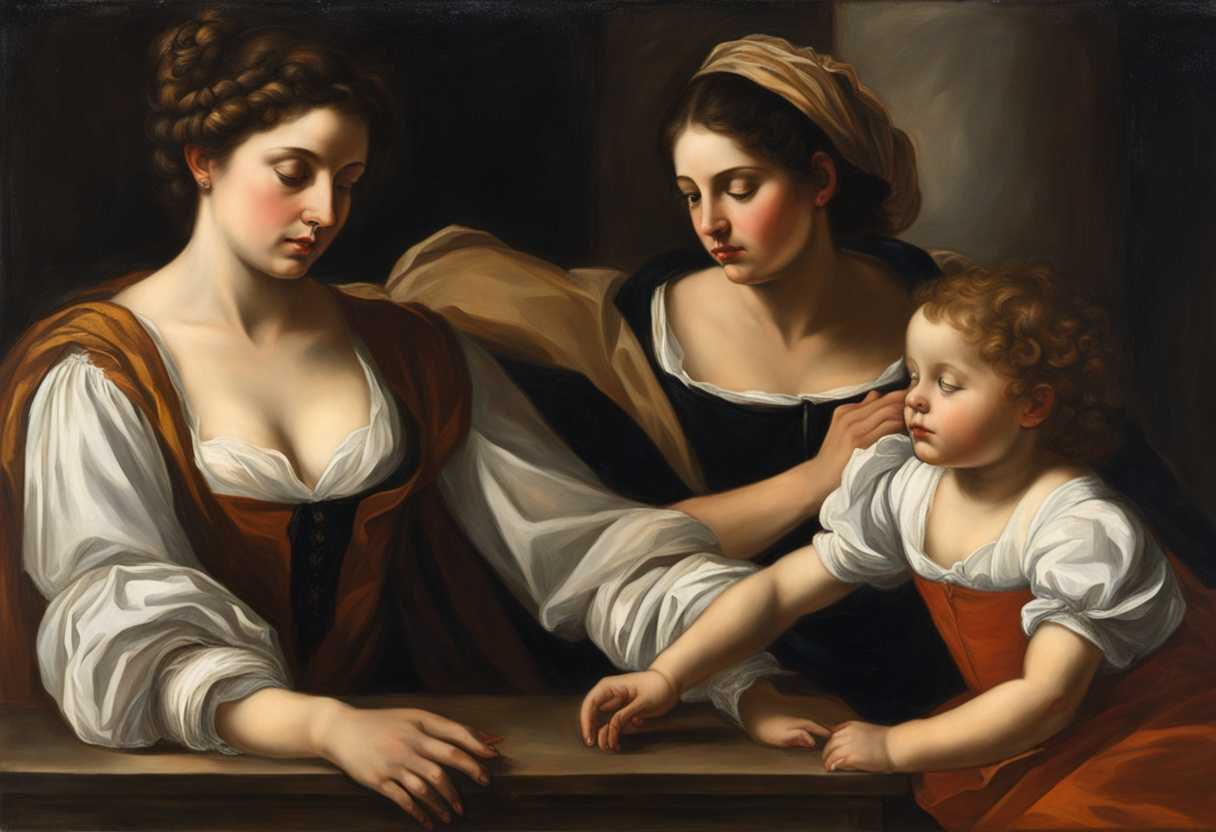
Setting the Scene for Mark 7:24-37
In Mark chapter 7, we find Jesus traveling to the region of Tyre. The scene opens with a Gentile woman, a Syrophoenician by birth, approaching Jesus. She had heard of His miraculous healings and sought Him out to ask for help for her demon-possessed daughter. The woman’s desperation and faith were evident as she fell at Jesus’ feet, pleading for her daughter’s deliverance.
Jesus, initially seeming to brush off the woman’s request, stated that the children’s bread should not be given to dogs. However, the woman’s response, acknowledging her place as a Gentile yet expressing her faith in Jesus’ ability to help, moved Him. Jesus commended her faith and granted her request, healing her daughter from afar.
The surroundings were likely bustling with people, as Jesus’ reputation for healing had spread far and wide. The interaction between Jesus and the Syrophoenician woman serves as a powerful example of faith transcending cultural boundaries and Jesus’ compassion extending to all who seek Him.
What is Mark 7:24-37 about?
This verse in the Bible demonstrates the miraculous power and boundless compassion of Jesus. Jesus showcases His ability to overcome any physical limitations by healing a man who was both deaf and had a speech impediment. The fact that the man couldn’t hear or speak properly emphasizes the depth of his struggle, making his healing all the more remarkable.
Through this act of healing, Jesus not only shows His divine authority over physical ailments but also His deep care for each individual’s well-being. Jesus demonstrates his personal concern for each of us by taking the time to address this man’s specific needs and restore his ability to hear and speak, no matter how big or small our struggles may seem. This verse reminds us of Jesus’ limitless power to heal and His unwavering love for all people, reaffirming our faith in His ability to bring restoration and transformation into our lives. We can marvel at the depth of Jesus’ compassion and acknowledge His power to bring about miraculous healing in our lives as we reflect on this verse. We can take comfort in knowing that, just as Jesus healed the deaf man with a speech impediment, He is also present in our own struggles and challenges, ready to bring healing and restoration. This verse serves as a powerful reminder of the boundless love and mercy that Jesus offers to each of us, inviting us to trust in His ability to bring about transformation and renewal in every aspect of our lives.
Understanding what Mark 7:24-37 really means
In the passage from Mark 7:24-37, we witness Jesus’ encounters in the region of Tyre and Sidon, highlighting themes of faith, humility, and the breaking of cultural barriers. The narrative unfolds with a Syrophoenician woman approaching Jesus, seeking healing for her daughter possessed by an unclean spirit. Her act of falling at Jesus’ feet signifies her desperation and unwavering faith in His power and authority. Jesus, initially testing her faith with a metaphorical reference to Gentiles as dogs, is met with the woman’s humble response, acknowledging her position yet believing in Jesus’ mercy. This interaction showcases the woman’s persistent faith and humility, leading to the miraculous healing of her daughter, emphasizing the importance of approaching God with unwavering faith and humility.
The healing of the deaf and mute man further illustrates the community’s faith in Jesus’ healing power. Jesus’ personal and compassionate approach to healing, taking the man aside privately and using physical gestures, demonstrates His intimate care for individuals. His command, “Ephphatha,” to be opened, showcases the power of His word to bring about healing and restoration, echoing the divine authority and fulfillment of messianic prophecies. The acknowledgment by the crowd that “He has done all things well” underscores Jesus’ divine authority and ability to bring forth miraculous healing, emphasizing the significance of recognizing and acknowledging God’s power in our lives.
The relevance of these encounters resonates with people today, emphasizing the importance of faith, humility, and the breaking of cultural barriers. The Syrophoenician woman’s story serves as a poignant reminder of the power of persistent faith and humility in approaching God. Jesus’ interactions with individuals from different backgrounds highlight God’s love and power transcending cultural and ethnic boundaries, encouraging us to embrace diversity and unity in Christ. His personal touch in healing reminds us of God’s intimate care for each of us, reinforcing the belief in His ability to bring healing and restoration in our lives.
An anecdote of a modern-day mother’s unwavering faith and humility in seeking God’s intervention for her child’s healing parallels the Syrophoenician woman’s story, showcasing the transformative power of faith and humility leading to divine intervention. This narrative serves as a testament to the enduring truth that approaching God with faith and humility can lead to miraculous outcomes, inspiring us to trust in God’s power and timing in our own lives.
In conclusion, readers are encouraged to reflect on the lessons from these encounters, embracing faith and humility in their approach to God. By recognizing and breaking down cultural barriers, trusting in God’s power, and seeking His personal touch in their lives, individuals can experience the transformative healing and restoration that Jesus brings. Reflecting on areas where faith and humility are needed, readers are urged to approach God with confidence, knowing that He cares for them personally and intimately, ready to bring about miraculous change in their lives.
How can we approach Jesus with persistent faith?
We can approach Jesus with persistent faith by recognizing our need for Him and surrendering ourselves to Him completely. The woman approached Jesus with humility and desperation in the passage, knowing that only He could help her daughter. Despite being initially rebuffed, she persisted in her faith and trust in Jesus, even when faced with obstacles along the way. This kind of persistent faith involves a deep belief in Jesus’ power and willingness to help us, even in the face of challenges or delays.
Additionally, approaching Jesus with persistent faith requires perseverance and determination. We must continue to seek Jesus’ help earnestly for our daughter, just as the woman in the passage did not give up. This kind of faith demonstrates our trust in Jesus’ ability to bring about healing, restoration, and deliverance in our lives, even when circumstances may seem dire. We can experience the fullness of His grace and mercy in our lives by persisting in our faith and never losing hope in His goodness and power.
Application
Friends, consider the Syrophoenician woman from Mark 7:24-37. She never gave up and fought for her daughter’s healing. Imagine tackling your life’s challenges with that same tenacity. Whether it’s a tough project at work or a family issue at home, approach it with unwavering faith. Believe that you can find solutions and strength. Will you commit to facing your struggles with the same persistence and trust today?

Reverend Michael Johnson is an experienced Church Minister with a profound expertise in spirituality and guidance. With a serene presence and a compassionate heart, he has faithfully served his congregation for over 20 years, leading them on a spiritual journey towards inner peace and enlightenment. Reverend Johnson’s extensive knowledge of religious philosophies and profound understanding of human nature have made him a trusted confidant and mentor to many, as he seamlessly weaves his profound wisdom into life teachings. Reverend Johnson’s calming demeanor and empathetic nature continue to uplift and heal souls, nurturing a sense of unity and tranquility within his community.