
Mark 8:27-30 is about Peter confessing Jesus as the Christ, the moment of recognition and acknowledgement of Jesus’ true identity as the Messiah.
27 And Jesus went on with his disciples to the villages of Caesarea Philippi. And on the way he asked his disciples, “Who do people say that I am?”
28 And they told him, “John the Baptist; and others say, Elijah; and others, one of the prophets.”
29 And he asked them, “But who do you say that I am?” Peter answered him, “You are the Christ.”
30 And he strictly charged them to tell no one about him.
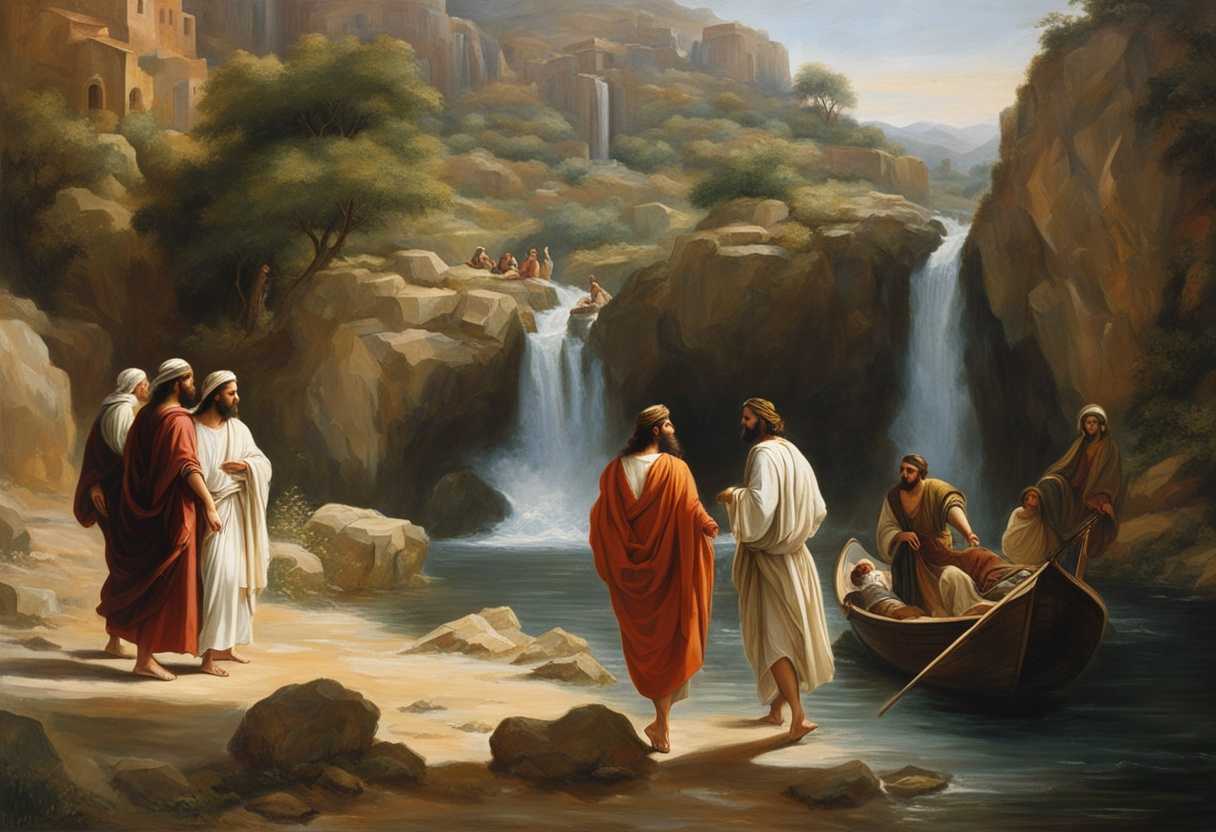
Setting the Scene for Mark 8:27-30
In Mark chapter 8, we find Jesus and his disciples traveling to the region of Caesarea Philippi. As they journey along the way, Jesus takes the opportunity to engage his disciples in a profound conversation about his identity. The scene is set against the backdrop of a rocky landscape, with the sound of a nearby stream providing a peaceful ambiance.
The disciples, including Peter, James, and John, are walking closely with Jesus, listening intently as he poses a crucial question to them: “Who do people say I am?” The disciples respond with various answers, reflecting the confusion and speculation surrounding Jesus’ identity at that time. Then Jesus directs the question specifically to his disciples, asking, “But who do you say I am?” It is in this moment that Peter, inspired by the Holy Spirit, boldly declares, “You are the Messiah.” This pivotal exchange marks a significant turning point in the disciples’ understanding of Jesus’ true nature and mission.
The atmosphere is charged with anticipation and revelation as Jesus affirms Peter’s confession and instructs the disciples not to reveal his identity just yet. This intimate moment of revelation and recognition serves as a foundation for the disciples’ future ministry and their growing understanding of Jesus as the long-awaited Savior.
What is Mark 8:27-30 about?
This verse is a pivotal moment in the New Testament when Peter, one of Jesus’ disciples, publicly proclaims his belief in Jesus as the Christ and the Son of God. This declaration is significant because it marks a recognition of Jesus’ divinity and messianic role. Peter demonstrates his faith in Jesus as the awaited Messiah and the Son of God by acknowledging Jesus in this way.
Through Peter’s confession, we see the importance of personal belief and recognition of Jesus’ true identity. This moment challenges us to reflect on our own understanding of who Jesus is in our lives. Do we truly believe in him as the Christ, the Son of God? And if so, how does that belief influence our thoughts, actions, and the way we live our lives? This verse serves as a reminder for us to continually deepen our faith and understanding of Jesus’ divine nature, just as Peter did in this powerful declaration.
Understanding what Mark 8:27-30 really means
Jesus and His disciples find themselves in the vicinity of Caesarea Philippi, a setting ripe for a pivotal conversation. Jesus initiates a probing inquiry, asking His disciples about the prevailing public opinion regarding His identity. This question serves as a precursor to the more personal and profound query that follows: “But what about you? Who do you say I am?” In this moment, the disciples are confronted with the crux of their faith, prompting Peter to boldly proclaim, “You are the Messiah.” This confession encapsulates the essence of Christian belief, acknowledging Jesus as the anointed savior sent by God.
The interchange between Jesus and His disciples in Mark 8:27-30 resonates across time, inviting contemporary readers to grapple with the same fundamental question of identity and belief. Just as Peter’s declaration was a defining moment, individuals today are challenged to articulate their own convictions about Jesus. This passage underscores the significance of openly confessing faith in Jesus as the Messiah, a declaration that transcends mere acknowledgment to a personal and transformative commitment.
Peter’s acknowledgment of Jesus as the Messiah not only solidifies the disciples’ understanding of His divine role but also illuminates the broader mission that Jesus came to fulfill. By recognizing Jesus’ identity, believers gain insight into His purpose and their role within His redemptive plan. This recognition serves as a compass guiding believers in understanding the significance of Jesus’ life, death, and resurrection, shaping their faith and actions accordingly.
Consider Sarah, a young woman grappling with doubts about her faith, who encounters this passage in a Bible study. The question, “Who do you say I am?” strikes a chord within her, prompting a soul-searching journey from a faith rooted in tradition to a personal and vibrant relationship with Jesus. Sarah’s experience mirrors the transformative power embedded in Peter’s confession, illustrating how a sincere acknowledgment of Jesus’ identity can catalyze profound spiritual growth and renewal.
As readers delve into the nuances of this passage, they encounter a tapestry of themes—identity, belief, confession, and mission—that intertwine to form a rich theological narrative. The questions posed by Jesus reverberate through the centuries, challenging each individual to confront their understanding of His identity and the implications of that belief. Through contemplation and introspection, readers can glean insights that not only deepen their comprehension of the text but also resonate with the core tenets of Christian faith, inviting them to embrace a personal and transformative relationship with Jesus Christ.
Who do you say that I am?
You are the Christ, the Son of the living God.
Application
Imagine you’re at work, and your boss asks, “What value do you bring to this team?” Just like that, Jesus asks, “Who do you say I am?” This isn’t just a casual question—it’s the cornerstone of your faith, like knowing your family’s history or understanding your role in your career. Let this question push you to know Jesus more intimately, from boardroom to dinner table. Will you stand up and declare your belief, shaping your life’s purpose? How will you respond to Jesus’ question today?

Reverend Michael Johnson is an experienced Church Minister with a profound expertise in spirituality and guidance. With a serene presence and a compassionate heart, he has faithfully served his congregation for over 20 years, leading them on a spiritual journey towards inner peace and enlightenment. Reverend Johnson’s extensive knowledge of religious philosophies and profound understanding of human nature have made him a trusted confidant and mentor to many, as he seamlessly weaves his profound wisdom into life teachings. Reverend Johnson’s calming demeanor and empathetic nature continue to uplift and heal souls, nurturing a sense of unity and tranquility within his community.