
Mark 8:27-38 is about Jesus revealing his true identity as the Messiah and teaching his disciples about the cost of following him, emphasizing the necessity of self-denial, taking up one’s cross, and prioritizing eternal life over worldly pursuits.
27 And Jesus went on with his disciples to the villages of Caesarea Philippi. And on the way he asked his disciples, “Who do people say that I am?”
28 And they told him, “John the Baptist; and others say, Elijah; and others, one of the prophets.”
29 And he asked them, “But who do you say that I am?” Peter answered him, “You are the Christ.”
30 And he strictly charged them to tell no one about him.
31 And he began to teach them that the Son of Man must suffer many things and be rejected by the elders and the chief priests and the scribes and be killed, and after three days rise again.
32 And he said this plainly. And Peter took him aside and began to rebuke him.
33 But turning and seeing his disciples, he rebuked Peter and said, “Get behind me, Satan! For you are not setting your mind on the things of God, but on the things of man.”
34 And calling the crowd to him with his disciples, he said to them, “If anyone would come after me, let him deny himself and take up his cross and follow me.
35 For whoever would save his life will lose it, but whoever loses his life for my sake and the gospel’s will save it.
36 For what does it profit a man to gain the whole world and forfeit his soul?
37 For what can a man give in return for his soul?
38 For whoever is ashamed of me and of my words in this adulterous and sinful generation, of him will the Son of Man also be ashamed when he comes in the glory of his Father with the holy angels.”
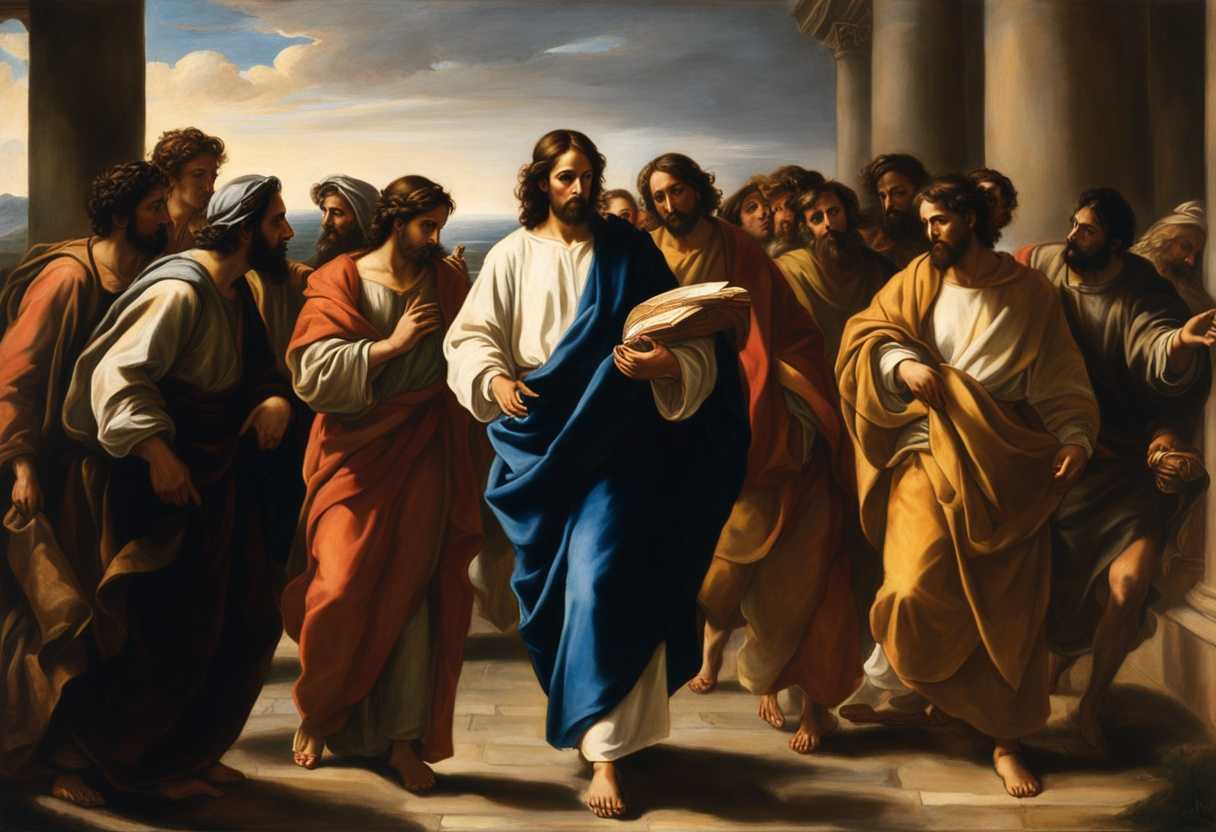
Setting the Scene for Mark 8:27-38
In Mark chapter 8, Jesus and his disciples are traveling through the region of Caesarea Philippi. The group has been journeying together for some time, teaching and performing miracles along the way. As they walk, Jesus takes a moment to engage his disciples in a deep conversation about his identity and mission.
The scene is set against the backdrop of a lush green valley, with the majestic Mount Hermon towering in the distance. The disciples are gathered around Jesus, their faces reflecting a mixture of curiosity and reverence. Jesus, with his gentle yet commanding presence, begins to ask them probing questions about who people say he is and, more importantly, who they believe him to be.
Peter, always quick to speak, boldly declares, “You are the Messiah.” Jesus then goes on to explain the true nature of his mission, foretelling his suffering, death, and resurrection. The weight of his words hangs heavy in the air as the disciples grapple with the profound implications of following a Messiah who would endure such hardships. This pivotal moment in their journey together marks a turning point in their understanding of Jesus’ divinity and the sacrificial path he is destined to walk.
What is Mark 8:27-38 about?
Peter proclaims Jesus as the long-awaited Messiah in this verse, a pivotal moment in the New Testament. This declaration holds immense significance as it marks the recognition of Jesus’ divine nature and mission. Consider how Peter’s proclamation impacts the disciples’ understanding of Jesus and their role in spreading His message as educators. How does this declaration of Jesus as the Messiah shape the disciples’ future actions and beliefs?
Furthermore, Jesus foretells His impending death and resurrection, emphasizing the sacrificial nature of His mission. Jesus required profound courage and selflessness to undergo such hardship for the salvation of others. How does this prediction of His resurrection offer hope and renewal to His followers? Encourage your students to ponder the challenges and rewards of sacrificial love and commitment in their own lives. We can inspire introspection and spiritual growth in our journey of faith by delving deep into the meaning of this verse.
Understanding what Mark 8:27-38 really means
In the journey to the villages of Caesarea Philippi, Jesus engages His disciples in a profound conversation that delves into the core aspects of Christian faith. He begins by questioning His disciples about public opinion regarding His identity, leading to Peter’s pivotal confession that Jesus is the Messiah, the anointed Savior. This acknowledgment forms the bedrock of Christian belief, emphasizing the significance of recognizing Jesus’ divine mission and authority. Peter’s revelation is not merely a personal insight but a divine revelation, as Jesus blesses him for this profound declaration, underscoring the importance of spiritual discernment in understanding Christ’s identity.
As the dialogue progresses, Jesus unveils a challenging truth: the Son of Man must suffer. This declaration shatters conventional expectations of a triumphant political leader, introducing the concept of a suffering Messiah. When Peter rebukes Jesus for this prediction, he is swiftly corrected with a stern rebuke, “Get behind me, Satan!” This exchange underscores the necessity of aligning one’s understanding with God’s plan, even when it defies human logic. The reference to Isaiah 53 further illuminates the prophesied role of the suffering servant, emphasizing the redemptive purpose behind Jesus’ sacrificial mission.
The discourse culminates in a poignant call to discipleship, demanding self-denial and a willingness to bear one’s cross for the sake of following Christ. This radical invitation challenges the prevailing culture of self-gratification and material pursuits, highlighting the eternal value of prioritizing spiritual growth over worldly gains. Jesus’ rhetorical question, “What good is it for someone to gain the whole world, yet forfeit their soul?” underscores the fleeting nature of earthly achievements compared to the enduring significance of one’s soul.
In contemporary society, where diverse opinions about Jesus abound, the imperative to recognize Him as the Messiah remains as crucial as ever. Personal anecdotes of individuals finding clarity and purpose through acknowledging Jesus as their Savior serve as powerful testimonies to the transformative impact of this confession. Moreover, grappling with the reality of suffering becomes more comprehensible in light of Jesus’ own prediction of His impending sacrifice. Stories of individuals finding meaning in their suffering by aligning it with Christ’s redemptive suffering offer hope and perspective in times of trial.
The call to discipleship, with its mandate for self-denial and cross-bearing, stands in stark contrast to prevailing cultural norms yet promises profound fulfillment and peace. Narratives of individuals making significant sacrifices to follow Jesus and experiencing deep joy serve as inspirations for modern believers to embrace the cost of discipleship wholeheartedly. As we reflect on the profound truths encapsulated in Mark 8:27-38, may we be challenged to reevaluate our priorities, deepen our commitment to Christ, and embark on a journey of self-sacrifice and spiritual growth.
What does it mean to deny oneself?
Denying oneself in the context of Mark 8:27-38 means putting aside one’s own desires, ambitions, and comfort in order to follow Jesus and prioritize serving God and others. It involves surrendering one’s own will and submitting to the will of God, even if it means sacrificing personal wants or conveniences. This act of self-denial requires a shift in focus from the self to Christ, acknowledging His lordship and authority over one’s life.
Furthermore, denying oneself also encompasses a willingness to bear hardships, persecution, and rejection for the sake of the gospel. It means being ready to endure difficulties and challenges in obedience to Jesus’s teachings, with a deep understanding that the ultimate reward lies in faithfully following Him. This self-denial is not about self-deprecation or self-harm, but rather a conscious decision to prioritize the kingdom of God above personal comfort and self-interest, reflecting a commitment to live a life aligned with God’s purposes and values.
Application
Think about your daily grind, juggling work and family. Consider choosing to ‘pick up your cross’ as Jesus asked. Denying yourself and embracing sacrifice isn’t just for sermons; it’s a call to everyday action. Look at your life—where can you show more love and selflessness, as Christ showed us? Are you ready to make this radical commitment today?

Reverend Michael Johnson is an experienced Church Minister with a profound expertise in spirituality and guidance. With a serene presence and a compassionate heart, he has faithfully served his congregation for over 20 years, leading them on a spiritual journey towards inner peace and enlightenment. Reverend Johnson’s extensive knowledge of religious philosophies and profound understanding of human nature have made him a trusted confidant and mentor to many, as he seamlessly weaves his profound wisdom into life teachings. Reverend Johnson’s calming demeanor and empathetic nature continue to uplift and heal souls, nurturing a sense of unity and tranquility within his community.