
is about Jesus choosing Judas Iscariot as one of his twelve disciples despite knowing he would betray him, showcasing Jesus’s intentional acceptance of betrayal as part of his divine plan for salvation.
4 Simon the Zealot, and Judas Iscariot, who betrayed him.
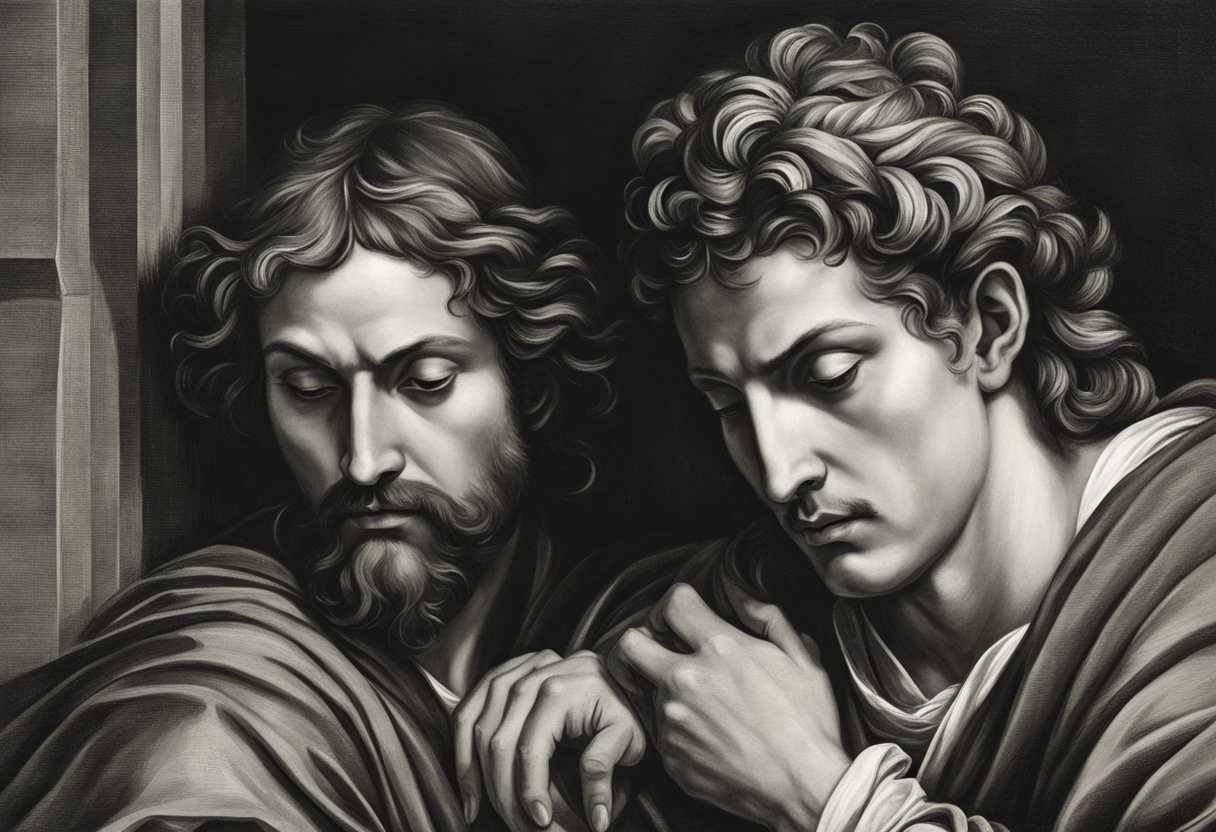
Setting the Scene for Matthew 10:4
In Matthew chapter 10, Jesus is gathering his twelve disciples and commissioning them to go out and spread the message of the kingdom of God. The scene is set in a humble dwelling in Capernaum, a small fishing village on the northern shore of the Sea of Galilee. The disciples, including Simon Peter, Andrew, James, John, Philip, Bartholomew, Thomas, Matthew, James the son of Alphaeus, Thaddaeus, Simon the Zealot, and Judas Iscariot, are gathered around Jesus as he imparts his instructions to them.
The disciples, a diverse group of fishermen, a tax collector, and others, have been chosen by Jesus to accompany him on his ministry. They have witnessed his teachings, miracles, and the compassion he shows to the people. Now, Jesus is empowering them to go out on their own, to heal the sick, raise the dead, cleanse the lepers, and cast out demons, just as he has been doing.
The room is filled with anticipation and a sense of responsibility as the disciples listen intently to Jesus’ words. They are about to embark on a journey that will test their faith, courage, and dedication to the message of the gospel. This moment marks the beginning of their mission to spread the good news of salvation to the people of Israel.
What is Matthew 10:4 about?
Ah, Simon the Cananaean, also known as Simon the Zealot. What a fascinating figure among Jesus’ twelve disciples. This verse highlights the diversity and backgrounds of those chosen by Jesus to spread His teachings. Simon is sometimes referred to as the Zealot, implying his zeal and passion for matters of faith and possibly political beliefs.
His association with the Zealots, a group known for their resistance against Roman occupation, raises questions about Simon’s past and how his views may have shifted upon following Jesus. It is a reminder that Jesus welcomed individuals from various walks of life, including those with potentially conflicting ideologies, showing His acceptance and message of love for all. This verse serves as a testament to the transformative power of faith and how it can unite people from different backgrounds under a common purpose. Simon the Zealot’s journey inspires us to embrace diversity and overcome differences in the name of a greater good.
Understanding what Matthew 10:4 really means
In Matthew 10:4, we encounter a significant moment in the biblical narrative where the twelve apostles are listed, including Simon the Zealot and Judas Iscariot. This verse is part of Jesus’ commissioning of His disciples, granting them authority to perform miraculous acts. The mention of Simon the Zealot is intriguing as it highlights the diverse backgrounds and passions of Jesus’ followers. Simon’s association with the term “Zealot” suggests a fervent dedication to Jewish nationalism, possibly even involvement in political movements against Roman rule. This diversity among the apostles underscores the inclusive nature of Jesus’ message, showing that individuals from varied backgrounds can unite for a common purpose.
On the other hand, the mention of Judas Iscariot, who would later betray Jesus, serves as a poignant reminder of human frailty and the potential for betrayal even among those closest to us. This foreshadowing of Judas’ ultimate act of betrayal emphasizes the importance of integrity and loyalty in our relationships and commitments. The juxtaposition of Simon’s zeal and Judas’ betrayal prompts reflection on the complexities of human nature and the choices we make in our interactions with others.
Exploring related biblical passages such as Luke 6:12-16, John 13:21-30, and Acts 1:15-26 provides additional context and depth to the narratives surrounding the apostles. These passages offer insights into the selection of the apostles, Jesus’ foreknowledge of Judas’ betrayal, and the subsequent actions taken by the early Christian community after Judas’ death. They underscore the continuity and resilience of the early followers of Jesus in the face of challenges and betrayals.
The relevance of these biblical accounts to contemporary life is striking. Just as the apostles came from diverse backgrounds and faced internal challenges, we too encounter differences and conflicts within our communities and teams. Embracing and leveraging these diverse perspectives can lead to a richer and more effective collaboration towards shared goals. Moreover, reflecting on the cautionary tale of Judas’ betrayal prompts us to consider the importance of loyalty and integrity in our personal and professional relationships.
To illustrate the significance of trust and loyalty within a group, imagine a modern-day team working on a crucial project. Within this team, there may be individuals akin to Simon the Zealot, deeply passionate and committed, as well as those resembling Judas Iscariot, whose intentions may not align with the group’s best interests. This scenario underscores the vital role of trust and loyalty in fostering unity and achieving common objectives.
As we ponder the lives and roles of the apostles, particularly Simon the Zealot and Judas Iscariot, we are encouraged to reflect on our own relationships and commitments. How can we embrace diversity and unity in our communities? How can we uphold loyalty and integrity in our interactions? By delving into these questions, we glean valuable insights into the complexities of human nature and the enduring importance of faithfulness in our lives.
How can we discern between true and false disciples?
True disciples can be discerned by their actions and their fruits. Those who follow and imitate Jesus in both word and deed are considered true disciples. Their faith is genuine and is reflected in their obedience to God’s commands and their love for others. On the other hand, false disciples may claim to be followers of Jesus, but their actions do not align with their profession of faith. They may display hypocrisy, deceit, or lack of fruit in their lives, which can reveal their true nature as impostors.
True disciples are known by their commitment to Jesus and their adherence to His teachings. They bear good fruit, such as love, joy, peace, patience, kindness, goodness, faithfulness, gentleness, and self-control. False disciples, however, may appear to be followers of Jesus on the surface, but their hearts are far from Him. Their actions may stem from selfish motives, pride, or a desire for recognition rather than a genuine love and devotion to God. Their character and behavior will ultimately reveal whether individuals are true or false disciples of Jesus as we examine their lives.
Application
Imagine your faith as the heartbeat of your daily grind. Are you truly walking the path Christ laid out for you, or are you merely going through the motions? Reflect on whether your actions at work and home mirror His love and grace. Make your faith as integral as your morning coffee and late-night deadlines. Live boldly, let your compassion shine through your tasks, interactions, and decisions. Are you ready to answer the call and truly embody Christ’s teachings in every aspect of your life?

Reverend Michael Johnson is an experienced Church Minister with a profound expertise in spirituality and guidance. With a serene presence and a compassionate heart, he has faithfully served his congregation for over 20 years, leading them on a spiritual journey towards inner peace and enlightenment. Reverend Johnson’s extensive knowledge of religious philosophies and profound understanding of human nature have made him a trusted confidant and mentor to many, as he seamlessly weaves his profound wisdom into life teachings. Reverend Johnson’s calming demeanor and empathetic nature continue to uplift and heal souls, nurturing a sense of unity and tranquility within his community.