
Matthew 11:11-15 is about acknowledging John the Baptist’s pivotal role in preparing the way for Jesus, emphasizing the importance of humility and openness to receiving the message of salvation, which requires spiritual insight to discern the fulfillment of prophecies.
11 Truly, I say to you, among those born of women there has arisen no one greater than John the Baptist. Yet the one who is least in the kingdom of heaven is greater than he.
12 From the days of John the Baptist until now the kingdom of heaven has suffered violence, and the violent take it by force.
13 For all the Prophets and the Law prophesied until John,
14 and if you are willing to accept it, he is Elijah who is to come.
15 He who has ears to hear, let him hear.
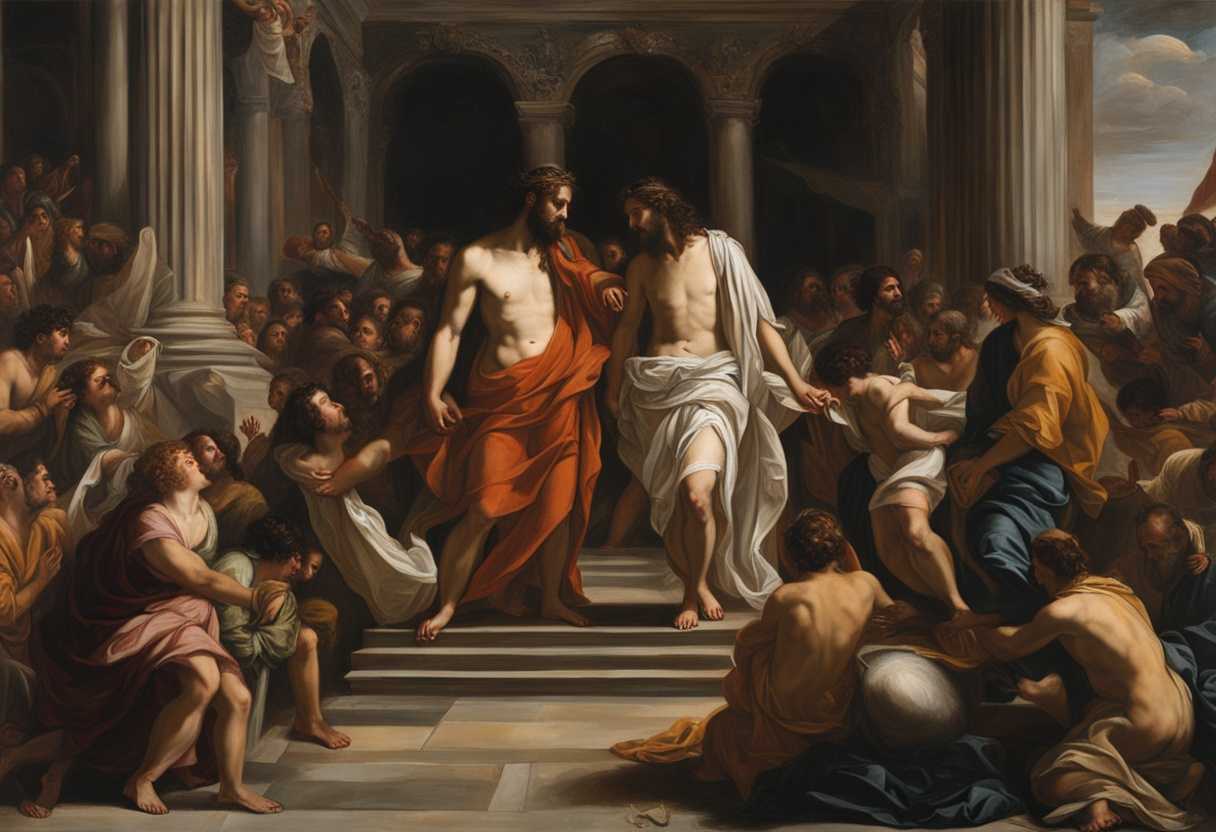
Setting the Scene for Matthew 11:11-15
In Matthew chapter 11, Jesus is speaking to a crowd of people who have gathered to hear Him teach. The scene is set in a quiet countryside, with the sun shining down on the group as they sit on the grassy hillside. The crowd consists of Jesus’ disciples, curious onlookers, and those seeking healing and wisdom from the renowned teacher.
Among the crowd are also John the Baptist’s disciples, who have come to Jesus with a message from John himself. John, who is currently imprisoned, sends his followers to ask Jesus if He is the Messiah they have been waiting for. Jesus responds by affirming His identity and ministry, citing the miracles and teachings as evidence of His divine authority. The atmosphere is tense with anticipation as the crowd listens intently to Jesus’ words, pondering the significance of His message.
As Jesus continues to speak, He acknowledges the importance of John the Baptist in preparing the way for Him. He praises John’s role as the messenger who heralded the arrival of the Messiah, despite facing opposition and persecution. The scene is filled with a sense of reverence and awe as Jesus honors John’s faithfulness and dedication to fulfilling his prophetic calling. The crowd is left pondering the profound connection between John’s ministry and the arrival of the long-awaited Savior.
What is Matthew 11:11-15 about?
Jesus is acknowledging the significant role that John the Baptist played in preparing the way for his ministry in this verse. Jesus is validating John’s mission and confirming the divine plan that was set in motion for the salvation of humanity by declaring that John is the one whom the scriptures spoke of when they mentioned a messenger coming before the Messiah. This affirmation not only honors John’s dedication and obedience to God but also emphasizes the interconnectedness of their missions and the continuity of God’s plan throughout history.
Have you ever thought about the pivotal role that John the Baptist played in paving the way for Jesus? How his humility and obedience set the stage for the arrival of the Messiah? This verse serves as a reminder of the intricate tapestry of God’s plan and how every piece, no matter how small or seemingly insignificant, has a vital role to play in the fulfillment of His divine purpose. It challenges us to reflect on our own roles in God’s greater plan and to wholeheartedly embrace whatever task or mission He has entrusted us with, just like John the Baptist did.
Understanding what Matthew 11:11-15 really means
In Matthew 11:11-15, we find Jesus in the midst of a discourse about John the Baptist, addressing the crowds and shedding light on the significance of John’s role in the Kingdom of Heaven. Jesus starts by proclaiming, “Among those born of women there has not risen anyone greater than John the Baptist,” emphasizing the unique greatness of John in fulfilling his divine purpose. This statement echoes the prophecy in Luke 1:15, where John is destined to be “great in the sight of the Lord,” showcasing his pivotal role in God’s plan. Furthermore, John’s life and mission were foretold in the Old Testament, as seen in prophecies from Isaiah 40:3 and Malachi 3:1, underscoring the divine orchestration of his ministry.
However, Jesus introduces a paradox by stating, “Yet whoever is least in the kingdom of heaven is greater than he,” highlighting the transformative power of the Kingdom of Heaven and the new covenant it brings. This paradox emphasizes the importance of humility, as reiterated in Matthew 18:4, where Jesus speaks about the necessity of humility to enter the Kingdom of Heaven. Jesus then delves into the spiritual warfare faced by those advancing God’s Kingdom, stating, “From the days of John the Baptist until now, the kingdom of heaven has been subjected to violence, and violent people have been raiding it,” drawing attention to the opposition encountered in spreading God’s message, as described in Ephesians 6:12.
Moreover, Jesus declares, “For all the Prophets and the Law prophesied until John,” signifying John the Baptist as the culmination of the Old Testament prophecies. This aligns with Luke 16:16, where Jesus mentions that the Law and the Prophets were proclaimed until John, marking a shift in the era with the arrival of John and the subsequent ministry of Jesus. Jesus further identifies John as the fulfillment of the prophecy in Malachi 4:5 about Elijah’s return, emphasizing John’s pivotal role in preparing the way for the Messiah. The passage concludes with Jesus urging spiritual receptivity, stating, “Whoever has ears, let them hear,” echoing a call for deeper understanding and discernment, as seen in Revelation 2:7.
In reflecting on this passage, we are reminded of the importance of recognizing and honoring those who pave the way for God’s work, like John the Baptist. True greatness in the Kingdom of Heaven is not measured by worldly standards but by humility and service, as exemplified by John’s life. Just as John humbly fulfilled his role, impacting many through his obedience, we are called to emulate such humility and service in our own lives. Let us ponder our roles in advancing God’s Kingdom, seeking greatness not through worldly achievements but through humble service, following the example set by John the Baptist and ultimately by Jesus Christ.
Are we willing to accept God’s appointed messengers?
Jesus affirms the importance of accepting the messengers whom God sends in this passage. He emphasizes that those who recognize and receive these messengers are truly blessed. Jesus is pointing out that John the Baptist, as a messenger sent by God, is to be accepted and valued by the people. The people align themselves with God’s will and actively participate in his plan by acknowledging and listening to John’s message.
Jesus warns that if the people do not accept the messengers sent by God, they are essentially rejecting God himself. He highlights the importance of being open to receiving and heeding the messages brought by these messengers, as they carry divine truths and guidance. The people are closing themselves off from the spiritual blessings and insights that God seeks to impart to them through his chosen messengers by rejecting the messengers. This passage ultimately serves as a reminder to be receptive to God’s appointed messengers and open to the messages they bring. It urges us to be discerning and to understand that these messengers are instruments through which God communicates with us, offering guidance, wisdom, and blessings. We align ourselves with God’s will and invite his presence and blessings into our lives by accepting them.
Application
Think of John the Baptist as a top employee who knows the value of the CEO, Jesus. In our busy lives, let’s take a moment to follow his example of humility. Prioritize serving others and recognizing Jesus as the ultimate guide. Embrace His teachings and share His message of hope with your coworkers and family. How will you act on this call to humble service and obedience today?

Reverend Michael Johnson is an experienced Church Minister with a profound expertise in spirituality and guidance. With a serene presence and a compassionate heart, he has faithfully served his congregation for over 20 years, leading them on a spiritual journey towards inner peace and enlightenment. Reverend Johnson’s extensive knowledge of religious philosophies and profound understanding of human nature have made him a trusted confidant and mentor to many, as he seamlessly weaves his profound wisdom into life teachings. Reverend Johnson’s calming demeanor and empathetic nature continue to uplift and heal souls, nurturing a sense of unity and tranquility within his community.