
Matthew 11:2-10 is about John the Baptist sending his disciples to confirm Jesus as the long-awaited Messiah, emphasizing how Jesus fulfills the prophecies of the Old Testament.
2 Now when John heard in prison about the deeds of the Christ, he sent word by his disciples
3 and said to him, “Are you the one who is to come, or shall we look for another?”
4 And Jesus answered them, “Go and tell John what you hear and see:
5 the blind receive their sight and the lame walk, lepers are cleansed and the deaf hear, and the dead are raised up, and the poor have good news preached to them.
6 And blessed is the one who is not offended by me.”
7 As they went away, Jesus began to speak to the crowds concerning John: “What did you go out into the wilderness to see? A reed shaken by the wind?
8 What then did you go out to see? A man dressed in soft clothing? Behold, those who wear soft clothing are in kings’ houses.
9 What then did you go out to see? A prophet? Yes, I tell you, and more than a prophet.
10 This is he of whom it is written, “‘Behold, I send my messenger before your face, who will prepare your way before you.’
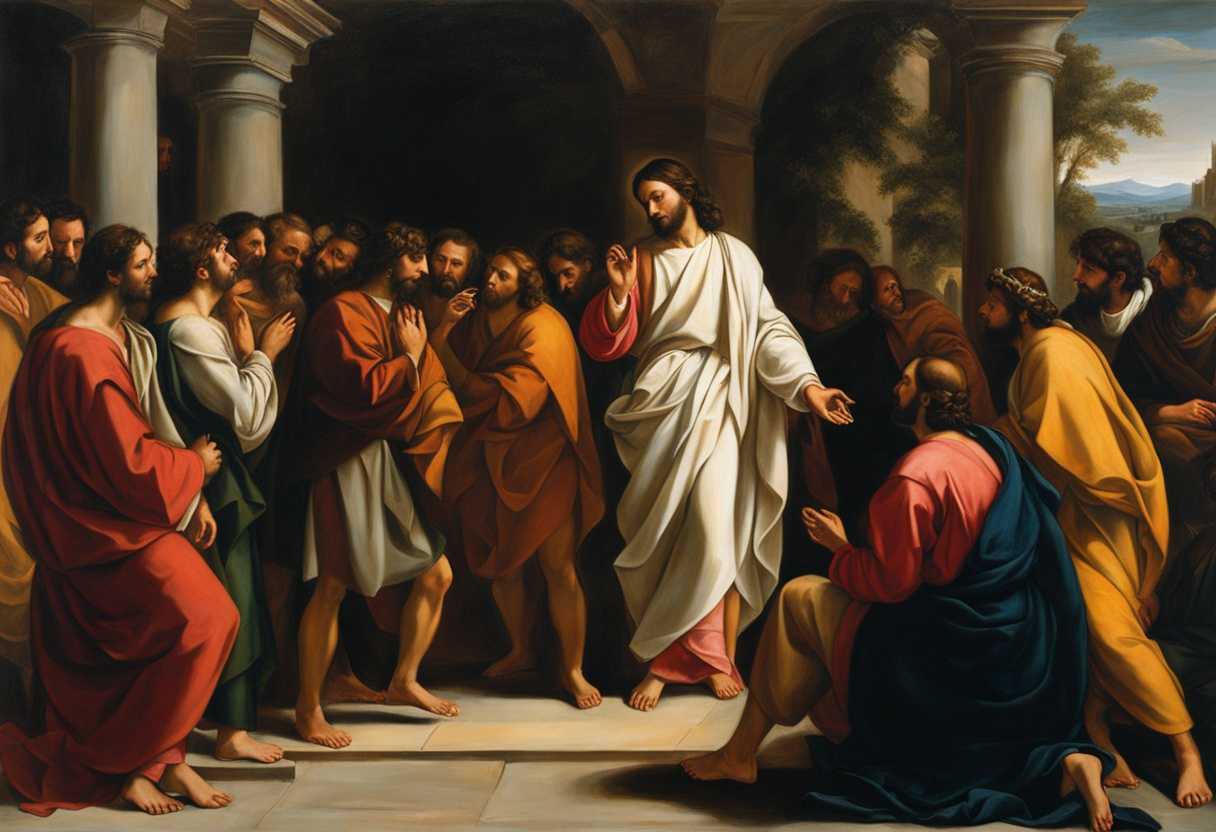
Setting the Scene for Matthew 11:2-10
In Matthew chapter 11, we find John the Baptist in prison, having been arrested by Herod Antipas for speaking out against his unlawful marriage to Herodias. John, known for his fiery preaching and unwavering commitment to righteousness, finds himself in a dark and desolate prison cell, his spirit undeterred despite his physical confinement.
As John languishes in prison, doubts begin to creep into his mind about Jesus’ identity as the Messiah. He sends his disciples to Jesus to ask, “Are you the one who is to come, or should we expect someone else?” Jesus, aware of John’s inner turmoil, responds by performing miracles and pointing to the fulfillment of prophecies, reassuring John of his divine mission.
Meanwhile, Jesus is surrounded by a crowd of people who have witnessed his teachings and miracles. They are in awe of his wisdom and power, drawn to him by the hope and healing he offers. The scene is set in a humble village, with dusty streets and simple homes providing the backdrop for this pivotal moment in which Jesus reaffirms John’s faith and proclaims his own identity as the long-awaited Messiah.
What is Matthew 11:2-10 about?
John the Baptist, a significant figure in Christianity, expressed doubt about whether Jesus was truly the Messiah in this powerful verse. This moment of hesitation adds a human element to the narrative, as even prophets like John struggled with moments of uncertainty. However, Jesus responds not with anger or condemnation, but with compassion and understanding. Jesus provides evidence of his divine nature through signs and prophecy, reinforcing his identity as the awaited Messiah.
Reflecting on this verse, I invite you to consider the complexities of faith and doubt. Even the most steadfast believers may encounter moments of uncertainty, and that is completely normal. Just like John the Baptist, we may question and seek reassurance. Jesus’s response reminds us of his unwavering love and grace, offering guidance and proof of his divine purpose. It is a reminder that our doubts and questions are not a sign of weakness, but opportunities for deeper understanding and connection with our faith.
Understanding what Matthew 11:2-10 really means
In Matthew 11:2-10, we encounter a poignant moment where John the Baptist, while in prison, sends his disciples to question Jesus about His identity as the awaited Messiah. This inquiry from John, a stalwart figure in the faith, reminds us that even the most devout believers can grapple with moments of uncertainty. It humanizes the journey of faith, showing that doubts can coexist with deep conviction. As we ponder John’s question, “Are you the one who is to come, or should we expect someone else?” we are prompted to reflect on our own moments of questioning and seek reassurance in the evidence of God’s work in our lives.
Jesus responds to John’s disciples by pointing to His miraculous deeds as proof of His divine mission. He instructs them to report back to John what they have witnessed: the blind receiving sight, the lame walking, and the fulfillment of Old Testament prophecies. Through these acts, Jesus not only affirms His identity as the Messiah but also demonstrates the tangible impact of God’s kingdom breaking into the world. Just as the miracles served as signs of Jesus’ authority, we are encouraged to recognize God’s handiwork in the kindness, healing, and transformation we witness around us today.
Moreover, Jesus acknowledges John the Baptist as more than a prophet, highlighting his pivotal role in preparing the way for the Messiah. This recognition underscores the significance of prophets and messengers in God’s plan, emphasizing the importance of paving the path for others to encounter Christ. It prompts us to consider our own role as bearers of God’s love and truth in our communities, echoing John’s mission to herald the coming of Jesus.
As we contemplate the relevance of this passage in our lives today, we are reminded that faith can coexist with doubt, and that moments of uncertainty can lead us to a deeper understanding of God’s work. Just as John found reassurance in Jesus’ response, we too can find solace in the evidence of God’s presence in our lives. We are called to be attentive to the ways in which God is actively at work around us, and to embrace our role as messengers of His love and grace to those we encounter.
Consider a scenario where a person grappling with doubts encounters a friend whose life has been transformed by faith. Witnessing the peace and purpose that faith has brought to their friend, the doubter finds renewed strength in their own belief, much like John’s disciples found assurance in Jesus’ response. This anecdote serves as a poignant illustration of how the evidence of God’s work in the lives of others can reaffirm our own faith and inspire us to trust in God’s unfolding plan.
In conclusion, Matthew 11:2-10 invites us to navigate the interplay between faith and doubt, urging us to seek reassurance in the tangible signs of God’s presence in our lives. It prompts us to recognize and appreciate the ways in which God is actively at work in the world, and to embrace our calling as messengers of His love and truth. Just as John the Baptist prepared the way for Jesus, may we too pave the path for others to encounter the transformative power of Christ in their lives.
Are you willing to trust God’s timing and plan?
Yes, I am willing to trust God’s timing and plan. Just like John the Baptist questioned if Jesus was the one they were waiting for, we may also find ourselves questioning and unsure at times. However, we can find comfort in knowing that God’s plan unfolds perfectly in His timing. Even when we may not fully understand or see the bigger picture, we can trust that God has everything under control.
John the Baptist had to wait patiently for the fulfillment of God’s plan, and so do we. We are called to trust in God’s timing and plan, just as John had to do. Even if things seem delayed or uncertain, we can trust that God is working all things together for our good according to His perfect timing and wisdom. Knowing that God’s plan is always better than we can imagine, let us remain faithful and patient. In moments of doubt or impatience, let us remember the example of John the Baptist and trust in God’s timing and plan. Even when things do not seem to make sense or align with our expectations, we can have confidence that God is working behind the scenes for our ultimate good. May we find peace and assurance in surrendering to His will and put our trust in His perfect timing.
Application
Dear friend, just like John the Baptist, let’s seek clarity in our beliefs and confirm our faith in Jesus. It’s time to reflect and pray, to deepen our connection with the Lord and live by His teachings more devotedly than ever before. Are you prepared to renew your faith and strengthen your spiritual connection with Jesus right now?

Reverend Michael Johnson is an experienced Church Minister with a profound expertise in spirituality and guidance. With a serene presence and a compassionate heart, he has faithfully served his congregation for over 20 years, leading them on a spiritual journey towards inner peace and enlightenment. Reverend Johnson’s extensive knowledge of religious philosophies and profound understanding of human nature have made him a trusted confidant and mentor to many, as he seamlessly weaves his profound wisdom into life teachings. Reverend Johnson’s calming demeanor and empathetic nature continue to uplift and heal souls, nurturing a sense of unity and tranquility within his community.