
Matthew 13:24-33 is about the parable of the wheat and the weeds, illustrating how good and evil coexist in the world and how the kingdom of God gradually grows despite the presence of evil influences.
24 He put another parable before them, saying, “The kingdom of heaven may be compared to a man who sowed good seed in his field,
25 but while his men were sleeping, his enemy came and sowed weeds among the wheat and went away.
26 But when the plants sprouted and bore grain, then the weeds appeared also.
27 And the servants of the master of the house came and said to him, ‘Master, did you not sow good seed in your field? How then does it have weeds?’
28 He said to them, ‘An enemy has done this.’ So the servants said to him, ‘Then do you want us to go and gather them?’
29 But he said, ‘No, lest in gathering the weeds you root up the wheat along with them.
30 Let both grow together until the harvest, and at harvest time I will tell the reapers, “Gather the weeds first and bind them in bundles to be burned, but gather the wheat into my barn.”
31 He put another parable before them, saying, “The kingdom of heaven is like a grain of mustard seed that a man took and sowed in his field.
32 It is the smallest of all seeds, but when it has grown it is larger than all the garden plants and becomes a tree, so that the birds of the air come and make nests in its branches.
33 He told them another parable. “The kingdom of heaven is like leaven that a woman took and hid in three measures of flour, till it was all leavened.”
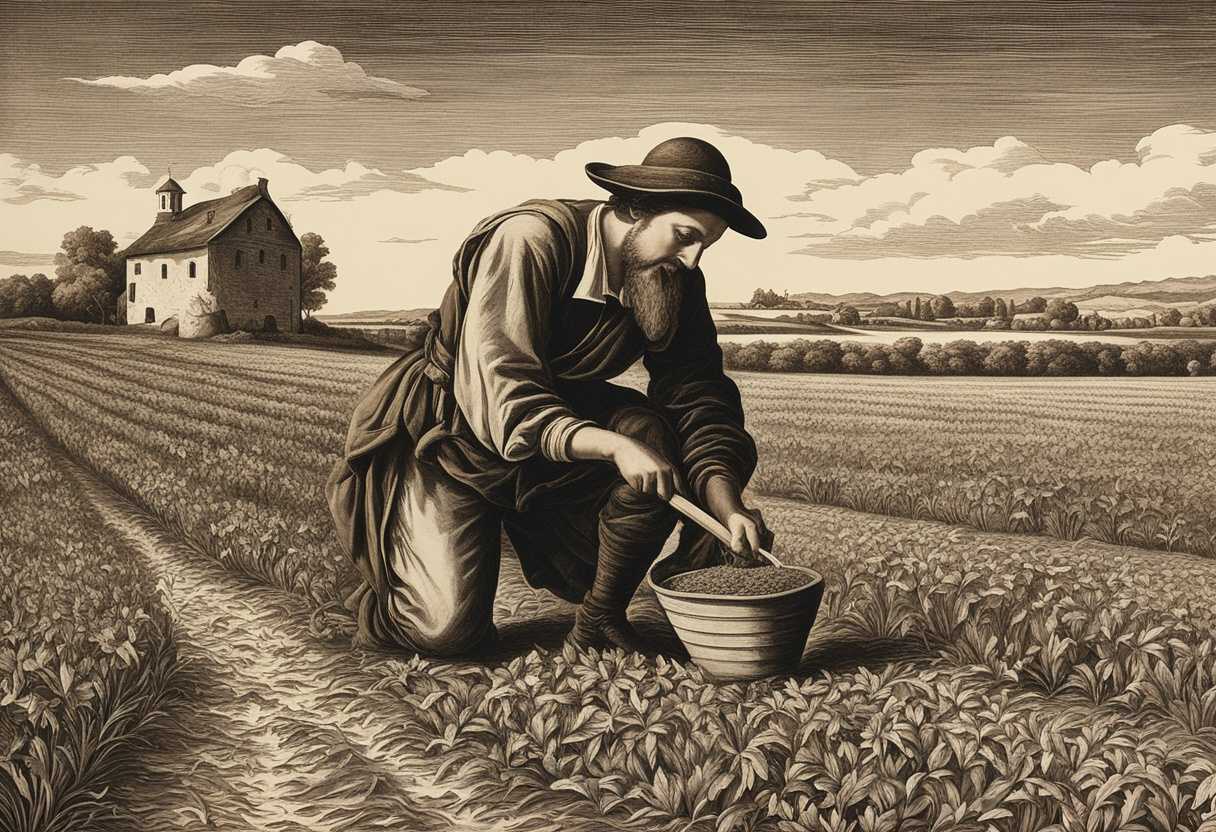
Setting the Scene for Matthew 13:24-33
In Matthew chapter 13, Jesus is sitting by the Sea of Galilee, teaching a large crowd of people who have gathered to listen to him. The sun is shining brightly, and the gentle breeze from the sea provides a sense of peace and tranquility to the scene. The crowd is a mix of people from different walks of life – fishermen, farmers, merchants, and families – all eager to hear the teachings of Jesus.
As Jesus begins to speak, he uses parables to convey his message about the kingdom of heaven. In one of the parables, he tells the story of a farmer who sows good seed in his field, only to have an enemy come and sow weeds among the wheat. The farmer’s servants are puzzled and ask if they should pull up the weeds, but the farmer advises them to wait until the harvest to avoid damaging the wheat.
The scene is filled with anticipation and curiosity as the crowd listens intently to Jesus’ words, trying to understand the deeper meaning behind his parables. The setting by the Sea of Galilee provides a picturesque backdrop to this profound moment of teaching and reflection.
What is Matthew 13:24-33 about?
Jesus speaks of a field where a farmer sows good seeds, only for an enemy to come and sow weeds among them in the parable of the weeds. When the farmer’s servants suggest pulling out the weeds, the farmer advises against it, saying that both the wheat and the weeds must grow together until the harvest. Here, Jesus is teaching us about the coexistence of good and evil in the world and the eventual judgment that will separate the righteous from the wicked. It reminds us that God is in control of the final judgment, and we should trust in His timing and wisdom.
On the other hand, the parable of the mustard seed illustrates the seemingly small beginnings of God’s kingdom that will grow into something large and impactful. A mustard seed, one of the smallest seeds, grows into a large tree where birds can rest in its branches. This parable highlights the power and growth potential of God’s kingdom, starting with humble beginnings but flourishing into something significant and influential. It challenges us to have faith in the growth and impact of God’s kingdom, even when it may seem small or insignificant in the beginning.
Reflecting on these parables, we are prompted to consider the patience and sovereignty of God in dealing with evil in the world and the incredible growth potential of His kingdom. We are encouraged to trust in God’s timing and plans for judgment, knowing that He will ultimately separate good from evil. Additionally, we are inspired to be faithful stewards of the small beginnings in our own lives, trusting that God can use even the smallest acts of faith to bring about significant growth in His kingdom.
Understanding what Matthew 13:24-33 really means
Jesus often used parables to teach profound truths about the Kingdom of Heaven, and in Matthew 13:24-33, we find a collection of these stories. One of these parables is the Parable of the Weeds, where Jesus compares the Kingdom of Heaven to a man who sowed good seed in his field. Here, the man symbolizes Jesus, the field represents the world, and the good seed signifies the people of the Kingdom. Despite the presence of evil, represented by the weeds sown by the enemy (Satan), God’s wisdom is displayed in allowing both good and evil to coexist until the final judgment, as explained in Matthew 13:49-50.
In the Parable of the Mustard Seed, Jesus illustrates the Kingdom of Heaven as a mustard seed, the smallest of seeds that grows into the largest of garden plants. This imagery highlights the humble beginnings of God’s Kingdom, which may seem insignificant at first but eventually provides shelter and support for many. Similarly, the Parable of the Yeast portrays the transformative power of the Kingdom, likening it to yeast that works invisibly but thoroughly through the dough. This emphasizes how the Kingdom of Heaven can bring about profound change in individuals and communities.
Today, these parables remain relevant as they remind us of the coexistence of good and evil in the world and the ultimate judgment that belongs to God. They also teach us about the importance of recognizing the potential in small beginnings and the transformative power of faith. Consider a simple act of kindness or a small display of faith that grew into something impactful, mirroring the mustard seed and yeast parables. These stories illustrate how God can work through the seemingly insignificant to bring about significant change.
In conclusion, the Parable of the Weeds, the Mustard Seed, and the Yeast convey essential lessons about the Kingdom of Heaven. They teach us about the coexistence of good and evil, the growth of God’s Kingdom from humble beginnings, and its transformative power. Let us have faith in God’s plan, knowing that even the smallest acts of kindness or displays of faith can contribute to the growth of His Kingdom. May we be encouraged to play our part in spreading His love and truth in the world.
How can we cultivate spiritual growth amidst challenges?
One way to cultivate spiritual growth amidst challenges is to focus on the potential for growth within each trial we face. Our faith can also be strengthened and deepened through the difficulties we encounter, just as the seed grows amidst the weeds in the parable. We can approach challenges with a mindset of learning and development rather than despair by recognizing that they provide an opportunity for growth and spiritual maturation.
Another way to cultivate spiritual growth amidst challenges is to trust in the process of growth. The parable reminds us that spiritual growth takes time as the seed grows gradually. When faced with challenges, it can be tempting to seek a quick solution or instant relief. However, just as the seed requires time to grow into a strong plant, our spiritual journey also requires patience and perseverance. Trusting in the timing of our growth and remaining steadfast in our faith can help us navigate challenges with resilience and strength.
Additionally, fostering a sense of community and support can also aid in spiritual growth during challenging times. The seed in the parable grows alongside other plants, illustrating the importance of companionship and solidarity. Surrounding ourselves with a supportive community of like-minded individuals can provide encouragement, guidance, and a sense of connection as we navigate through difficulties. Together, we can help each other grow and thrive spiritually, even when faced with obstacles along the way.
Application
Imagine your daily life as a busy garden, full of both weeds and flowers. Are you cultivating what’s good and pure, or letting the weeds take over? Like a diligent gardener, sift through your actions and choices, nurturing patience, wisdom, and faith. Be the mustard seed—a small start leading to immense growth. Your community and family depend on it. How will you nurture the good around you today?

Reverend Michael Johnson is an experienced Church Minister with a profound expertise in spirituality and guidance. With a serene presence and a compassionate heart, he has faithfully served his congregation for over 20 years, leading them on a spiritual journey towards inner peace and enlightenment. Reverend Johnson’s extensive knowledge of religious philosophies and profound understanding of human nature have made him a trusted confidant and mentor to many, as he seamlessly weaves his profound wisdom into life teachings. Reverend Johnson’s calming demeanor and empathetic nature continue to uplift and heal souls, nurturing a sense of unity and tranquility within his community.