
Matthew 13:40-42 is about the coming judgment day where those who have acted wickedly will be separated from the righteous and cast into a fiery furnace.
40 Just as the weeds are gathered and burned with fire, so will it be at the end of the age.
41 The Son of Man will send his angels, and they will gather out of his kingdom all causes of sin and all law-breakers,
42 and throw them into the fiery furnace. In that place there will be weeping and gnashing of teeth.
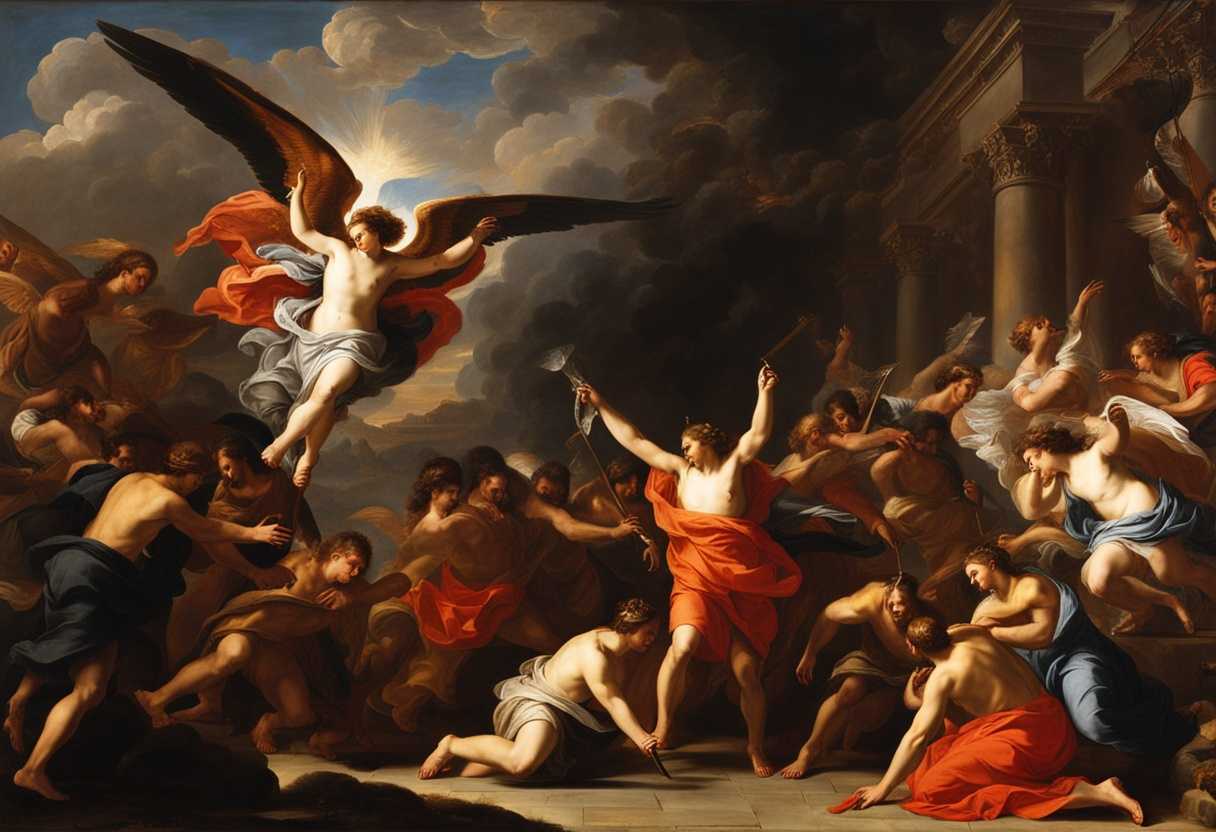
Setting the Scene for Matthew 13:40-42
The scene in Matthew 13:40-42 takes place in a vast field during the harvest season. Jesus is speaking to his disciples, surrounded by a crowd of people who have gathered to listen to his teachings. The sun is setting, casting a warm golden glow over the fields of wheat ready for harvest. The disciples, a diverse group of men from various backgrounds, are seated around Jesus, eager to learn from him.
As Jesus speaks, he describes the final judgment, where the Son of Man will send out his angels to separate the righteous from the wicked. The imagery of the harvest is powerful, with the righteous being gathered like wheat into the barn, while the wicked are bundled up like weeds to be burned in the fire. The gravity of Jesus’ words hangs heavy in the air, as the disciples contemplate the significance of being either wheat or weeds in the eyes of God.
The scene is filled with tension and anticipation as Jesus paints a vivid picture of the consequences of one’s actions and the importance of living a righteous life. The disciples listen intently, knowing that these teachings will shape their understanding of God’s kingdom and their role in it. The setting sun serves as a reminder of the fleeting nature of life and the urgency of making the right choices before the final judgment.
What is Matthew 13:40-42 about?
Yes, this verse paints a vivid picture of a future event where a clear differentiation will be made between the righteous and the wicked. It emphasizes the ultimate justice and accountability that will prevail in the end times. The metaphor of separating sheep from goats highlights the precision and thoroughness with which this division will take place.
Have you ever contemplated the idea of ultimate justice, where every action and intention is weighed and accounted for? How does this verse make you reflect on your own choices and actions? It serves as a sobering reminder that our deeds and character will ultimately determine our eternal destiny. This verse inspires us to strive for righteousness and goodness in all aspects of our lives, knowing that one day we will be held accountable for our actions. It calls us to reflect on the values we hold dear and the impact they have on our present and future.
Understanding what Matthew 13:40-42 really means
In the Parable of the Weeds, Jesus paints a vivid picture of the final judgment, using agricultural imagery to convey profound spiritual truths. The phrase “As the weeds are pulled up and burned in the fire” symbolizes the separation of the wicked from the righteous, highlighting the ultimate destiny of each. This event, referred to as “the end of the age,” signifies a future culmination of history as we know it, emphasizing the certainty of divine judgment. Jesus’ authority is underscored as “the Son of Man will send out his angels” to execute this judgment, ensuring that all sources of sin and evil are removed from God’s kingdom.
The severity of the consequences for the wicked is depicted through the imagery of being thrown into a blazing furnace, where there will be weeping and gnashing of teeth. This stark portrayal serves as a poignant reminder of the eternal separation from God that awaits those who choose to reject His ways. Drawing parallels with other biblical passages, such as Matthew 3:12, Revelation 20:15, and 2 Thessalonians 1:8-9, further solidifies the gravity of this final judgment and the importance of aligning our lives with God’s will.
These verses hold relevance for us today, prompting introspection and repentance as we consider the eternal implications of our choices. Just as a farmer meticulously tends to his crops, separating weeds from wheat for the health of the harvest, God will ultimately separate the righteous from the wicked to preserve His kingdom. This process, though challenging, is essential for the flourishing of God’s creation and the establishment of His righteousness.
As we reflect on these teachings, we are urged to examine our lives and ensure that we are living in alignment with God’s kingdom. The imagery of separation and judgment serves as a sobering reminder of the eternal consequences of our actions, compelling us to strive for righteousness and turn away from sin. Ultimately, these verses offer both a warning and a promise – a warning of the consequences of disobedience and a promise of God’s justice and restoration for those who walk in His ways.
By delving into these verses and related passages, we deepen our understanding of God’s justice and mercy, prompting us to live with faithfulness and purpose. Let us heed the call to self-reflection, repentance, and alignment with God’s will, knowing that His judgment is just, His mercy is abundant, and His kingdom is one of righteousness and peace.
What will happen to the wicked in eternity?
The fate of the wicked in eternity will be a separation from the righteous. The wicked will be gathered and cast into a fiery furnace where there will be weeping and gnashing of teeth. This signifies a place of torment and suffering for those who have chosen to reject God and live in disobedience to His ways. The consequences of their actions will ultimately judge the wicked.
The imagery of a fiery furnace and weeping and gnashing of teeth highlights the severity and finality of the punishment for the wicked in eternity. This outcome serves as a warning and a call to repentance, urging individuals to turn away from wickedness and instead embrace righteousness and obedience to God. The fate of the wicked in eternity underscores the importance of living a life that is pleasing to God and striving to follow His commandments.
Application
In this journey of life, we are tasked with making choices that define who we are. The biblical passage in Matthew 13:40-42 serves as a compass, guiding us towards righteousness in a world filled with distractions. Let us not shy away from the challenge of living a life that reflects our faith. Embrace the power within you to spread love and kindness to all you encounter. Are you ready to embrace this calling and be a beacon of hope in a world that craves light?

Reverend Michael Johnson is an experienced Church Minister with a profound expertise in spirituality and guidance. With a serene presence and a compassionate heart, he has faithfully served his congregation for over 20 years, leading them on a spiritual journey towards inner peace and enlightenment. Reverend Johnson’s extensive knowledge of religious philosophies and profound understanding of human nature have made him a trusted confidant and mentor to many, as he seamlessly weaves his profound wisdom into life teachings. Reverend Johnson’s calming demeanor and empathetic nature continue to uplift and heal souls, nurturing a sense of unity and tranquility within his community.