
Matthew 14:27-33 is about Jesus walking on water, demonstrating His divinity and power over nature, calling Peter to step out in faith and walk towards Him, teaching the importance of unwavering faith even in the face of doubt and fear.
27 But immediately Jesus spoke to them, saying, “Take heart; it is I. Do not be afraid.”
28 And Peter answered him, “Lord, if it is you, command me to come to you on the water.”
29 He said, “Come.” So Peter got out of the boat and walked on the water and came to Jesus.
30 But when he saw the wind, he was afraid, and beginning to sink he cried out, “Lord, save me.”
31 Jesus immediately reached out his hand and took hold of him, saying to him, “O you of little faith, why did you doubt?”
32 And when they got into the boat, the wind ceased.
33 And those in the boat worshiped him, saying, “Truly you are the Son of God.”
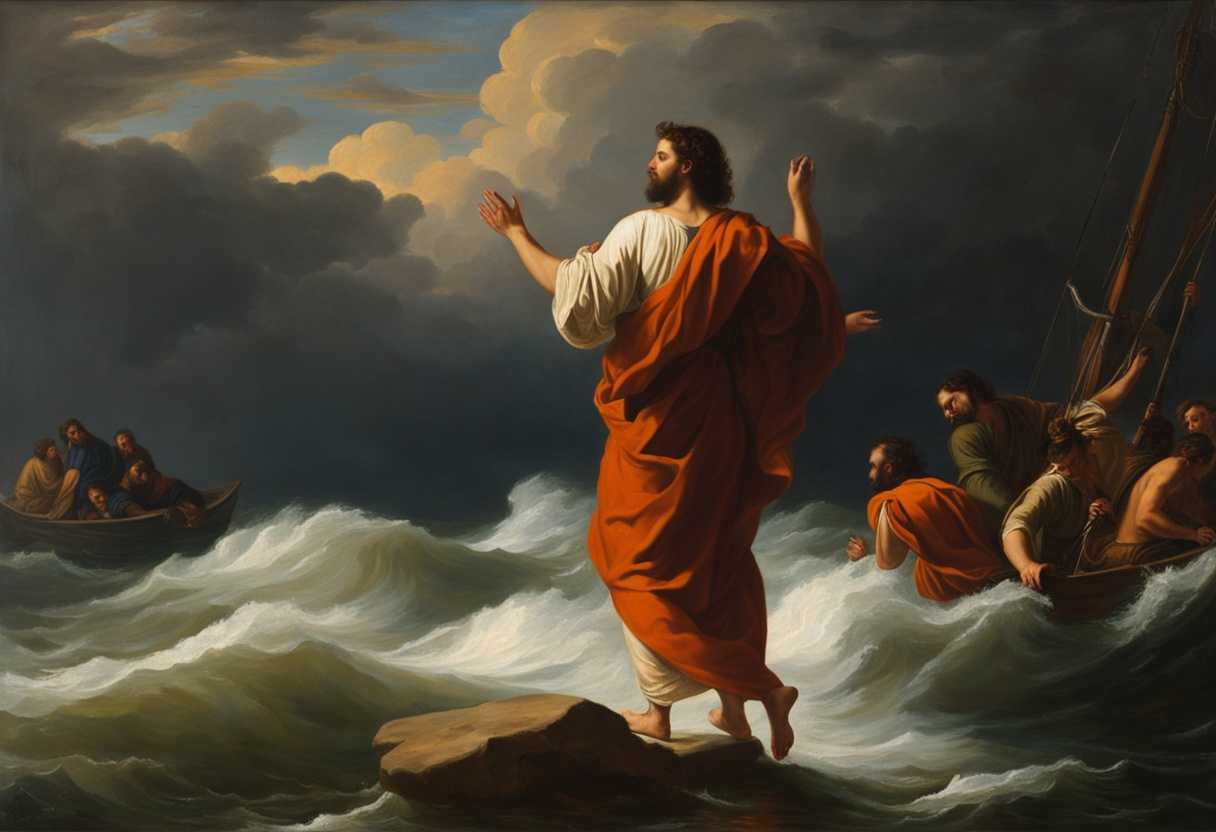
Setting the Scene for Matthew 14:27-33
In Matthew chapter 14, we find the scene where Jesus walks on water. The disciples had just witnessed Jesus feeding the 5,000 with five loaves of bread and two fish. After this miraculous event, Jesus sent the disciples ahead of him in a boat to cross the Sea of Galilee while he went up the mountain to pray. As evening fell, the boat was battered by the waves, and the disciples were straining at the oars.
Suddenly, they saw Jesus walking on the water towards them. Initially, they were terrified, thinking it was a ghost. But Jesus reassured them, saying, “Take courage! It is I. Don’t be afraid.” Peter, always impulsive, asked Jesus to command him to come to him on the water. Jesus did so, and Peter stepped out of the boat. However, when Peter saw the strength of the wind, he began to sink and cried out to Jesus for help. Jesus immediately reached out his hand and caught him, saying, “You of little faith, why did you doubt?” As they got into the boat, the wind died down, and the disciples worshipped Jesus, declaring him the Son of God. The scene is one of awe, fear, faith, doubt, and ultimately, a powerful display of Jesus’ authority over nature.
What is Matthew 14:27-33 about?
This iconic biblical story of Jesus walking on water and Peter’s attempt to do the same is rich with symbolism and lessons for our own lives. Jesus demonstrates his divine power and the extent of his authority over the natural world by defying the laws of nature and walking on water. When Peter expresses his desire to join Jesus on the water, it symbolizes the human desire to have faith and trust in a higher power, even in the face of seemingly impossible challenges.
However, Peter’s momentary doubt and fear upon seeing the wind and waves reflect our own struggles with doubt and uncertainty in our faith and the challenges we face in life. Despite his doubts, Peter is ultimately saved when he calls out to Jesus for help, showing us that when we turn to our faith and trust in God, even in moments of doubt and fear, we can find strength and salvation. This story serves as a reminder that with faith and trust in God, we can overcome the storms in our lives and walk on water, figuratively speaking, through the challenges and trials we face. What doubts and fears are holding you back from fully trusting in God? How can you turn to your faith in difficult times and call out to Jesus for help, just as Peter did?
Understanding what Matthew 14:27-33 really means
In Matthew 14:27-33, we witness a remarkable event where Jesus walks on water, showcasing His divine power and care for His followers. Following the miraculous feeding of the 5,000, this episode underscores Jesus’ authority over nature and His ability to provide reassurance in times of uncertainty. When Jesus tells His disciples, “Take courage! It is I. Don’t be afraid,” He not only calms the storm but also emphasizes His presence and sovereignty over the situation, echoing God’s consistent assurance to His people throughout the Bible.
Peter’s bold request to walk on water reflects his desire to draw near to Jesus and his faith in Jesus’ extraordinary abilities. By stepping out of the boat, Peter demonstrates the importance of seeking Jesus and trusting in His power, even when faced with seemingly impossible circumstances. However, when Peter begins to doubt and sink, Jesus’ question, “You of little faith, why did you doubt?” highlights the ongoing struggle between faith and doubt that many believers encounter.
The relevance of this passage extends to contemporary life, where individuals often confront metaphorical “storms” such as personal crises, health challenges, or societal uncertainties. Just as Jesus reassured His disciples, this story encourages believers today to rely on His presence and power amidst life’s trials, fostering trust and confidence in His ability to guide them through turbulent times. Additionally, Peter’s initial step onto the water serves as a poignant reminder for individuals to take courageous leaps of faith, following Jesus’ call even when plagued by fears and uncertainties.
Consider Sarah, a young woman inspired to establish a non-profit aiding the homeless. Despite facing obstacles and self-doubt, she chooses to emulate Peter’s faith by stepping out in obedience to what she believes is her God-given mission. Through Sarah’s journey, we witness the transformative power of faith in action, as she experiences miraculous provisions and impacts numerous lives, reinforcing her trust in Jesus’ guidance and provision.
Supporting passages such as Isaiah 41:10 and James 1:6 further emphasize the themes of God’s unwavering presence, the necessity of faith without doubt, and the reassurance that believers can find in trusting in Jesus amidst life’s challenges. Ultimately, Matthew 14:27-33 serves as a compelling narrative that prompts individuals to reflect on their own faith journeys, encouraging them to step out in faith, overcome doubts, and embrace the assurance of Jesus’ constant presence and power in their lives.
What keeps us from fully trusting in God’s power?
We often struggle to fully trust in God’s power because of our own fears and doubts. When faced with overwhelming circumstances, like Peter walking on water in this passage, we may become fearful and start to doubt God’s ability to protect and help us. Our focus shifts from the greatness and power of God to the seemingly impossible situation in front of us, causing us to lose sight of His capability to deliver us.
Additionally, our lack of faith can also be attributed to our reliance on our own strength and understanding. Instead of surrendering control to God and placing our trust fully in Him, we tend to lean on our own limited perspectives and abilities. This self-reliance can hinder us from experiencing the miraculous power of God at work in our lives, as we try to navigate challenges and trials on our own strength. Trusting fully in God’s power ultimately requires us to let go of our fears, doubts, and self-reliance, and instead fix our gaze on the One who is able to do immeasurably more than we could ever ask or imagine. We can find the strength and courage to step out in faith by shifting our focus from our circumstances to God’s power and faithfulness, knowing that He is able to sustain us through every storm and trial we may face.
Application
Embrace faith like Peter stepping out of the boat. Trust in God’s power. Be courageous and step out of your comfort zone. Don’t let fear hold you back. God will guide and support you. Will you dare to step out in faith today, trusting in the Lord’s love and power?

Reverend Michael Johnson is an experienced Church Minister with a profound expertise in spirituality and guidance. With a serene presence and a compassionate heart, he has faithfully served his congregation for over 20 years, leading them on a spiritual journey towards inner peace and enlightenment. Reverend Johnson’s extensive knowledge of religious philosophies and profound understanding of human nature have made him a trusted confidant and mentor to many, as he seamlessly weaves his profound wisdom into life teachings. Reverend Johnson’s calming demeanor and empathetic nature continue to uplift and heal souls, nurturing a sense of unity and tranquility within his community.