
Matthew 16:19-20 is about Jesus giving the keys to the kingdom of heaven to Peter and instructing the disciples not to reveal His identity as the Messiah until the appointed time, emphasizing the divine authority and timing of Jesus’ mission on earth.
19 I will give you the keys of the kingdom of heaven, and whatever you bind on earth shall be bound in heaven, and whatever you loose on earth shall be loosed in heaven.”
20 Then he strictly charged the disciples to tell no one that he was the Christ.
Setting the Scene for Matthew 16:19-20
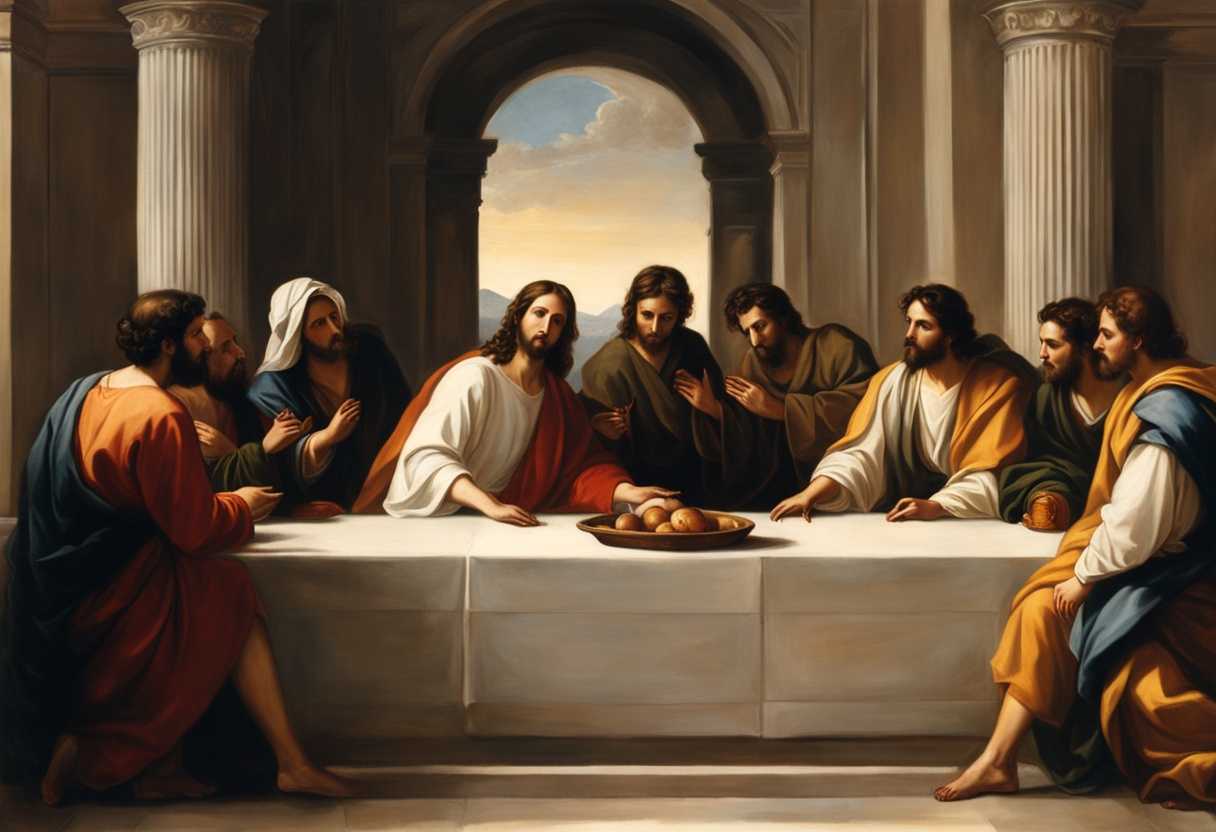
In Matthew chapter 16, we find Jesus with his disciples in the region of Caesarea Philippi. The scene is set against the backdrop of a rocky landscape, with the sound of the nearby Jordan River flowing gently in the background. The disciples are gathered around Jesus, their faces reflecting a mixture of curiosity and reverence as they listen to his teachings.
Peter, Andrew, James, John, and the rest of the disciples are present, having followed Jesus on his journey through Galilee. They have witnessed his miracles, heard his parables, and seen the crowds that flock to him for healing and teaching. As they sit with Jesus in the shade of a large olive tree, the disciples are eager to learn more about his mission and purpose.
It is in this tranquil setting that Jesus poses a question to his disciples, asking them, “Who do people say the Son of Man is?” This question sparks a discussion among the disciples about the various opinions circulating among the people. And it is in this moment that Peter, inspired by the Holy Spirit, declares, “You are the Messiah, the Son of the living God.” This pivotal confession sets the stage for Jesus to reveal more about his identity and the future of his ministry.
What is Matthew 16:19-20 about?
Jesus gives Peter authority in the church by declaring him as the rock on which He will build His church in this verse. This signifies Peter’s leadership role within the early Christian community, being entrusted with the keys to the kingdom of heaven. Jesus establishes a hierarchy within the church and sets a foundation for future leadership structures by giving Peter this authority.
However, Jesus also instructs the disciples to keep his identity a secret. This may seem puzzling at first, but it serves a specific purpose in the context of Jesus’ ministry. Jesus is able to continue His work without drawing too much attention to Himself prematurely by not revealing his identity too soon, allowing His teachings and miracles to speak for themselves. This also aligns with the concept of Jesus’ divine timing and His ultimate purpose in fulfilling the prophecy of being the Messiah. We can ponder the significance of authority and humility in leadership as we reflect on this verse and discern the right timing for revealing certain truths. It prompts us to consider the balance between exercising authority with humility and following God’s timing in all aspects of our lives. Jesus’ actions here challenge us to reflect on our own roles in leadership, service, and how we navigate the complexities of sharing our identities and purposes in ways that align with God’s will.
Understanding what Matthew 16:19-20 really means
In Matthew 16:19-20, we find a pivotal moment in the interaction between Jesus and His disciples, with a particular focus on Peter. This passage holds significant weight in the broader narrative of the Gospel of Matthew as it marks a turning point where Jesus bestows upon Peter a special authority within the community of believers. The key phrase “Keys of the kingdom of heaven” signifies not only authority but also the responsibility that comes with it. In ancient times, keys were emblematic of control over entry and access, highlighting the power to govern and make decisions.
Moreover, the phrases “Whatever you bind on earth will be bound in heaven” and “Whatever you loose on earth will be loosed in heaven” delve into the concept of binding and loosing, which pertains to the authority to make decisions in religious matters. This authority is further exemplified in John 20:23, where Jesus grants the disciples the power to forgive sins, emphasizing the weight of their decisions in matters of faith. Acts 15:28-29 also showcases the exercise of this authority by the early church when determining the requirements for Gentile believers, underscoring the significance of spiritual leadership in shaping the community of believers.
Today, the authority granted to Peter and the apostles extends to the church, highlighting the ongoing role of spiritual leadership in guiding believers. This underscores the importance of accountability and the weight of responsibility that accompanies spiritual authority. Reflecting on this, we see how crucial it is for individuals within faith communities to support and uphold their leaders as they navigate the complexities of decision-making and governance.
Consider a scenario where a church leader or community faced a challenging decision that ultimately benefited the congregation. Through prayerful consideration and collective wisdom, a decision was made regarding a new ministry initiative that positively impacted the community. This anecdote illustrates the practical application of the authority to bind and loose, showcasing how spiritual discernment and communal input can lead to decisions that bless and nurture the faith community.
In conclusion, the authority bestowed by Jesus upon Peter and the apostles carries profound implications for the church today. It serves as a reminder of the responsibility and accountability that come with spiritual leadership, urging believers to support and respect those entrusted with guiding the community of faith. As we ponder on our roles within our respective faith communities, let us consider how we can actively contribute to upholding and honoring the responsibilities placed upon our leaders, fostering a community grounded in faith, wisdom, and unity.
How can we find and establish the kingdom of heaven?
The kingdom of heaven can be found and established through the authority given by God. This authority includes the power to bind and loose, meaning to proclaim what is permissible and impermissible according to God’s will. We can establish the kingdom of heaven on earth by following God’s commands and teachings. This involves living a life in alignment with God’s principles of love, kindness, forgiveness, and righteousness.
Through faith and obedience to God, we can bring about the kingdom of heaven in our hearts and in the world around us. It is through our actions, words, and intentions that we can manifest the values of the kingdom of heaven. We can contribute to the establishment of the kingdom of heaven on earth by seeking to do God’s will and spreading His message of love and salvation. This process requires a continual dedication to living out God’s teachings and sharing His light with others.
Application
Harness the power within you! Just like in a bustling office, you have been entrusted with a vital role. Embrace the authority given to you and make courageous choices. Your actions hold weight in the grand scheme of things. Are you ready to step up and make a difference, knowing that the heavens are cheering you on?

Reverend Michael Johnson is an experienced Church Minister with a profound expertise in spirituality and guidance. With a serene presence and a compassionate heart, he has faithfully served his congregation for over 20 years, leading them on a spiritual journey towards inner peace and enlightenment. Reverend Johnson’s extensive knowledge of religious philosophies and profound understanding of human nature have made him a trusted confidant and mentor to many, as he seamlessly weaves his profound wisdom into life teachings. Reverend Johnson’s calming demeanor and empathetic nature continue to uplift and heal souls, nurturing a sense of unity and tranquility within his community.