
Matthew 16:9-10 is about being prepared for and recognizing the signs of spiritual teachings and revelations, just as the disciples were able to understand Jesus’ instructions through the metaphor of yeast and bread.
9 Do you not yet perceive? Do you not remember the five loaves for the five thousand, and how many baskets you gathered?
10 Or the seven loaves for the four thousand, and how many baskets you gathered?
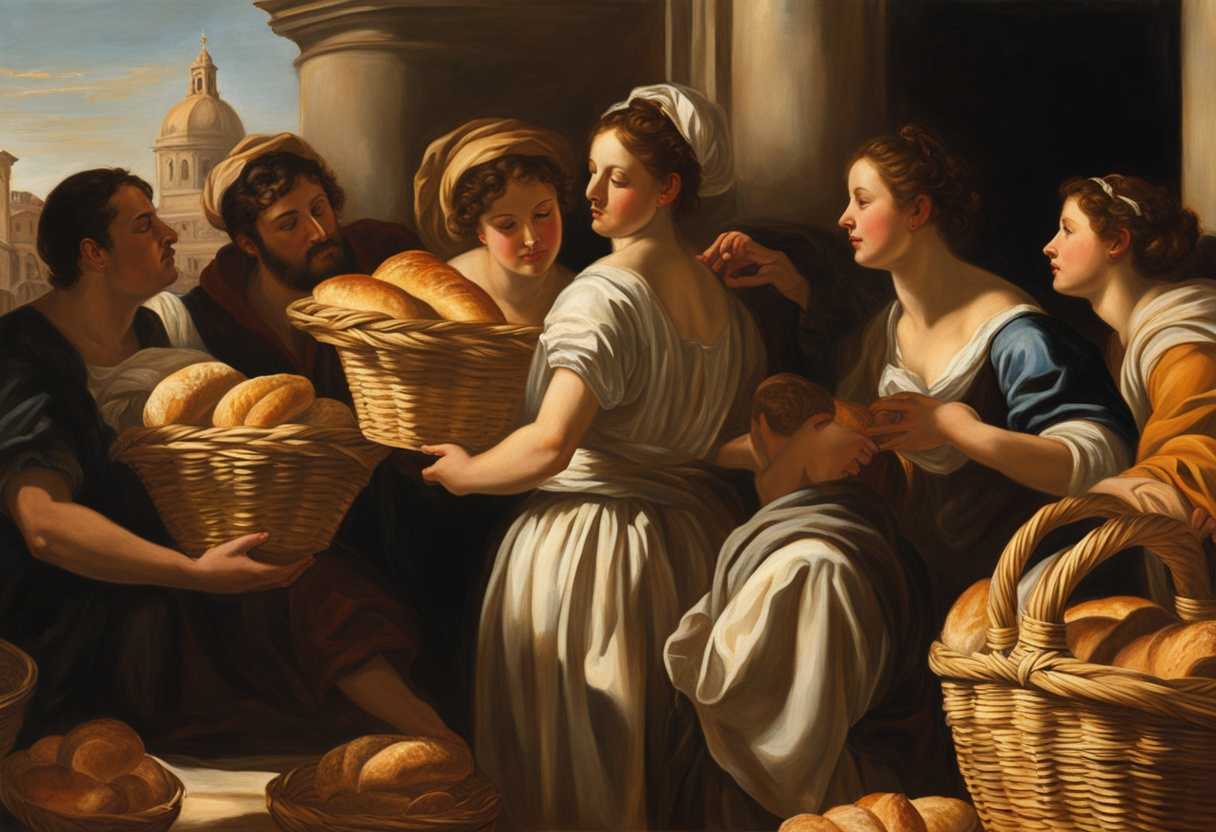
Setting the Scene for Matthew 16:9-10
In Matthew chapter 16, we find Jesus with his disciples in the region of Caesarea Philippi. The scene is set against the backdrop of a rocky landscape, with the sound of rushing water from the nearby Jordan River adding to the serene atmosphere. The disciples are gathered around Jesus, eager to learn from his teachings and witness his miracles.
Among the disciples present are Peter, Andrew, James, and John, who have been following Jesus closely and witnessing his ministry firsthand. They have seen him heal the sick, raise the dead, and preach with authority like no other. As they sit with Jesus in this peaceful setting, they are filled with a sense of anticipation and wonder about what he will reveal to them next.
It is in this tranquil moment that Jesus poses a question to his disciples, asking them who people say the Son of Man is. This question sparks a discussion among the disciples, with various answers being offered. It is in this setting that Peter makes his famous declaration that Jesus is the Messiah, the Son of the living God. This pivotal moment in the disciples’ journey with Jesus marks a turning point in their understanding of his identity and mission.
What is Matthew 16:9-10 about?
This verse is a powerful reminder of Jesus’ miraculous ability to provide for his followers, even in the most challenging circumstances. Jesus is testing the faith of his disciples by bringing up the feeding of the 5,000 with just 5 loaves and 2 fish. He is challenging them to trust in his divine power and provision, even when faced with apparent scarcity and impossibility.
Imagine being one of the disciples in that moment, witnessing this incredible miracle unfold before your eyes. How would you have felt? What emotions would have been swirling within you? Jesus is using this example to show that with faith and trust in Him, anything is possible. He is teaching his disciples, and us, to rely on God’s abundant grace and sufficiency, even when circumstances seem dire. Just like the loaves and fish were multiplied to meet the needs of thousands, Jesus can multiply blessings in our lives when we trust in Him wholeheartedly. So, let us take this lesson to heart and remember that with God, all things are possible.
Understanding what Matthew 16:9-10 really means
In Matthew 16:9-10, Jesus questions His disciples, “Do you not yet understand or remember the five loaves for the five thousand, and how many basketfuls you gathered? Or the seven loaves for the four thousand, and how many basketfuls you gathered?” These verses serve as a reminder of the miraculous feedings that Jesus performed, emphasizing His divine provision and power. The disciples, despite witnessing these extraordinary events, struggled to fully comprehend the extent of Jesus’ abilities, highlighting the common human struggle of faith and understanding.
The context of these verses lies in a conversation where Jesus is addressing the lack of faith and understanding among His disciples. By referencing the feeding of the 5,000 and the 4,000, Jesus is prompting His followers to recall these miracles as evidence of His divine provision. Just as the disciples needed to remember these acts of abundance, we too are reminded to trust in God’s ability to provide for our needs, even in seemingly impossible situations.
These verses are closely related to other passages in the Gospels, such as Matthew 14:13-21 and Matthew 15:32-39, which recount the feedings of the multitudes with limited resources. Additionally, in John 6:35, Jesus declares Himself as the “bread of life,” underscoring His role as the ultimate provider and sustainer. This interconnectedness of passages reinforces the theme of God’s abundant provision and care for His people.
The relevance of these verses extends to people today in various ways. They prompt us to reflect on our own faith and trust in God, especially during times of doubt or need. Just as Jesus provided physical nourishment to the crowds, He also offers spiritual nourishment to us, sustaining us in our daily lives. By meditating on these verses, we are encouraged to deepen our trust in God’s provision and to remember His faithfulness in our lives.
To illustrate the significance of God’s provision, consider a family facing financial struggles who receive an unexpected gift that meets their immediate needs. This act of kindness serves as a tangible reminder of God’s faithfulness and provision, akin to how Jesus reminded His disciples of the miraculous feedings. Through such experiences, we are reminded of God’s ability to provide abundantly, even in the midst of scarcity.
In conclusion, the phrases in Matthew 16:9-10 serve as poignant reminders of God’s miraculous provision and the importance of faith and trust in His care. As we ponder these verses and their implications, may we be encouraged to trust in God’s provision, remember His past faithfulness, and rely on His sustaining grace in our lives today.
How am I demonstrating faith in God’s provision?
We can demonstrate faith in God’s provision in our daily lives by trusting that He will provide for all our needs. This includes both physical needs such as food, shelter, and clothing, as well as emotional and spiritual needs like peace, comfort, and guidance. We can have faith that God’s provision is abundant and more than enough to meet our needs, just as the disciples collected twelve basketfuls of leftover bread after Jesus fed the five thousand. We show our trust that He will provide for us by actively seeking God’s guidance and direction in our lives. This may involve prayer, reading scriptures, seeking wise counsel, and having faith that God will lead us to the paths He has planned for us. It also means being content with what we have, knowing that God will provide exactly what we need at the right time.
Additionally, we can demonstrate faith in God’s provision by being good stewards of the resources He has given us. This includes being generous with what we have, helping others in need, and sharing our blessings with those around us. When we have faith in God’s provision, we trust that He will not only take care of us but also enable us to be a blessing to others.
Application
Let the miracles of Jesus inspire us to spread love and compassion in our daily lives. Just as Jesus showed kindness and generosity, let us also extend a helping hand to those around us. Emulate His love to make a difference in the world. Will you join the mission of spreading love and positivity today?

Reverend Michael Johnson is an experienced Church Minister with a profound expertise in spirituality and guidance. With a serene presence and a compassionate heart, he has faithfully served his congregation for over 20 years, leading them on a spiritual journey towards inner peace and enlightenment. Reverend Johnson’s extensive knowledge of religious philosophies and profound understanding of human nature have made him a trusted confidant and mentor to many, as he seamlessly weaves his profound wisdom into life teachings. Reverend Johnson’s calming demeanor and empathetic nature continue to uplift and heal souls, nurturing a sense of unity and tranquility within his community.