
Matthew 17:1-13 is about the transfiguration of Jesus on a high mountain, revealing his divine nature and confirming the presence of Moses and Elijah as witnesses to his fulfillment of the Law and the Prophets.
1 And after six days Jesus took with him Peter and James, and John his brother, and led them up a high mountain by themselves.
2 And he was transfigured before them, and his face shone like the sun, and his clothes became white as light.
3 And behold, there appeared to them Moses and Elijah, talking with him.
4 And Peter said to Jesus, “Lord, it is good that we are here. If you wish, I will make three tents here, one for you and one for Moses and one for Elijah.”
5 He was still speaking when, behold, a bright cloud overshadowed them, and a voice from the cloud said, “This is my beloved Son, with whom I am well pleased; listen to him.”
6 But when the disciples heard it, they fell on their faces and were terrified.
7 But Jesus came and touched them, saying, “Rise, and have no fear.”
8 And when they lifted up their eyes, they saw no one but Jesus only.
9 And as they were coming down the mountain, Jesus commanded them, “Tell no one the vision, until the Son of Man is raised from the dead.”
10 And the disciples asked him, “Then why do the scribes say that first Elijah must come?”
11 He answered, “Elijah does come, and he will restore all things.
12 But I tell you that Elijah has already come, and they did not recognize him, but did to him whatever they pleased. So also the Son of Man will certainly suffer at their hands.”
13 Then the disciples understood that he was speaking to them of John the Baptist.
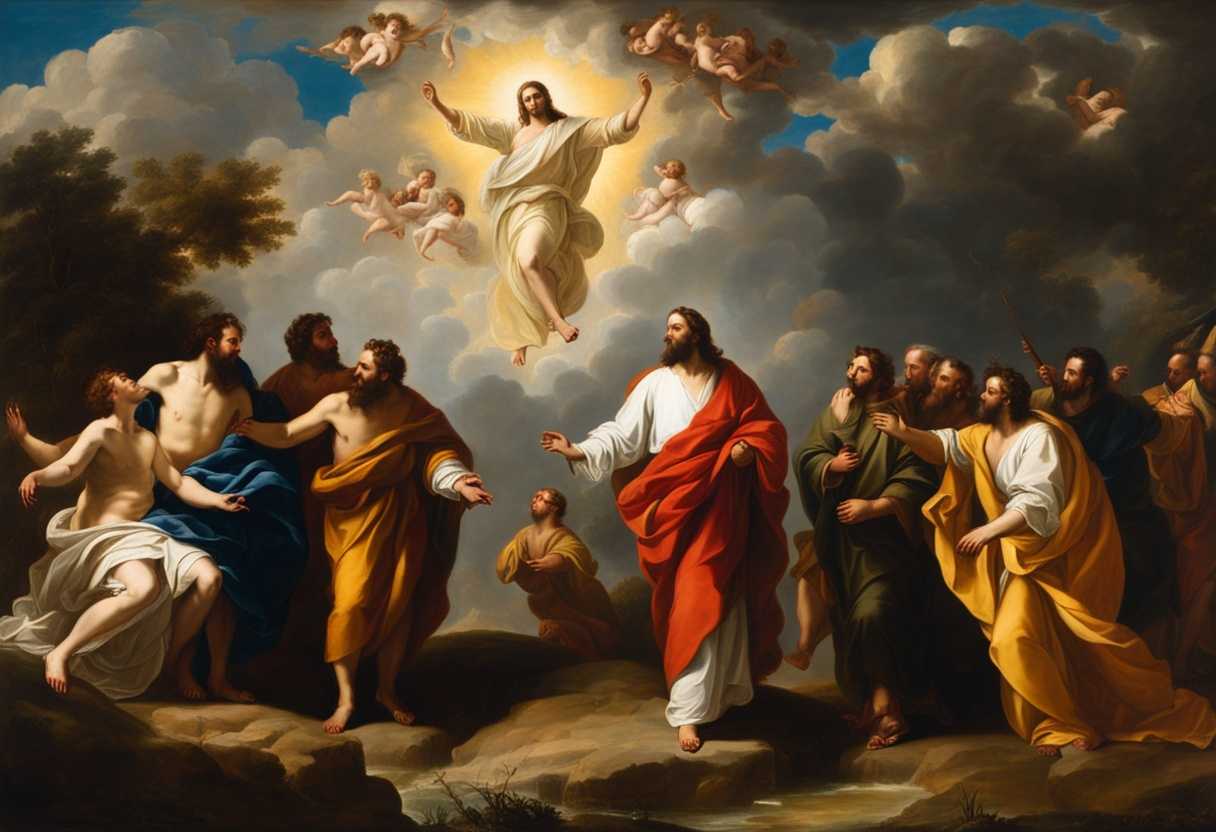
Setting the Scene for Matthew 17:1-13
In Matthew chapter 17, we find Jesus taking Peter, James, and John up a high mountain. The scene is set in the late afternoon, with the sun casting a warm golden glow over the landscape. As they ascend the mountain, the disciples are filled with a sense of anticipation and wonder, unsure of what is about to unfold.
Upon reaching the mountaintop, Jesus is transfigured before them, his face shining like the sun and his clothes becoming as white as light. Suddenly, Moses and Elijah appear, talking with Jesus. Peter, in his awe and excitement, suggests building shelters for Jesus, Moses, and Elijah. However, before he can finish speaking, a bright cloud envelops them, and a voice from the cloud declares, “This is my Son, whom I love; with him I am well pleased. Listen to him!”
Overwhelmed by the experience, the disciples fall facedown to the ground in fear. Jesus then touches them, reassuring them not to be afraid. As they descend the mountain, Jesus instructs them not to tell anyone about what they have witnessed until after his resurrection. This powerful and transformative moment on the mountain serves as a confirmation of Jesus’ divinity and his fulfillment of the Law and the Prophets.
What is Matthew 17:1-13 about?
The Transfiguration is a significant event in the New Testament where Jesus reveals His divine glory to His disciples Peter, James, and John on a mountaintop. This powerful moment not only confirms Jesus’ identity as the Son of God but also foreshadows His eventual resurrection and glory. Through the dazzling transformation of His appearance, Jesus displays His true nature as the Son of God, shining with heavenly light and radiance. The Transfiguration reminds us of Jesus’ divine nature and the importance of faith in Him as the Messiah. This event also serves as a reminder for us to seek moments of spiritual clarity and revelation in our own lives, just as the disciples experienced on that sacred mountaintop. The Transfiguration challenges us to deepen our understanding of who Jesus truly is and to embrace His teachings with unwavering faith and devotion. We should strive to witness and embrace the glory of Christ in our own lives, allowing His light to shine brightly through us for all to see.
Understanding what Matthew 17:1-13 really means
The passage in Matthew 17:1-13 unveils a remarkable event known as the Transfiguration of Jesus, where His divine glory is revealed to three of His disciples on a high mountain. This setting symbolizes a place of revelation and closeness to God, emphasizing the significance of what is about to unfold. As Jesus is transfigured, His face shines like the sun, signifying His divine nature and reflecting His glory and purity. His clothes becoming as white as light symbolize holiness and the righteousness that emanate from Christ. The voice of God the Father affirming Jesus as His beloved Son with authority underscores the unique sonship and divine approval upon Jesus.
Drawing parallels with other biblical passages such as Exodus 34:29-35, where Moses’ face shone after encountering God, we see a continuity in God’s revelation through history. 2 Peter 1:16-18 further solidifies the significance of the Transfiguration as Peter recounts the event, providing eyewitness testimony to its profound nature. Hebrews 1:3 describes Jesus as the radiance of God’s glory, reinforcing the divine essence revealed in the Transfiguration. These connections deepen our understanding of the event and its implications for our faith today.
The Transfiguration serves as a poignant reminder of Jesus’ divine nature and His pivotal role as the mediator between God and humanity. It urges believers to heed God’s command to listen to Jesus and follow His teachings amidst the noise and distractions of the world. Just as the disciples were called to focus on Jesus during this extraordinary event, we are also encouraged to center our lives on Him and His message in our modern context.
Consider a moment in your life when clarity or revelation struck you, akin to the disciples witnessing Jesus’ divine glory. Such moments of profound insight can transform our understanding and deepen our faith. For instance, a friend’s retreat in the mountains led them to a “transfiguration” experience, drawing them closer to God through prayer and reflection in a serene environment. These moments of connection with God can be transformative and enlightening, akin to the disciples’ encounter with Jesus on the mountain.
Reflect on the directive to “Listen to him!” and contemplate how you can align your life more closely with Jesus’ teachings. Ponder the implications of Jesus’ divine nature on your faith journey and daily walk with Him. Seek out moments of quiet and reflection to commune with God, gaining deeper insights into His will for your life. By delving into the profound meaning of the Transfiguration and its relevance today, we can draw nearer to Jesus, living out our faith with renewed conviction and clarity.
How can we listen to Jesus and follow him?
We can listen to Jesus and follow him by being attentive to his teachings and obeying his commands. Jesus often spoke in parables and gave instructions on how to live a life that is pleasing to God. We can gain understanding and wisdom on how to live according to his will by studying the Bible and meditating on his words.
Additionally, we can follow Jesus by seeking a personal relationship with him through prayer and worship. Developing a close connection with Jesus allows us to receive guidance, strength, and comfort from him. We can cultivate a deeper intimacy with him and align our lives with his purposes by spending time in prayer and seeking his presence daily. Surrendering our own desires and selfish ambitions to his authority involves following Jesus. This means being willing to let go of our own plans and submit to his will for our lives. We can experience true transformation and fulfillment as we journey with Jesus in faith and obedience by putting our trust in him and allowing him to lead us.
Application
Imagine your boss reveals a critical secret to you—one that changes everything about how you view your work. That’s what the Transfiguration of Jesus is like for your faith. It’s a wake-up call to see His true power and divinity. Reflect on this revelation; let it push you to get closer to Him, dig deeper into His words, and spread His love in your family and workplace. Will you let this moment transform your daily actions and belief?

Reverend Michael Johnson is an experienced Church Minister with a profound expertise in spirituality and guidance. With a serene presence and a compassionate heart, he has faithfully served his congregation for over 20 years, leading them on a spiritual journey towards inner peace and enlightenment. Reverend Johnson’s extensive knowledge of religious philosophies and profound understanding of human nature have made him a trusted confidant and mentor to many, as he seamlessly weaves his profound wisdom into life teachings. Reverend Johnson’s calming demeanor and empathetic nature continue to uplift and heal souls, nurturing a sense of unity and tranquility within his community.