
Matthew 17:1-3 is about the transfiguration of Jesus on the mountain, where he was revealed in his divine glory to his disciples Peter, James, and John, demonstrating his authority and relationship with God.
1 And after six days Jesus took with him Peter and James, and John his brother, and led them up a high mountain by themselves.
2 And he was transfigured before them, and his face shone like the sun, and his clothes became white as light.
3 And behold, there appeared to them Moses and Elijah, talking with him.
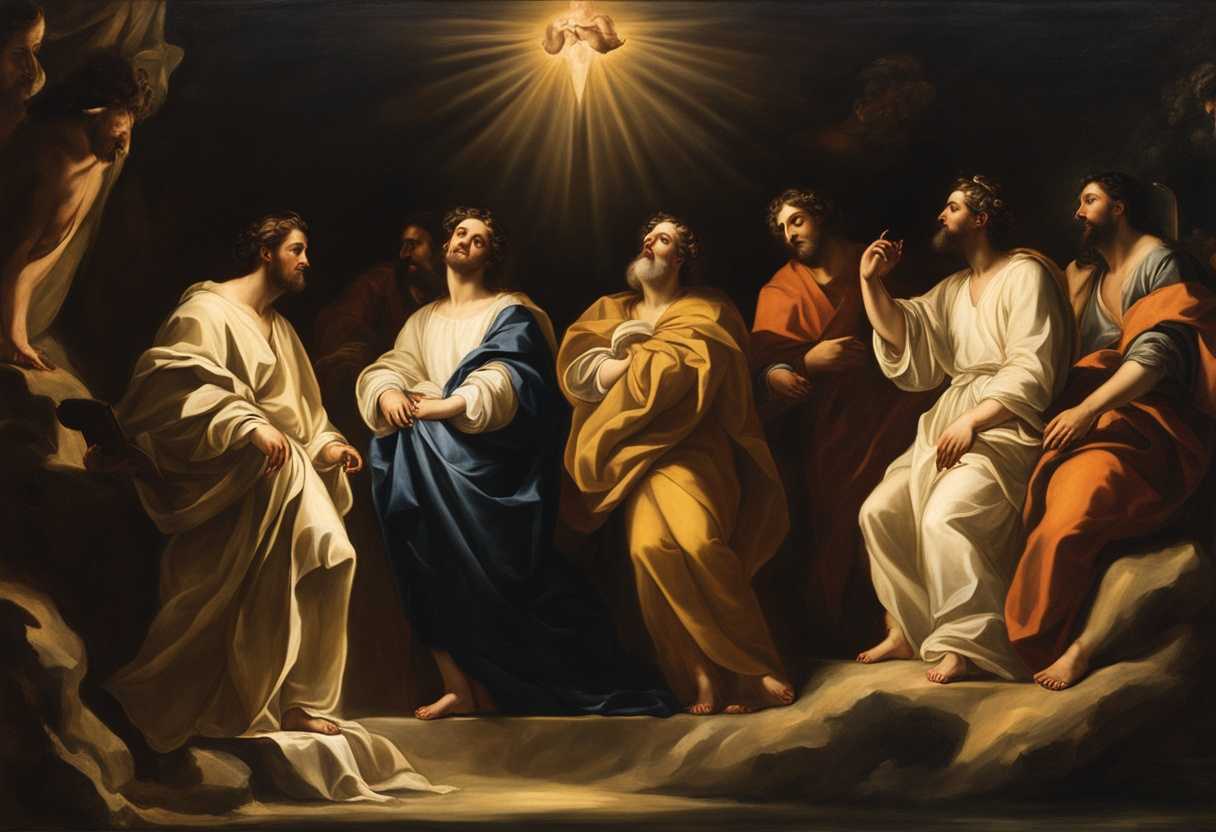
Setting the Scene for Matthew 17:1-3
In Matthew chapter 17, we find Jesus taking Peter, James, and John up a high mountain. The scene is set in the early morning, with the first rays of sunlight breaking through the clouds, casting a golden hue over the landscape. The air is crisp and cool, and the disciples can feel a sense of anticipation building as they climb higher and higher.
As they reach the summit, Jesus is transfigured before them, his face shining like the sun and his clothes becoming as white as light. Suddenly, Moses and Elijah appear, talking with Jesus. Peter, James, and John are awestruck by this incredible sight, witnessing a moment of divine glory that transcends their understanding.
The disciples are overwhelmed by the experience, not fully comprehending the significance of what they are witnessing. This moment on the mountain serves as a powerful revelation of Jesus’ true nature and his connection to the prophets of old. It is a pivotal moment in their journey with Jesus, deepening their faith and understanding of his divine mission.
What is Matthew 17:1-3 about?
Jesus transfigures before the eyes of Peter, James, and John on a mountain in this verse, the Transfiguration. It is a powerful moment where Jesus reveals His divine nature and glory to His closest disciples. This event serves as a confirmation of Jesus’s true identity as the Son of God and provided reassurance and strength to His disciples as they faced the challenges and doubts that lay ahead.
Can you imagine being one of the disciples witnessing this incredible moment of divine revelation? How would you feel seeing Jesus in His full glory? The Transfiguration reminds us of the majesty and power of Jesus Christ and reinforces our faith in Him as the Son of God. It serves as a pivotal moment in Jesus’s ministry, marking a transition towards His ultimate sacrifice on the cross for the salvation of humanity. Jesus extends unwavering love and grace to us, even in the midst of uncertainty and doubt, as we reflect on the Transfiguration. Let this moment be a source of encouragement and strength as we journey in our faith, knowing that Jesus’s divine glory shines brightly in our lives.
Understanding what Matthew 17:1-3 really means
The passage in Matthew 17:1-3 recounts the Transfiguration of Jesus, a significant event where His divine glory is revealed to Peter, James, and John on a high mountain. This setting symbolizes a place of spiritual elevation and divine encounter, akin to Moses receiving the Ten Commandments on Mount Sinai. The key phrases in this passage, such as “His face shone like the sun” and “His clothes became as white as the light,” signify purity, holiness, and the presence of the divine. The presence of Moses and Elijah conversing with Jesus represents the Law and the Prophets, affirming Jesus as the fulfillment of both aspects of Scripture.
Drawing parallels with other biblical passages like Exodus 34:29-35 and 2 Peter 1:16-18, we see a connection between Moses’ radiant face after encountering God and Jesus’ transfiguration, emphasizing divine encounters and confirming Jesus’ mission. Additionally, Revelation 1:13-16 echoes the imagery of the Transfiguration, reinforcing Jesus’ divine authority. The relevance of this event to people today lies in its reminder of Jesus’ divine nature and His role as the mediator between humanity and God. It prompts believers to seek spiritual transformation and deeper encounters with God in their personal lives.
Consider a scenario where an individual grappling with doubt attends a retreat on a mountaintop, akin to the disciples’ experience during the Transfiguration. In this moment of spiritual revelation, they find peace and clarity, strengthening their faith and commitment. This anecdote illustrates how divine encounters can profoundly impact and transform lives, much like the disciples’ experience on the mountain. In conclusion, the Transfiguration underscores Jesus’ divine identity and urges believers to pursue deeper spiritual experiences, reminding us of God’s ongoing work in our lives and His faithfulness to His promises through Jesus. Reflecting on this passage encourages us to embrace God’s transformative power and live out our faith with renewed conviction.
How can we listen to God’s voice clearly?
To listen to God’s voice clearly, we must seek opportunities to draw closer to Him just as Jesus took Peter, James, and John up a high mountain. We position ourselves to hear Him more clearly by intentionally creating space in our lives for prayer, worship, and meditation on His Word. We make ourselves available to receive His guidance and direction in these moments of solitude and stillness.
Furthermore, we can listen to God’s voice clearly by being attentive and receptive, just as the disciples were when Jesus was transfigured before them. It is important to be present in the moment and to open our hearts and minds to receive whatever God wants to communicate to us. This requires active listening and a willingness to let go of distractions and preconceived notions, allowing God’s voice to penetrate our innermost being.
Lastly, developing a close relationship with God through consistent prayer, studying His Word, and seeking His presence through worship enables us to recognize His voice more clearly. We can deepen our intimacy with God by spending time in His presence, just as Peter, James, and John were close companions of Jesus. The more we cultivate a relationship with Him, the more familiar we become with His voice, making it easier to discern His leading and respond in obedience.
Application
Think of your life as a hectic workday full of meetings and tasks. In the rush, don’t forget to take a moment for what’s truly important. Just as Jesus took His closest friends to a quiet place for a profound experience, you need to find your own mountain top—your sacred space to feel God’s presence. Don’t let your faith become a background task; make it a priority. Will you carve out time to seek out these moments of divine connection in your own busy world?

Reverend Michael Johnson is an experienced Church Minister with a profound expertise in spirituality and guidance. With a serene presence and a compassionate heart, he has faithfully served his congregation for over 20 years, leading them on a spiritual journey towards inner peace and enlightenment. Reverend Johnson’s extensive knowledge of religious philosophies and profound understanding of human nature have made him a trusted confidant and mentor to many, as he seamlessly weaves his profound wisdom into life teachings. Reverend Johnson’s calming demeanor and empathetic nature continue to uplift and heal souls, nurturing a sense of unity and tranquility within his community.