
Matthew 17:10 is about the disciples questioning Jesus about the prophecy of Elijah coming before the Messiah, prompting Jesus to explain the deeper spiritual truth of Elijah’s coming in the form of John the Baptist.
10 And the disciples asked him, “Then why do the scribes say that first Elijah must come?”
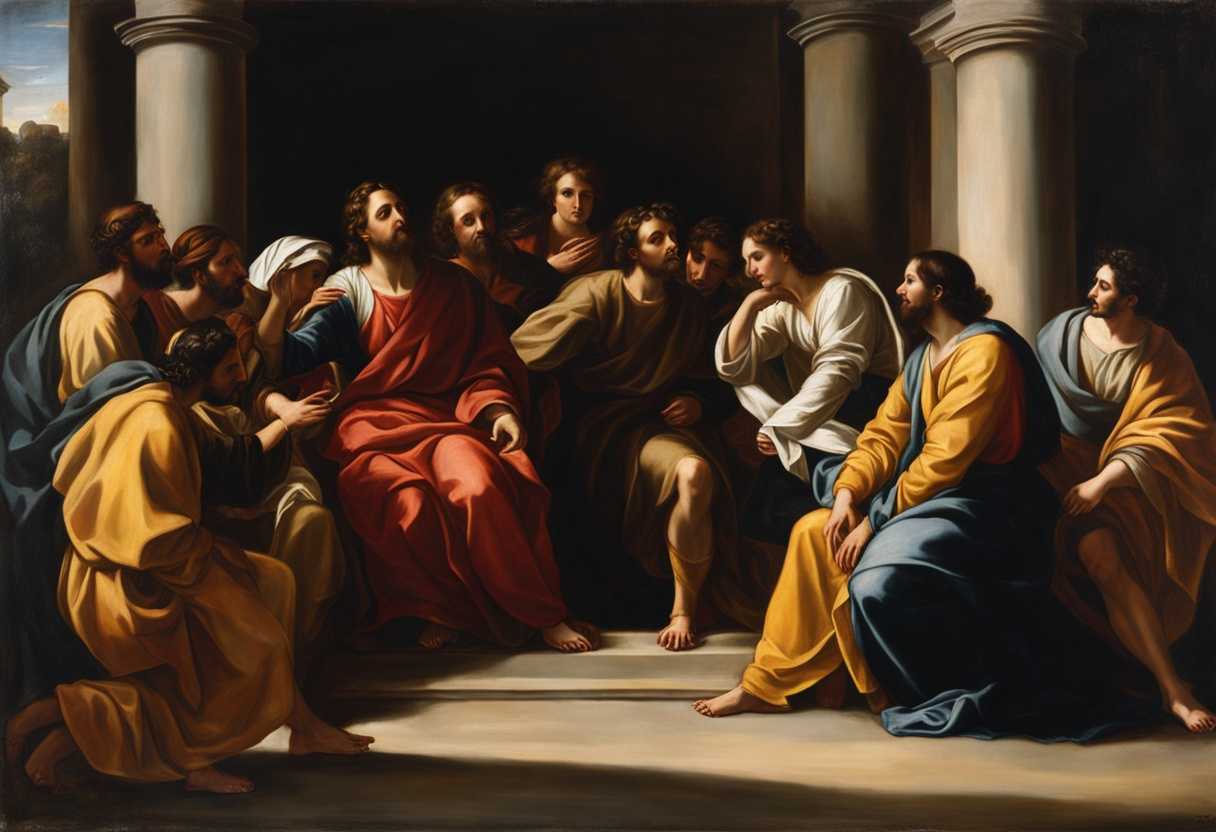
Setting the Scene for Matthew 17:10
In Matthew chapter 17, we find Jesus on a mountain with three of his disciples: Peter, James, and John. The scene is set on a high mountain, possibly Mount Hermon or Mount Tabor, with a breathtaking view of the surrounding landscape. The disciples are with Jesus as they often accompany him on important occasions.
As they are on the mountain, Jesus is transfigured before them, his face shining like the sun, and his clothes becoming as white as light. Suddenly, Moses and Elijah appear, talking with Jesus. This moment is known as the Transfiguration of Jesus, a significant event in the Gospels where Jesus reveals his divine glory to his disciples.
The disciples are in awe and fear at the sight before them, witnessing this extraordinary event. Peter, in his excitement, suggests building shelters for Jesus, Moses, and Elijah. However, a voice from heaven interrupts, declaring Jesus as the beloved Son of God, instructing the disciples to listen to him. This powerful and mystical scene solidifies Jesus’ identity as the Son of God and prepares the disciples for the challenges that lie ahead.
What is Matthew 17:10 about?
The disciples of Jesus inquire about the prophecy of Elijah’s coming before the end times in this verse. They were referencing a prophecy from the book of Malachi in the Old Testament, which foretold Elijah’s return to prepare the way for the Messiah. The disciples were seeking clarity on when this prophecy would be fulfilled and how it related to the events leading to the end times. We can understand the disciples’ curiosity and eagerness to comprehend the connection between the prophecy of Elijah’s return and the culmination of the age as we delve into this verse. Jesus’ response emphasizes the prophetic role of John the Baptist, who came in the spirit of Elijah to prepare the way for Jesus’ ministry and the establishment of the Kingdom of God. Through his explanation, Jesus highlights the fulfillment of prophecy and the importance of recognizing the signs and messengers sent by God. We are reminded of the intricate interplay between prophecy, preparation, and the unfolding of God’s divine plan by reflecting on this exchange between the disciples and Jesus. We can ask questions, seek answers, and deepen our faith by discerning the signs of God’s work in our lives and in the world around us, just as the disciples did. Jesus’ response underscores the significance of being attentive to the guidance and messages God sends our way, preparing our hearts and minds for the fulfillment of His promises and the coming of His Kingdom.
Understanding what Matthew 17:10 really means
After the extraordinary event of the Transfiguration, where Jesus revealed His divine glory to Peter, James, and John, a moment of confusion arises. The disciples, witnessing this incredible sight, are left pondering a prophecy they had heard about Elijah’s return. In the book of Malachi, it is foretold that Elijah will come before the “great and dreadful day of the Lord.” This prophecy sets the stage for the disciples’ inquiry to Jesus in Matthew 17:10, seeking clarity on the role of Elijah in the unfolding events.
In Matthew 11:14, Jesus identifies John the Baptist as the fulfillment of the prophecy regarding Elijah’s return. This connection underscores the intricate fulfillment of Old Testament prophecies in the New Testament, showcasing the continuity of God’s plan across generations. Luke 1:17 further reinforces this idea by describing John the Baptist as coming “in the spirit and power of Elijah,” emphasizing the spiritual essence rather than a literal reincarnation.
The relevance of this passage extends to believers today by prompting a deeper exploration of prophecy and its fulfillment. It challenges us to recognize that God’s plans often unfold in ways that may not align with our expectations, urging us to trust in His sovereignty and timing. Just as John the Baptist prepared the way for Jesus, we are called to prepare our hearts and communities for Christ’s presence in our lives.
Consider a scenario where a community anticipates the arrival of a revered leader based on prophecies and signs. When someone embodying the leader’s essence arrives, some fail to recognize him due to preconceived notions of a literal fulfillment. Similarly, John the Baptist, embodying Elijah’s spirit, went unrecognized by many as the forerunner of Jesus, illustrating the importance of spiritual discernment over rigid expectations.
The disciples’ question, “Why then do the teachers of the law say that Elijah must come first?” reflects their eagerness to understand the alignment of Jesus’ ministry with Jewish teachings. This inquiry encourages us to seek clarity and insight in our faith journey, emphasizing the value of seeking understanding in the midst of spiritual revelations. The phrase “Elijah must come first” underscores the significance of forerunners in God’s divine plan, highlighting the necessity of preparation and the unexpected ways in which God fulfills His promises.
By contemplating Matthew 17:10 within its broader context, we are invited to appreciate the intricate tapestry of God’s plan woven throughout Scripture. This verse serves as a reminder to approach prophecy with discernment, trust in God’s unfolding purposes, and actively prepare the way for Christ in our lives and communities.
How can we better understand and fulfill prophecy?
To better understand prophecy, we can look at how Jesus explains the role of John the Baptist in fulfilling the prophecy about Elijah. Jesus clarifies that John the Baptist came in the spirit of Elijah to prepare the way for the Messiah by examining the context of the verse. This teaches us that prophecy can be fulfilled in unexpected ways, and we should be open to the possibility that fulfillment may not always align with our preconceived notions. We can fulfill prophecy by recognizing and embracing our unique roles in God’s plan. We are called to play our part in bringing God’s purposes to fruition, just as John the Baptist fulfilled the prophecy in his time and context. This reminds us that prophecy is not stagnant but dynamically unfolds through the actions of individuals who align themselves with God’s will. Discerning God’s timing and guidance ultimately require a deeper understanding and fulfillment of prophecy. It involves staying rooted in faith, prayer, and a willingness to heed the promptings of the Holy Spirit. We can actively participate in the unfolding of prophecy and the fulfillment of His divine purposes by being attuned to God’s voice and direction.
Application
Think of your life like a busy work project. You need clarity and direction to succeed. Just as we seek advice from mentors and colleagues, why not turn to prayer and Scripture for guidance? Commit to understanding God’s Word better—it’s like unlocking a powerful tool for your daily challenges. Are you ready to let the Bible shape your decisions and actions?

Reverend Michael Johnson is an experienced Church Minister with a profound expertise in spirituality and guidance. With a serene presence and a compassionate heart, he has faithfully served his congregation for over 20 years, leading them on a spiritual journey towards inner peace and enlightenment. Reverend Johnson’s extensive knowledge of religious philosophies and profound understanding of human nature have made him a trusted confidant and mentor to many, as he seamlessly weaves his profound wisdom into life teachings. Reverend Johnson’s calming demeanor and empathetic nature continue to uplift and heal souls, nurturing a sense of unity and tranquility within his community.