
Matthew 17:14-20 is about the disciples’ lack of faith in their ability to heal the demon-possessed boy, and Jesus teaching them the importance of even a small amount of faith being able to move mountains.
14 And when they came to the crowd, a man came up to him and, kneeling before him,
15 “Lord, have mercy on my son, for he is an epileptic and he suffers terribly. For often he falls into the fire, and often into the water.”
16 And I brought him to your disciples, and they could not heal him.”
17 And Jesus answered, “O faithless and twisted generation, how long am I to be with you? How long am I to bear with you? Bring him here to me.”
18 And Jesus rebuked the demon, and it came out of him, and the boy was healed instantly.
19 Then the disciples came to Jesus privately and said, “Why could we not cast it out?”
20 He said to them, “Because of your little faith. For truly, I say to you, if you have faith like a grain of mustard seed, you will say to this mountain, ‘Move from here to there,’ and it will move, and nothing will be impossible for you.”
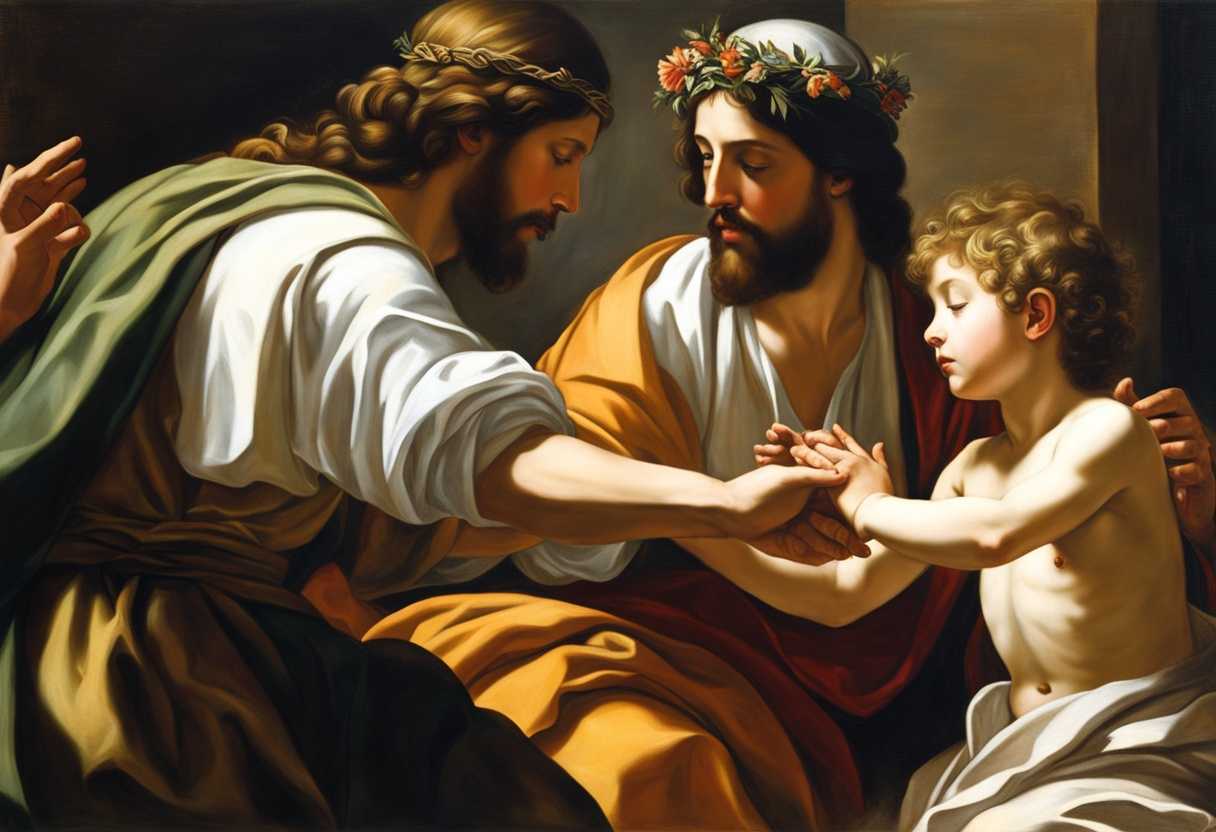
Setting the Scene for Matthew 17:14-20
In Matthew chapter 17, we find Jesus and three of his disciples, Peter, James, and John, coming down from the mountain where they had just experienced the transfiguration. As they descend, they are met by a large crowd. Among the crowd is a man who kneels before Jesus, pleading for help for his son who is suffering from seizures and is often thrown into the fire or water. The man explains that he brought his son to the disciples, but they were unable to heal him.
The scene is filled with a sense of desperation and hopelessness as the father begs Jesus to have mercy on his son. The disciples, who had been given the authority to heal and cast out demons by Jesus, are unable to help in this situation. Jesus, filled with compassion, rebukes the demon, and the boy is healed instantly. This moment serves as a powerful demonstration of Jesus’ authority over evil and his ability to bring healing and restoration. The crowd is left in awe of the miraculous power of Jesus, and the disciples are reminded of the importance of faith in their ministry.
What is Matthew 17:14-20 about?
This verse is a powerful message about the strength of faith and belief. It teaches us that with unwavering faith in God’s power, we can conquer any challenge or obstacle that comes our way. The metaphorical image of moving mountains emphasizes the idea that nothing is impossible when we place our trust in God. Just like how a mountain, a seemingly insurmountable obstacle, can be overcome with faith, so too can the difficulties in our lives be conquered with belief in God’s power.
Have you ever faced a situation that seemed impossible to overcome? Maybe it felt like you were trying to move a mountain on your own. But this verse reminds us that we are not alone; with faith and belief in God’s power, we can achieve the impossible. It encourages us to trust in something greater than ourselves and to have confidence in the limitless power of God. So, the next time you are faced with a daunting challenge, remember that faith can move mountains, and with God by your side, you can overcome anything.
Understanding what Matthew 17:14-20 really means
In Matthew 17:14-20, we find Jesus and His disciples encountering a crowd after descending from the Mount of Transfiguration. Among the people is a man whose son is possessed by a demon that the disciples were unable to cast out. Jesus expresses frustration at the lack of faith and spiritual understanding, referring to the generation as “unbelieving and perverse.” This highlights the importance of faith in the miraculous works of God and the need for a deeper spiritual connection.
When Jesus commands, “Bring the boy here to me,” He demonstrates both His authority and compassion. His direct intervention shows that He is the ultimate source of healing and deliverance. By pinpointing the disciples’ lack of faith as the reason for their inability to heal the boy, Jesus emphasizes the crucial role faith plays in accessing God’s power. He uses the metaphor of faith as small as a mustard seed to illustrate that even the tiniest amount of genuine faith can lead to extraordinary outcomes.
In Mark 9:14-29, we find a parallel account with additional details, shedding light on Jesus’ conversation with the boy’s father about belief and unbelief. This passage, along with Luke 17:6 and Hebrews 11:1, reinforces the concept of faith as the foundation of our relationship with God. Hebrews defines faith as confidence in what we hope for and assurance about what we do not see, underlining the importance of trusting in God’s promises.
The relevance of this passage to people today is profound. In a world filled with doubt and skepticism, the message of faith’s transformative power is a beacon of hope. Just as the disciples faced challenges beyond their own abilities, individuals today encounter obstacles that seem insurmountable. This passage serves as a reminder that faith can provide the strength and perseverance needed to overcome adversity.
Consider the story of Sarah, a young woman battling a severe illness. Despite her struggles and doubts, she reads this passage and is inspired by the idea of faith as small as a mustard seed. Through earnest prayer and unwavering trust in God, Sarah finds renewed hope and eventually discovers a treatment that leads to her healing. Sarah’s journey exemplifies how even a small amount of faith can lead to unexpected solutions and profound transformations in one’s life.
In conclusion, Matthew 17:14-20 challenges believers to cultivate and nurture their faith, no matter how small it may seem. By trusting in God’s power and embracing the mustard seed of faith, individuals can witness miraculous changes and experience the fullness of God’s grace in their lives. This passage serves as a reminder of the limitless potential of faith and the transformative impact it can have on our circumstances.
How can we increase our faith in God’s power?
To increase our faith in God’s power, we can reflect on the message conveyed in the verse from Matthew 17:14-20. The passage emphasizes the importance of faith as small as a mustard seed, which can move mountains. This analogy suggests that even the smallest amount of faith in God’s power can lead to extraordinary outcomes. We can cultivate a deep-seated belief in God’s ability to work wonders in our lives by internalizing this message, no matter how daunting the obstacles may seem.
Furthermore, to strengthen our faith in God’s power, we can look to the examples of biblical figures who exhibited unwavering trust in God. Reading about the experiences of individuals like Abraham, Moses, and David, who faced seemingly insurmountable challenges yet persevered through their faith, can inspire us to similarly place our trust in God’s divine capabilities. We can reinforce our belief in His limitless power to intervene in our circumstances and bring about miraculous solutions by immersing ourselves in stories of God’s faithfulness and provision throughout the Bible. We can nurture our faith in God’s power through prayer and personal experiences of His faithfulness. We open our hearts to God’s transformative presence and become more attuned to His guidance by spending time in prayer, expressing our desires, concerns, and gratitude to Him. Our faith in His power grows stronger as we witness answered prayers and see God’s hand at work in our lives. Keeping a record of answered prayers and moments where God has shown His power can serve as a tangible reminder of His faithfulness and reinforce our confidence in His ability to overcome any challenges we may face.
Application
Think of life’s challenges as the demanding projects at work or the struggles within your family. In Matthew 17:14-20, Jesus shows us that faith, even as small as a mustard seed, can overcome monumental obstacles. Are you ready to tap into that faith and trust in God’s boundless power to transform your life? Will you believe in the miracles waiting to unfold in your toughest moments?

Reverend Michael Johnson is an experienced Church Minister with a profound expertise in spirituality and guidance. With a serene presence and a compassionate heart, he has faithfully served his congregation for over 20 years, leading them on a spiritual journey towards inner peace and enlightenment. Reverend Johnson’s extensive knowledge of religious philosophies and profound understanding of human nature have made him a trusted confidant and mentor to many, as he seamlessly weaves his profound wisdom into life teachings. Reverend Johnson’s calming demeanor and empathetic nature continue to uplift and heal souls, nurturing a sense of unity and tranquility within his community.