
Matthew 19:8-9 is about Jesus explaining to the Pharisees that divorce was allowed under Moses due to their hard hearts, but in the kingdom of heaven, divorce is permitted only in cases of marital unfaithfulness, emphasizing the importance of fidelity in marriage.
8 He said to them, “Because of your hardness of heart Moses allowed you to divorce your wives, but from the beginning it was not so.
9 And I say to you: whoever divorces his wife, except for sexual immorality, and marries another, commits adultery.”
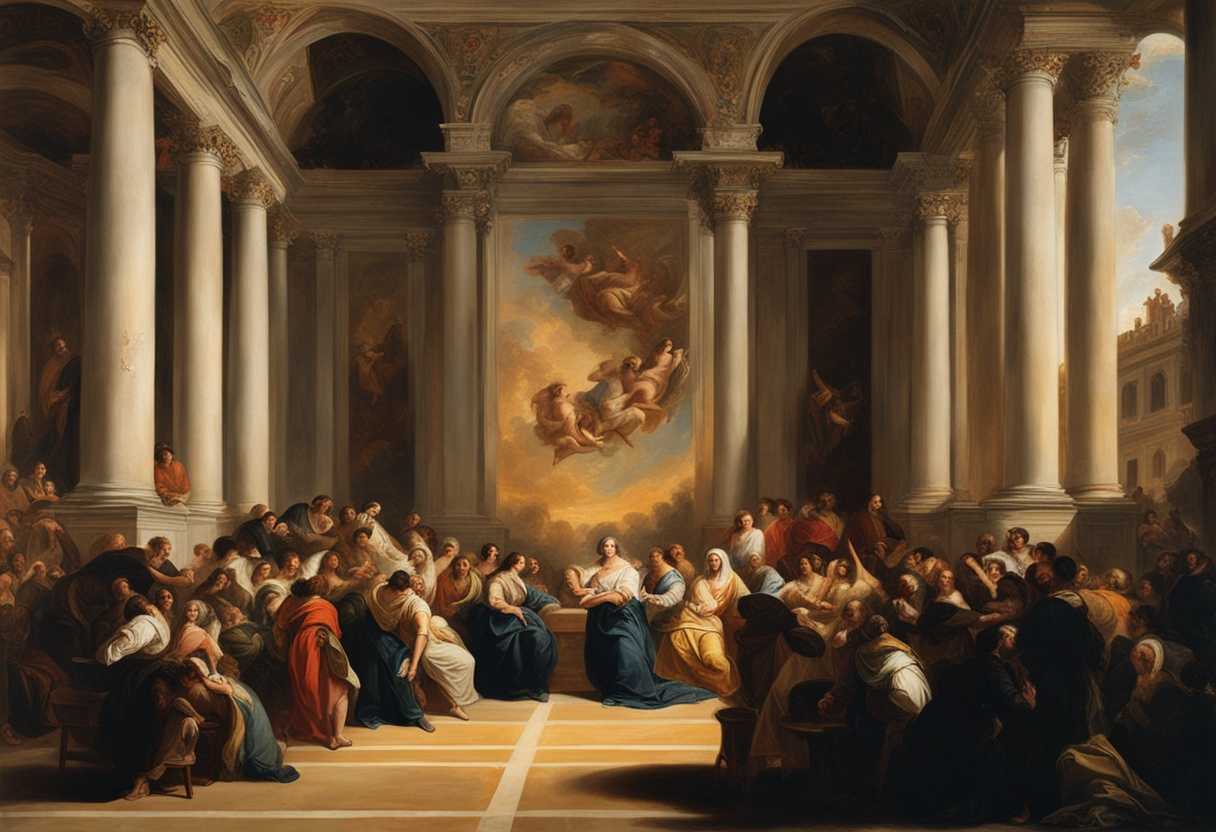
Setting the Scene for Matthew 19:8-9
In Matthew chapter 19, we find Jesus teaching a crowd of people who have gathered around him. The scene is set in the countryside, with the sun shining down on the group as they sit or stand on the grassy hillsides. The disciples are also present, listening intently to Jesus’ words and observing the interactions taking place.
As Jesus speaks, a group of Pharisees approaches him, seeking to test his knowledge of the law. They ask him about the legality of divorce, hoping to trap him with their question. Jesus responds with wisdom and authority, quoting scripture and explaining the sanctity of marriage as established by God. The Pharisees are taken aback by his response, realizing that they cannot outwit him in this debate.
The atmosphere is tense as the Pharisees try to challenge Jesus, but his words carry a weight of truth that leaves them silenced. The disciples watch on, learning from their teacher’s example of grace and wisdom in the face of adversity. This encounter serves as a powerful lesson on the importance of upholding God’s principles in all aspects of life, including marriage and relationships.
What is Matthew 19:8-9 about?
Jesus is emphasizing the sanctity of marriage and the seriousness of the commitment made between partners in this verse. Jesus is highlighting the importance of fidelity and trust in a marriage by allowing divorce only in cases of adultery. The act of adultery signifies a breach of that trust and can have profound consequences on the relationship. Therefore, in such cases, divorce is permitted as a way to address this betrayal and seek resolution.
Additionally, Jesus’ statement about remarriage being considered adultery unless the divorce was due to adultery itself serves as a reminder of the permanence and sacred nature of the marriage covenant. It challenges us to reflect on the true essence of marriage and the significance of the vows exchanged between partners. Jesus urges us to approach marriage with reverence, honor, and faithfulness by categorizing remarriage in certain circumstances as adultery. This verse can influence our perspectives on commitment, trust, and forgiveness within relationships and what it means for the institution of marriage. How can we apply these teachings in our own lives and relationships to uphold the sanctity of marriage and honor the vows we make to our partners? Reflect on the deeper meaning behind Jesus’ words and the valuable lessons we can learn from them.
Understanding what Matthew 19:8-9 really means
In Matthew 19:8-9, Jesus responds to the Pharisees’ inquiry about divorce, shedding light on the heart of the matter. The Pharisees, referencing Moses’ provision for divorce, prompt Jesus to delve into the essence of marriage. Jesus’ statement, “Because of your hardness of heart,” unveils a crucial insight – divorce was permitted as a concession to human frailty, not as a reflection of God’s original design for marriage. This acknowledgment underscores the significance of aligning our actions with God’s intended purposes, even in the face of human shortcomings.
Jesus further emphasizes the sanctity of marriage by stating, “From the beginning it was not so.” This declaration underscores the divine intention for marriage to be a lifelong, unbreakable union between a man and a woman. The permanence and unity of marriage are rooted in God’s original plan, highlighting the sacred nature of this covenant relationship. Additionally, Jesus introduces the clause, “Except for sexual immorality,” acknowledging that marital unfaithfulness can be a valid reason for divorce. This exception clause underscores the importance of upholding fidelity and trust within the marital bond.
Drawing from related biblical passages such as Genesis 2:24 and Malachi 2:16, we gain a broader perspective on God’s perspective on marriage. Genesis underscores the unity and permanence of marriage, while Malachi reveals God’s aversion to divorce, emphasizing His desire for marital faithfulness. The teachings of Jesus, echoed by Paul in 1 Corinthians 7:10-11, reinforce the call to honor the sanctity of marriage and prioritize reconciliation over dissolution.
In today’s context, the message of Matthew 19:8-9 remains profoundly relevant. It challenges believers to uphold the sanctity of marriage in a culture where divorce is prevalent. By addressing marital issues with a commitment to reconciliation, couples can embody the enduring love and faithfulness that mirror God’s relationship with His people. The passage serves as a beacon, guiding individuals to navigate challenges within marriage with grace, forgiveness, and a steadfast commitment to the covenant they have entered into.
Consider the narrative of John and Mary, a couple who weathered storms in their marriage. Despite contemplating divorce, they chose to seek counseling and confront their issues head-on. Through perseverance and a shared commitment to their union, they experienced restoration and a deepening of their love. Their journey mirrors the transformative power of dedication and resilience within marriage, echoing Jesus’ teachings on the enduring nature of this sacred bond.
In conclusion, Matthew 19:8-9 beckons us to a higher standard of marital fidelity and perseverance. It prompts introspection on the foundational principles of marriage and urges us to honor and safeguard this divine institution. By embracing these teachings, we can cultivate marriages that reflect God’s unwavering love, grace, and faithfulness, serving as a testament to His enduring covenant with His people.
When is divorce acceptable in God’s eyes?
Divorce is acceptable in God’s eyes when it is due to marital unfaithfulness. Jesus specifies in this context that a person who divorces their spouse for any reason other than sexual immorality and remarries commits adultery. This indicates that divorce is permissible if one’s spouse has been unfaithful, as infidelity breaks the marriage covenant.
However, it is important to note that God’s ideal plan for marriage is lifelong commitment and unity between a husband and wife. Divorce should not be taken lightly or pursued frivolously. It is wise for couples to seek counseling, reconciliation, and forgiveness in challenging times before considering divorce. God ultimately desires that marriages be characterized by love, respect, and mutual fidelity. Divorce may be a last resort in situations where reconciliation is not possible or when there is ongoing harm or abuse in the marriage. While divorce is permitted in cases of marital unfaithfulness, it is always preferable for couples to strive for healing, restoration, and reconciliation in their marriage through prayer, counseling, and seeking God’s guidance.
Application
Just as we dedicate ourselves to our jobs and families, we must also honor and cherish our marriages. Let’s approach marriage with the utmost respect and commitment, knowing that it is a sacred bond that deserves our unwavering dedication. Before thoughts of divorce creep in, let’s strive to work through challenges, seek reconciliation, and uphold the promises we made to our partners and to God. Are you ready to prioritize the sanctity of marriage and fight for love, no matter the obstacles?

Reverend Michael Johnson is an experienced Church Minister with a profound expertise in spirituality and guidance. With a serene presence and a compassionate heart, he has faithfully served his congregation for over 20 years, leading them on a spiritual journey towards inner peace and enlightenment. Reverend Johnson’s extensive knowledge of religious philosophies and profound understanding of human nature have made him a trusted confidant and mentor to many, as he seamlessly weaves his profound wisdom into life teachings. Reverend Johnson’s calming demeanor and empathetic nature continue to uplift and heal souls, nurturing a sense of unity and tranquility within his community.