
Matthew 1:1-16 is about tracing the genealogy of Jesus Christ, highlighting key figures in his ancestral line leading up to his birth.
1 The book of the genealogy of Jesus Christ, the son of David, the son of Abraham.
2 Abraham was the father of Isaac, and Isaac the father of Jacob, and Jacob the father of Judah and his brothers,
3 and Judah the father of Perez and Zerah by Tamar, and Perez the father of Hezron, and Hezron the father of Ram,
4 and Ram the father of Amminadab, and Amminadab the father of Nahshon, and Nahshon the father of Salmon,
5 and Salmon the father of Boaz by Rahab, and Boaz the father of Obed by Ruth, and Obed the father of Jesse,
6 and Jesse the father of David the king.
7 and Solomon the father of Rehoboam, and Rehoboam the father of Abijah, and Abijah the father of Asaph,
8 and Asa the father of Jehoshaphat, and Jehoshaphat the father of Joram, and Joram the father of Uzziah,
9 and Azor the father of Zadok, and Zadok the father of Achim, and Achim the father of Eliud,
10 and Hezekiah the father of Manasseh, and Manasseh the father of Amos, and Amos the father of Josiah,
11 and Josiah the father of Jechoniah and his brothers, at the time of the deportation to Babylon.
12 And after the deportation to Babylon: Jechoniah was the father of Shealtiel, and Shealtiel the father of Zerubbabel.
13 and Zerubbabel the father of Abiud, and Abiud the father of Eliakim, and Eliakim the father of Azor,
14 and Azor the father of Zadok, and Zadok the father of Achim, and Achim the father of Eliud,
15 and Eliud the father of Eleazar, and Eleazar the father of Matthan, and Matthan the father of Jacob,
16 and Jacob the father of Joseph the husband of Mary, of whom Jesus was born, who is called Christ.
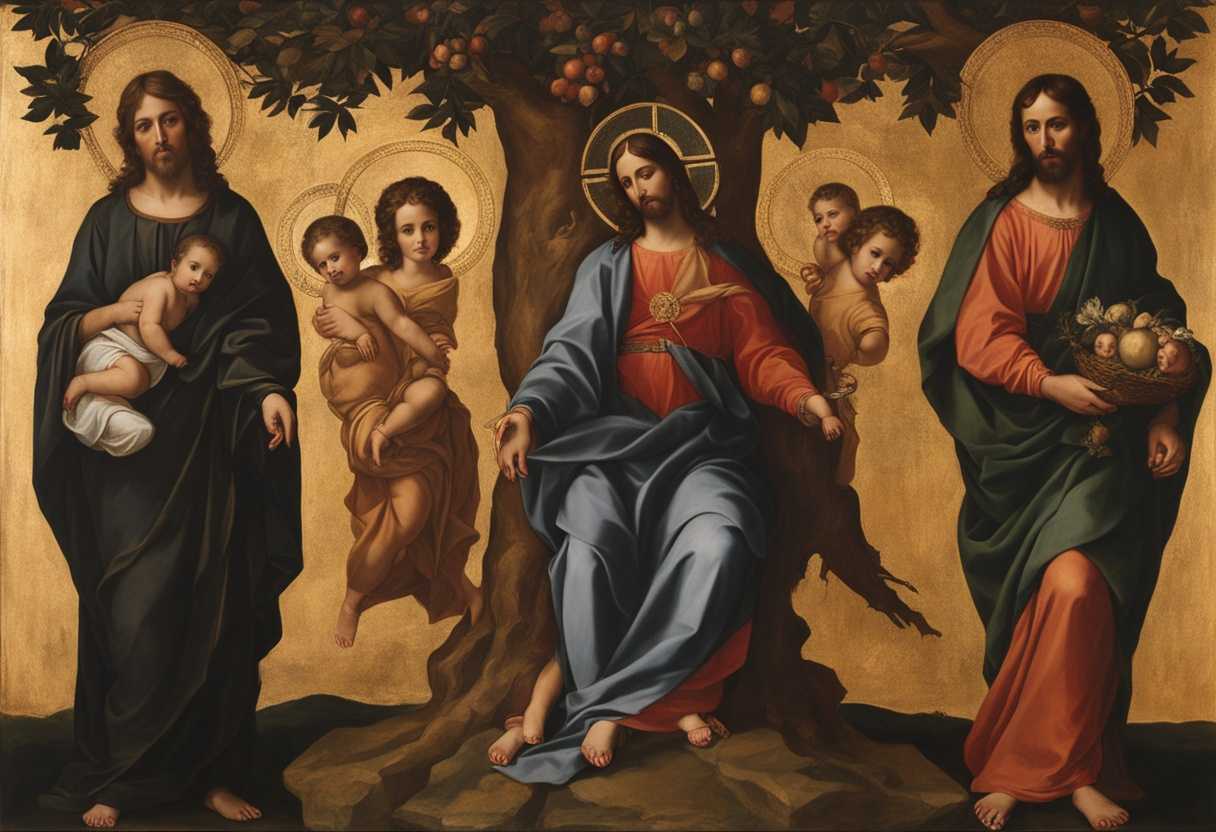
Setting the Scene for Matthew 1:1-16
The scene in Matthew 1:1-16 takes place in the town of Bethlehem, a small village in Judea. The main characters in this scene are Joseph, a carpenter from the lineage of King David, and Mary, a young virgin who is betrothed to Joseph. They are in Bethlehem because of a decree from Caesar Augustus that required everyone to return to their ancestral hometown for a census.
Joseph and Mary arrived in Bethlehem after a long and arduous journey from Nazareth, where they lived. The town is bustling with people who have also come to register for the census, and the inns are crowded with travelers. Despite the challenges they faced, Joseph and Mary find themselves in a humble stable, where Mary gives birth to Jesus, the promised Messiah. The surroundings are simple and rustic, with animals nearby and a bright star shining overhead, signaling the miraculous event that has just taken place.
What is Matthew 1:1-16 about?
The author in this verse is showing the lineage of Jesus, tracing it back through important figures in Jewish history such as Abraham and David. The author highlights Jesus’ connection to the promises and covenants established by God with these forefathers by mentioning these specific ancestors. This genealogy not only serves to establish Jesus’ credibility as a legitimate descendant of David, fulfilling Old Testament prophecies about the Messiah coming from David’s line, but also emphasizes Jesus’ inclusion in the historical trajectory of God’s chosen people.
This verse is significant as it links Jesus to the rich tapestry of Jewish history and tradition, grounding his identity in a long line of faithful believers. It showcases the faithfulness of God in fulfilling His promises throughout generations, culminating in the birth of Jesus as the Savior of the world. We can appreciate the depth of Jesus’ identity as both fully human and fully divine, perfectly positioned to bridge the gap between God and humanity by understanding his lineage. Reflecting on this verse prompts us to consider the incredible precision in God’s plan and the fulfillment of His promises through the coming of Jesus.
Understanding what Matthew 1:1-16 really means
The passage of Matthew 1:1-16 delves into the genealogy of Jesus Christ, meticulously tracing His lineage from Abraham to Joseph, the husband of Mary. This genealogy serves as a crucial link to Jewish history and prophecy, solidifying Jesus’ identity as the long-awaited Messiah. The opening phrase, “The book of the genealogy of Jesus Christ, the son of David, the son of Abraham,” strategically connects Jesus to pivotal figures in Jewish history, emphasizing His royal lineage through David and His fulfillment of the Abrahamic covenant. It sets the stage for understanding Jesus’ significance within the context of God’s redemptive plan.
Furthermore, the mention of “And Jacob the father of Joseph, the husband of Mary, of whom Jesus was born, who is called Christ,” sheds light on the legal lineage through Joseph while subtly alluding to the miraculous nature of Jesus’ birth through Mary. This intricate interplay of human lineage and divine intervention underscores the complexity and depth of Jesus’ identity as both fully human and fully divine. The genealogy in Matthew 1:1-16 intricately weaves together historical narratives and prophetic promises, painting a vivid picture of God’s unfolding plan of redemption through the generations.
Drawing connections to related biblical passages such as Genesis 12:3, 2 Samuel 7:12-13, and Isaiah 11:1 further illuminates the significance of Jesus’ genealogy. These passages underscore God’s faithfulness in fulfilling His promises to Abraham, David, and the prophetic anticipation of the Messiah’s lineage. The genealogy not only serves as a historical record but also as a testament to God’s unwavering commitment to His people throughout history.
In our contemporary context, the genealogy of Jesus Christ holds profound relevance for individuals seeking identity and belonging. Just as Jesus’ identity was firmly rooted in a rich history and divine purpose, we are encouraged to find our identity and purpose in God’s overarching plan for our lives. Moreover, the genealogy highlights God’s inclusivity by incorporating women and non-Israelites like Rahab and Ruth, showcasing His grace that transcends societal norms and embraces all who seek Him.
Consider a child discovering a famous ancestor in a family tree project at school. This revelation can evoke a sense of pride and purpose. Similarly, understanding Jesus’ genealogy can instill in us a profound sense of spiritual heritage and purpose, anchoring us in God’s grand narrative of redemption and restoration. Ultimately, the genealogy in Matthew 1:1-16 is not merely a list of names but a powerful declaration of God’s faithfulness, the fulfillment of His promises, and the inclusive nature of His kingdom. It beckons us to recognize our place in God’s unfolding story and to place our trust in His unchanging promises.
How does our family history impact our spiritual journey?
Our family history can play a significant role in shaping our spiritual journey. Just like in Matthew 1:1-16 where the genealogy of Jesus is traced back through generations, our own family history can provide us with a sense of identity and connection to those who came before us. Understanding our lineage can help us appreciate the faith of our ancestors and the ways in which it has been passed down to us. Our family history can also influence the spiritual practices and traditions that we follow. The customs and beliefs that have been upheld by our family for generations can greatly impact the way we approach our own relationship with God. We can learn from the successes and failures of our ancestors by reflecting on our family history, and use these lessons to deepen our own faith journey. Recognizing the importance of our family history can ultimately lead us to a greater appreciation for the spiritual legacy that has been passed down to us. We can connect more deeply with our faith and continue to grow in our relationship with God by acknowledging the impact of our ancestors on our beliefs and practices.
Application
Think about your family’s legacy – the struggles and victories that shape you today. The genealogy of Jesus in Matthew 1:1-16 is like a roadmap of faith through generations. Don’t overlook the power of imperfection and perseverance in these stories. Use their lessons to fuel your own spiritual journey. How will you let this lineage of faith drive you to make a difference in your work, family, and community?

Reverend Michael Johnson is an experienced Church Minister with a profound expertise in spirituality and guidance. With a serene presence and a compassionate heart, he has faithfully served his congregation for over 20 years, leading them on a spiritual journey towards inner peace and enlightenment. Reverend Johnson’s extensive knowledge of religious philosophies and profound understanding of human nature have made him a trusted confidant and mentor to many, as he seamlessly weaves his profound wisdom into life teachings. Reverend Johnson’s calming demeanor and empathetic nature continue to uplift and heal souls, nurturing a sense of unity and tranquility within his community.